Smart Home Automation: Complete Guide to Smart Devices, Security, Energy Efficiency, and IoT (2026)
Smart home automation is changing how people interact with their homes. From controlling lights with a smartphone to managing security cameras remotely, connected technology is making homes more efficient, secure, and convenient. As Internet of Things (IoT) devices become more common, homeowners and renters can automate everyday tasks without needing advanced technical knowledge.
This article explains smart home automation in simple language, covering its importance, the latest developments, Indian regulations, useful tools, frequently asked questions, and practical information for everyday users.
What Is Smart Home Automation and Why Does It Exist?
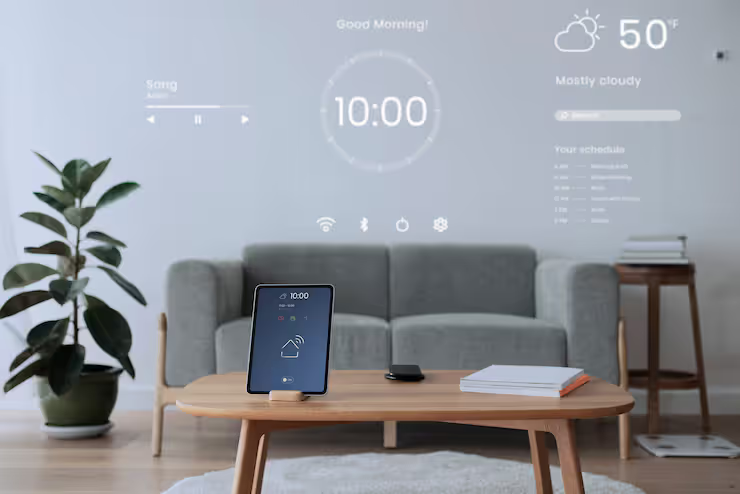
Smart home automation is the use of connected devices and software to control, monitor, and automate household functions. These devices communicate through Wi-Fi, Bluetooth, Zigbee, Thread, or other wireless technologies, allowing users to manage their homes through mobile apps, voice assistants, or automated schedules.
The main goal of smart home automation is to make homes more efficient, secure, and convenient. Instead of manually operating appliances or systems, users can create routines that perform tasks automatically based on time, motion, temperature, or other conditions.
Common examples of smart home automation include:
Smart lighting that turns on automatically.
Smart thermostats that adjust temperature based on occupancy.
Smart locks that provide digital access control.
Smart security cameras with remote monitoring.
Smart plugs that automate electrical appliances.
Smart sensors that detect smoke, water leaks, or movement.
A smart home works by connecting multiple devices to a central platform or ecosystem, enabling them to communicate and respond together.
Core Components of a Smart Home Ecosystem
Component | Purpose |
| Smart Hub | Connects and manages compatible smart devices. |
| IoT Devices | Lights, plugs, switches, locks, sensors, cameras, and appliances. |
| Mobile Application | Allows remote control and monitoring from anywhere. |
| Voice Assistant | Enables voice commands for supported devices. |
| Automation Rules | Creates schedules, routines, and event-based actions. |
| Cloud or Local Network | Supports communication between connected devices. |
Why Smart Home Automation Matters Today
Smart home automation has become increasingly important because households now rely on connected technology for daily activities. It improves convenience while also supporting energy efficiency, accessibility, and digital home security.
People living in apartments, independent houses, and smart residential communities are adopting connected devices for different needs.
Key Benefits of Smart Home Automation
Improved convenience: Control multiple devices from one application.
Better energy management: Schedule lights and appliances to reduce unnecessary usage.
Enhanced home security: Receive alerts from cameras, sensors, and smart locks.
Remote monitoring: Check home status while traveling.
Accessibility support: Voice commands help elderly users and people with limited mobility.
Personalized routines: Devices respond automatically based on user preferences.
Who Is Affected by Smart Home Technology?
Smart home automation benefits different groups in different ways.
User Group | How Automation Helps |
| Homeowners | Centralized control of lighting, security, and appliances. |
| Apartment Residents | Smart lighting, locks, and sensors without major wiring changes. |
| Families | Safety alerts, automation routines, and remote monitoring. |
| Senior Citizens | Voice control and emergency monitoring features. |
| Students and Professionals | Remote access and energy-saving schedules. |
Problems Smart Home Automation Solves
Many everyday household challenges can be simplified through automation.
Forgotten lights or fans.
Unsecured doors.
Monitoring deliveries or visitors.
Managing multiple electrical devices.
Detecting water leaks or smoke early.
Tracking electricity usage patterns.
Growth of Smart Home Automation in India (Illustrative Trend)
The adoption of connected home devices has steadily increased with improved internet connectivity and IoT awareness.
Recent Updates in Smart Home Automation (2025–2026)
The smart home industry has seen significant developments during the past year, especially around interoperability, AI integration, and energy management.
Wider Adoption of the Matter Standard (2025)
Matter has become one of the biggest developments in smart home technology. During 2025, more manufacturers expanded support for Matter-compatible devices.
Key improvements include:
Better compatibility between brands.
Easier device setup across ecosystems.
Support for lights, plugs, switches, sensors, locks, thermostats, and appliances.
More reliable local communication using Thread.
Matter reduces compatibility issues that previously existed between different smart home platforms.
AI-Powered Home Automation Expanded in 2025–2026
Artificial intelligence is increasingly used for:
Predicting user routines.
Automatically adjusting lighting.
Energy optimization.
Intelligent security alerts.
Voice recognition improvements.
Instead of only responding to commands, AI-enabled automation learns recurring household patterns.
Increased Focus on Energy Monitoring
During 2025, more smart plugs, switches, and appliances introduced detailed electricity usage dashboards.
Users can now monitor:
Daily electricity consumption.
Appliance-specific energy usage.
Peak usage hours.
Automation suggestions for energy efficiency.
Thread Network Adoption Increased
Thread networking became more common across smart home devices during late 2025 and early 2026.
Benefits include:
Faster device communication.
Lower power consumption.
Mesh networking for improved reliability.
Better performance even if one device disconnects.
Smarter Home Security Features
Recent security improvements include:
AI-based person detection.
Vehicle and package detection.
Privacy zones for cameras.
Local video storage support.
Encrypted communication between devices.
Popular Smart Home Technology Trends in 2026
Trend | Why It Matters |
| Matter Compatibility | Improves interoperability across brands. |
| Thread Networking | Creates faster and more reliable smart home connections. |
| AI Automation | Learns household routines automatically. |
| Energy Monitoring | Tracks electricity consumption in real time. |
| Privacy Controls | Provides stronger camera and data protection settings. |
Laws and Policies Affecting Smart Home Automation in India
India's smart home ecosystem is influenced by data privacy regulations, electronics standards, cybersecurity initiatives, and energy-efficiency programs.
Digital Personal Data Protection Act, 2023
The Digital Personal Data Protection (DPDP) Act affects smart home devices that collect personal information.
It introduces principles related to:
User consent.
Purpose-based data collection.
Data protection responsibilities.
Security safeguards for digital information.
Smart devices that process user information are expected to follow applicable privacy requirements.
BIS Standards for Connected Electronics
The Bureau of Indian Standards (BIS) establishes quality and safety standards for many electronic devices.
Smart home products may fall under standards related to:
Electrical safety.
Wireless communication.
Consumer electronics quality.
Electromagnetic compatibility.
IoT Security Guidelines
Government agencies have promoted cybersecurity recommendations for IoT devices.
These recommendations encourage:
Strong passwords.
Regular firmware updates.
Secure communication protocols.
Protection against unauthorized access.
Smart Cities Mission
India's Smart Cities Mission supports broader digital infrastructure development.
Its objectives include:
Connected public infrastructure.
Intelligent lighting systems.
Smart energy management.
Digital monitoring technologies.
While the program focuses on cities, it also encourages wider adoption of connected technologies.
Energy Efficiency Programs
Organizations such as the Bureau of Energy Efficiency (BEE) promote efficient electrical appliances and energy conservation practices.
Smart home automation complements these efforts through:
Automated scheduling.
Occupancy-based lighting.
Smart energy monitoring.
Efficient appliance management.
Best Practices for Privacy and Cybersecurity
Users should follow basic security practices when using connected home devices.
Use unique passwords.
Enable two-factor authentication where available.
Keep firmware updated.
Review app permissions regularly.
Use secure home Wi-Fi encryption.
Remove unused connected devices from the network.
Tools and Resources for Smart Home Automation
Several platforms and applications help users manage smart home ecosystems.
Tool or Resource | Purpose |
| Google Home | Manage compatible smart home devices and routines. |
| Apple Home | Control Matter-compatible and HomeKit-enabled devices. |
| Amazon Alexa App | Create routines and manage connected devices. |
| Samsung SmartThings | Connect multiple brands through one platform. |
| Home Assistant | Local smart home automation with advanced customization. |
| IFTTT | Create automation workflows between supported services. |
| BEE Star Label Portal | Information about energy-efficient appliances. |
Useful Smart Home Resources
These resources help users understand compatibility and automation planning.
Matter compatibility documentation.
Thread networking documentation.
Google Home Help Center.
Apple Home User Guide.
SmartThings documentation.
Home Assistant documentation.
Bureau of Energy Efficiency resources.
Basic Smart Home Automation Checklist
Smart lighting schedule.
Motion sensor automation.
Smart plug schedules.
Door lock notifications.
Camera activity alerts.
Smoke or water leak detection.
Energy monitoring dashboard.
Night mode automation.
Common Smart Home Categories
Category | Examples |
| Lighting Automation | Bulbs, switches, dimmers, motion sensors. |
| Security Automation | Cameras, locks, doorbells, alarms. |
| Climate Automation | Thermostats, air conditioners, fans. |
| Energy Automation | Smart plugs, energy monitors, schedules. |
| Safety Automation | Smoke detectors, gas sensors, water leak sensors. |
Frequently Asked Questions
What is the difference between a smart home and home automation?
A smart home refers to a home with internet-connected devices. Home automation refers to rules and routines that allow those devices to operate automatically without manual control.
Do smart home devices require internet all the time?
Not always. Some devices work locally through hubs or Thread networks, while remote access and cloud-based features generally require an internet connection.
What is Matter in smart home automation?
Matter is a universal smart home connectivity standard that allows compatible devices from different manufacturers to work together across supported ecosystems.
Is smart home automation secure?
Security depends on device configuration and regular updates. Strong passwords, secure Wi-Fi encryption, firmware updates, and privacy settings improve protection.
Can smart home automation help reduce electricity usage?
Yes. Scheduling appliances, automating lighting, monitoring energy consumption, and using occupancy-based controls can improve household energy efficiency.
Conclusion
Smart home automation has evolved from a niche technology into a practical solution for modern households. It combines IoT devices, wireless connectivity, voice assistants, automation rules, and AI-powered features to improve convenience, security, and energy management.
Recent developments during 2025 and 2026, including wider Matter adoption, Thread networking, AI-powered automation, and stronger privacy features, have made smart home ecosystems more compatible and reliable. In India, data protection regulations, BIS standards, IoT cybersecurity guidance, and energy-efficiency initiatives also influence how connected home technology is developed and used.
Understanding smart home automation helps users make informed decisions about connected devices, privacy settings, interoperability, and long-term home technology planning.