Industrial Automation Hardware: Components, Types, Benefits, and Applications Explained
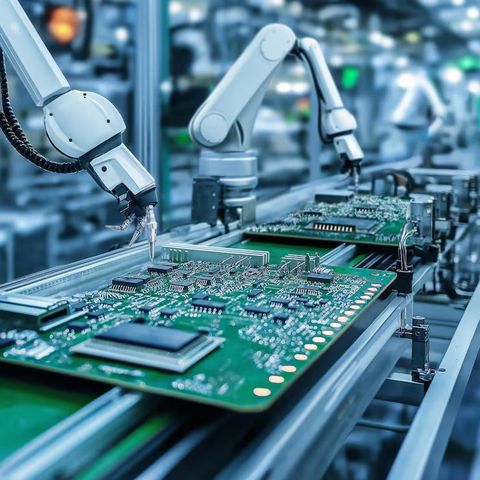
Industrial automation hardware is the foundation of modern manufacturing and industrial operations. It includes the physical devices and equipment that help machines, production lines, and industrial systems perform tasks automatically with minimal human intervention. From factories and warehouses to energy plants and processing facilities, automation hardware plays a vital role in improving efficiency, accuracy, safety, and productivity.
As industries continue adopting smart manufacturing and digital technologies, industrial automation hardware has become increasingly important. Businesses rely on sensors, controllers, motors, communication devices, and monitoring equipment to create automated systems that operate consistently and respond quickly to changing production requirements.
This guide explains industrial automation hardware in simple terms, covering its components, functions, benefits, applications, and recent developments in the field.
What Is Industrial Automation Hardware?
Industrial automation hardware refers to the physical equipment used to automate industrial processes, machines, and production systems. Unlike software, which provides instructions and data processing, hardware performs sensing, control, movement, communication, and power management tasks.
Automation hardware works together with control software to monitor industrial environments, collect data, execute commands, and manage equipment in real time. These systems reduce manual work while improving operational consistency and reliability.
Industrial automation hardware is commonly used in:
Manufacturing plants
Food and beverage processing
Automotive production
Pharmaceutical manufacturing
Oil and gas facilities
Chemical industries
Power generation
Warehousing and logistics
The combination of different hardware devices creates a complete automation system capable of handling complex industrial operations.
Why Industrial Automation Hardware Matters Today
Industrial environments demand speed, precision, and continuous operation. Manual processes often lead to inconsistencies, production delays, and increased operational costs. Automation hardware addresses these challenges by enabling machines to perform repetitive and critical tasks with greater accuracy.
The growing focus on Industry 4.0, smart factories, and connected manufacturing has increased the demand for reliable automation hardware. Modern industrial facilities use connected devices to collect operational data, monitor equipment performance, and optimize production.
Some reasons automation hardware is becoming essential include:
Higher production efficiency.
Improved product quality through consistent processes.
Better workplace safety.
Reduced machine downtime.
Faster monitoring and diagnostics.
Support for predictive maintenance.
Improved energy management.
Automation hardware also helps industries respond quickly to production changes and customer demands.
Main Components of Industrial Automation Hardware
Industrial automation systems consist of multiple hardware components that work together. Each device performs a specific role within the automation process.
Programmable Logic Controllers (PLCs)
Programmable Logic Controllers are specialized industrial computers used to control machines and production processes. PLCs receive input signals from sensors and execute programmed logic to control outputs.
PLCs are widely used because they are reliable, durable, and designed for harsh industrial environments.
Common PLC functions include:
Machine control.
Conveyor operation.
Packaging automation.
Motor control.
Process sequencing.
PLCs remain one of the most important hardware components in industrial automation.
Human Machine Interface (HMI)
An HMI allows operators to interact with industrial equipment. It provides visual displays, controls, alarms, and operational information through screens or touch panels.
HMI hardware helps operators:
Monitor machine status.
Start and stop equipment.
View production data.
Receive maintenance alerts.
Adjust operational parameters.
Modern HMIs often display real-time dashboards and historical performance information.
Industrial Sensors
Sensors collect information from machines and industrial environments. They detect physical conditions and convert them into signals for controllers.
Common sensor types include:
Temperature sensors.
Pressure sensors.
Proximity sensors.
Level sensors.
Flow sensors.
Motion sensors.
Optical sensors.
Sensors provide the real-time data needed for automated decision-making.
Actuators
Actuators convert electrical or pneumatic signals into physical movement. They allow machines to perform mechanical actions automatically.
Examples include:
Linear actuators.
Rotary actuators.
Pneumatic cylinders.
Hydraulic actuators.
Electric actuators.
Actuators move valves, robotic arms, conveyor components, and mechanical equipment.
Variable Frequency Drives (VFDs)
Variable Frequency Drives control the speed and torque of electric motors. Instead of running motors at constant speed, VFDs adjust motor performance according to operational needs.
Benefits include:
Energy savings.
Smooth motor starting.
Reduced mechanical wear.
Better speed control.
Improved production flexibility.
VFDs are commonly used in pumps, fans, conveyors, and compressors.
Industrial Motors
Electric motors power industrial machinery. Automation systems often integrate motors with PLCs, sensors, and drives for precise motion control.
Motor categories include:
AC motors.
DC motors.
Servo motors.
Stepper motors.
Gear motors.
The appropriate motor depends on torque, speed, precision, and application requirements.
Industrial Communication Devices
Automation hardware requires reliable communication between devices.
Common communication hardware includes:
Industrial Ethernet switches.
Communication gateways.
Fieldbus modules.
Wireless industrial communication devices.
Remote I/O modules.
These devices connect controllers, sensors, HMIs, and cloud platforms into a unified automation network.
How Industrial Automation Hardware Works Together
An automation system follows a simple sequence of operations:
Sensors detect conditions such as temperature, pressure, position, or movement.
PLCs receive sensor inputs.
The controller processes programmed logic.
Output devices receive commands.
Motors, actuators, or valves perform actions.
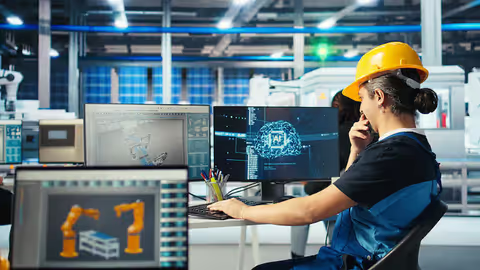
HMIs display system status for operators.
Communication hardware exchanges operational data across the network.
This continuous cycle allows industrial equipment to operate automatically while maintaining accuracy and consistency.
Types of Industrial Automation Systems
Industrial automation hardware supports several automation approaches depending on production needs.
Fixed Automation
Fixed automation is designed for repetitive, high-volume production.
Characteristics include:
Dedicated machinery.
High production speed.
Limited flexibility.
Consistent output.
Examples include assembly lines and continuous production systems.
Programmable Automation
Programmable automation supports batch manufacturing where products change periodically.
Advantages include:
Flexible programming.
Different production batches.
Reduced setup time.
Suitable for medium production volumes.
Flexible Automation
Flexible automation allows production systems to switch between products with minimal interruption.
It supports:
Customized manufacturing.
Robotics integration.
Automated material handling.
Real-time production adjustments.
Integrated Automation
Integrated automation combines hardware, software, networking, robotics, and monitoring into one connected system.
It enables:
Centralized control.
Data sharing across departments.
Smart factory operations.
Remote monitoring.
Benefits of Industrial Automation Hardware
Industrial automation hardware provides advantages across production, maintenance, safety, and operational management.
Increased Productivity
Automation systems operate continuously with consistent performance, increasing production output while reducing manual intervention.
Better Product Quality
Automated equipment performs tasks with high precision, reducing defects caused by human error and improving manufacturing consistency.
Improved Workplace Safety
Automation hardware handles hazardous tasks, reducing worker exposure to dangerous environments, heavy machinery, chemicals, and high temperatures.
Reduced Downtime
Connected hardware detects equipment issues early, allowing maintenance teams to respond before failures interrupt production.
Energy Efficiency
Motor drives, sensors, and intelligent controllers optimize energy consumption by adjusting equipment operation based on demand.
Real-Time Monitoring
Industrial hardware continuously collects operational data, helping operators monitor performance and identify abnormalities quickly.
Industries That Use Industrial Automation Hardware
Automation hardware supports nearly every major industrial sector.
Manufacturing
Manufacturing facilities use automation hardware for assembly, machining, welding, inspection, packaging, and material handling.
Food and Beverage
Automation helps maintain hygiene, consistency, temperature control, filling, labeling, and packaging processes.
Pharmaceutical Industry
Industrial hardware supports precision mixing, filling, packaging, environmental monitoring, and quality control.
Automotive Industry
Automation hardware powers robotic welding, painting, assembly lines, testing systems, and conveyor automation.
Energy and Utilities
Power plants and utility systems use automation hardware for monitoring equipment, controlling distribution systems, and managing energy production.
Oil and Gas
Automation hardware monitors pipelines, pumps, valves, storage systems, and processing equipment while improving operational safety.
Warehousing and Logistics
Automated warehouses rely on conveyors, robotic systems, barcode scanners, sensors, and sorting equipment to improve inventory movement.
Choosing the Right Industrial Automation Hardware
Selecting automation hardware depends on operational requirements rather than a single universal solution.
Important considerations include:
Application Requirements
Different industries require different controllers, sensors, motors, and communication devices based on the production process.
Environmental Conditions
Industrial hardware should withstand:
Heat.
Dust.
Moisture.
Vibration.
Chemicals.
Outdoor conditions where applicable.
Scalability
Choose hardware that can expand as production capacity or automation requirements grow.
Communication Compatibility
Automation devices should support compatible industrial communication protocols for seamless integration.
Maintenance and Reliability
Reliable hardware reduces downtime and supports long-term industrial operations through durable construction and diagnostic capabilities.
Industrial Automation Hardware and Industry 4.0
Industry 4.0 connects automation hardware with digital technologies to create intelligent manufacturing systems.
Automation hardware now supports:
Industrial Internet of Things (IIoT).
Cloud connectivity.
Edge computing.
Artificial intelligence integration.
Digital twins.
Predictive maintenance.
Smart analytics.
Connected devices collect operational information continuously, helping organizations improve productivity and maintenance planning.
Common Challenges in Industrial Automation Hardware
Although automation provides many benefits, implementation also presents challenges.
System Integration
Combining hardware from multiple manufacturers requires compatible communication standards and careful system design.
Maintenance Skills
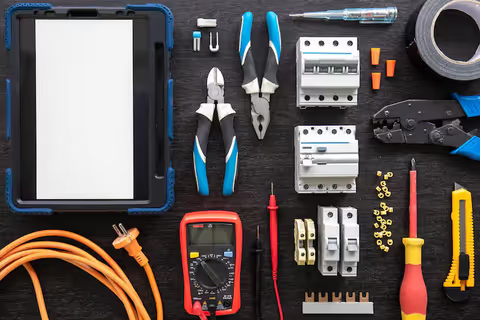
Modern automation hardware requires technicians with knowledge of controllers, networking, diagnostics, and industrial electronics.
Cybersecurity
Connected industrial devices require secure communication and access controls to protect operational systems.
Equipment Upgrades
Older industrial equipment may require additional hardware interfaces before integrating with modern automation systems.
Proper planning helps organizations overcome these challenges while maintaining reliable operations.
Recent Trends in Industrial Automation Hardware (2025–2026)
Industrial automation hardware continues evolving alongside smart manufacturing technologies.
AI-Enabled Controllers
Modern controllers increasingly support artificial intelligence for faster decision-making, anomaly detection, and adaptive process optimization.
Edge Computing Devices
Industrial edge hardware processes data locally, reducing latency and improving response times for critical operations.
Smarter Industrial Sensors
Advanced sensors now provide higher accuracy, self-diagnostics, and continuous condition monitoring for equipment health.
Industrial Ethernet Expansion
High-speed industrial networking continues replacing legacy communication systems in many facilities, improving connectivity and data exchange.
Energy Monitoring Hardware
Industries increasingly install intelligent power monitoring hardware to improve energy efficiency and sustainability reporting.
These developments help organizations build more connected, efficient, and data-driven industrial environments.
Best Practices for Using Industrial Automation Hardware
To maximize performance and reliability, organizations commonly follow several best practices:
Select hardware designed for industrial operating environments.
Use standardized communication protocols whenever possible.
Perform regular inspection and preventive maintenance.
Keep firmware and controller software updated according to operational policies.
Monitor equipment performance using diagnostic tools.
Train operators and maintenance personnel on automation systems.
Document hardware configurations for easier troubleshooting and future upgrades.
These practices help improve long-term reliability and reduce operational interruptions.
The Future of Industrial Automation Hardware
Industrial automation hardware is expected to become more intelligent, connected, and energy efficient. Future systems will integrate advanced sensors, AI-assisted controllers, robotics, machine vision, and real-time analytics into everyday industrial operations.
Manufacturers are also moving toward modular hardware designs that simplify upgrades and support flexible production environments. As sustainability becomes a larger priority, automation hardware will continue helping industries monitor resource usage, reduce waste, and improve overall operational efficiency.
The future of industrial automation will likely focus on greater interoperability between devices, faster communication networks, predictive maintenance capabilities, and closer integration between physical equipment and digital manufacturing platforms.
Conclusion
Industrial automation hardware is the physical backbone of automated industrial systems. It enables machines, production lines, and industrial processes to operate with greater precision, consistency, and efficiency while reducing manual intervention. Components such as PLCs, HMIs, sensors, actuators, motors, communication devices, and variable frequency drives work together to create reliable automation systems across manufacturing, energy, logistics, pharmaceuticals, food processing, and many other industries.
As Industry 4.0 technologies continue evolving through 2025 and 2026, industrial automation hardware is becoming smarter, more connected, and more capable of supporting real-time monitoring, predictive maintenance, and intelligent manufacturing. Understanding these hardware components and their applications helps businesses, engineers, technicians, and learners build a strong foundation for modern industrial automation systems and future-ready industrial operations.