Industrial Automation Development Tools: A Complete Guide to Modern Industrial Software and Systems
Industrial automation development tools have become an essential part of modern manufacturing, production, and industrial operations. As industries continue to adopt smart technologies, businesses rely on software tools to design, program, monitor, and maintain automated systems that improve efficiency and reduce manual intervention.
These development tools help engineers create automation logic, configure industrial devices, connect machines, collect production data, and optimize industrial processes. They are widely used across factories, warehouses, utilities, energy plants, food processing facilities, pharmaceutical manufacturing, automotive production, and many other industrial environments.
Today, industrial automation is no longer limited to large manufacturing companies. Small and medium-sized industries also use automation development tools to improve productivity, maintain consistent quality, reduce downtime, and support digital transformation initiatives.
This guide explains what industrial automation development tools are, why they matter, how they work, the different types available, important features, recent industry trends, and practical considerations for selecting the right tools.
What Are Industrial Automation Development Tools?
Industrial automation development tools are software applications and programming environments used to create, configure, test, deploy, and manage automated industrial systems. They provide engineers with the ability to build control logic that communicates with industrial equipment such as programmable logic controllers, sensors, robots, motors, drives, and human-machine interfaces.
These tools act as the bridge between industrial hardware and software. Instead of manually controlling machines, engineers create automation programs that define how equipment should respond to different conditions.
A typical automation development environment includes programming editors, simulation tools, device configuration panels, communication settings, diagnostics, and monitoring dashboards. Together, these features simplify the development and maintenance of industrial control systems.
Industrial automation tools are commonly used throughout the entire automation lifecycle, from system design and commissioning to troubleshooting and future upgrades.
Why Industrial Automation Development Tools Matter Today
Industries are under increasing pressure to improve productivity while maintaining safety, accuracy, and operational efficiency. Automation development tools make this possible by providing structured ways to manage complex industrial systems.
One major advantage is consistency. Automated control logic performs repetitive operations with the same accuracy every time, reducing the possibility of human error.
Another important benefit is faster engineering development. Instead of wiring every function manually, engineers can create reusable software modules, templates, and libraries that simplify programming across multiple machines or production lines.
Automation tools also improve visibility into industrial operations. They allow operators and engineers to monitor machine status, alarms, production performance, energy usage, and maintenance information from centralized interfaces.
As industries adopt Industry 4.0 technologies, automation development platforms increasingly support connectivity with cloud systems, analytics software, industrial Internet of Things platforms, and enterprise resource planning systems.
How Industrial Automation Development Tools Work
Automation development follows a structured workflow that begins with designing the industrial process and ends with deploying programs to physical equipment.
Engineers first define process requirements, including machine sequences, sensor inputs, actuator outputs, timers, alarms, and safety conditions.
The development tool is then used to create control logic using standardized industrial programming languages. After programming, engineers configure hardware devices, communication networks, and industrial protocols.
Many development environments include simulation capabilities that allow programs to be tested before connecting to real machines. This reduces commissioning time and helps identify programming issues early.
Once testing is complete, the software is downloaded to industrial controllers where it executes in real time. During operation, the same development tool can monitor variables, diagnose faults, update firmware, modify programs, and collect operational data.
This complete workflow supports efficient development while minimizing production interruptions.
Types of Industrial Automation Development Tools
Industrial automation includes several categories of development tools, each serving different roles within an automation system.
PLC Programming Software
Programmable Logic Controller development software is used to create logic that controls industrial machines and equipment. Engineers use graphical programming methods as well as structured programming languages to define machine behavior.
PLC software manages digital inputs, outputs, timers, counters, memory, communication, motion control, and safety functions.
HMI Development Software
Human-Machine Interface development tools create visual screens that operators use to interact with industrial equipment.
These interfaces display machine status, alarms, production counts, temperatures, pressures, and operational controls. Modern HMI tools support touchscreen interfaces, remote monitoring, multilingual displays, and customizable dashboards.
SCADA Development Platforms
Supervisory Control and Data Acquisition tools monitor and control large industrial systems from centralized control rooms.
SCADA development environments connect multiple PLCs, remote devices, sensors, and industrial databases into one monitoring platform. They provide visualization, alarm management, historical trends, reporting, and remote operation capabilities.
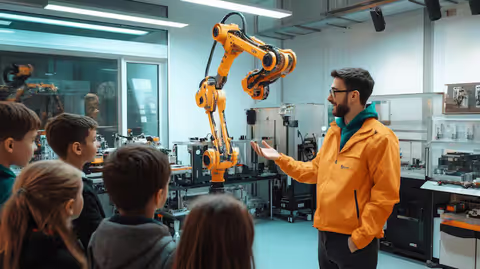
Industrial Robot Programming Tools
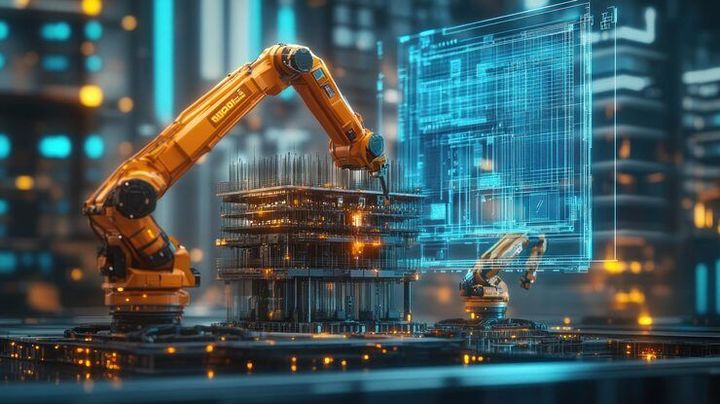
Robot development software allows engineers to configure robotic arms, motion sequences, coordinate systems, and production tasks.
These tools often include offline programming, collision detection, path optimization, and robotic simulation before deployment on production lines.
Motion Control Development Tools
Motion control software configures servo drives, motors, encoders, positioning systems, conveyors, and synchronized machine movement.
These tools help create accurate positioning, speed control, and coordinated multi-axis motion.
Key Features of Modern Automation Development Tools
Modern industrial automation software includes advanced capabilities that support increasingly connected production environments.
Visual Programming Environment
Many development platforms use graphical programming environments that simplify complex industrial logic through diagrams, function blocks, and reusable modules.
This approach improves readability and collaboration among engineering teams.
Device Configuration
Automation tools automatically detect compatible industrial hardware and simplify device configuration through templates and configuration wizards.
Engineers can assign addresses, communication parameters, network settings, and diagnostics without extensive manual setup.
Simulation and Testing
Simulation environments allow engineers to validate programs without connecting physical equipment.
Virtual testing reduces development risks, shortens commissioning time, and improves program reliability before deployment.
Diagnostics and Troubleshooting
Built-in diagnostic tools monitor controller status, communication errors, sensor values, alarms, and program execution.
Real-time troubleshooting helps reduce downtime during production.
Data Logging and Monitoring
Automation software records operational data such as temperatures, cycle times, machine utilization, production counts, and maintenance events.
Historical records support performance analysis and predictive maintenance strategies.
Version Management
Many development tools support project backups, version history, and collaborative engineering workflows, making it easier to manage updates across industrial systems.
Programming Languages Used in Industrial Automation
Industrial automation development tools commonly support internationally standardized programming languages for industrial control systems.
Ladder Diagram is one of the most widely used graphical programming methods because it resembles traditional electrical relay circuits and is easy for maintenance teams to understand.
Structured Text provides a text-based programming language suitable for mathematical calculations, loops, conditional logic, and advanced automation functions.
Function Block Diagram uses interconnected functional blocks to represent industrial operations visually, making it useful for process automation and reusable control functions.
Sequential Function Chart organizes automation into logical operating sequences and transitions between machine states.
Instruction List has historically been used in some automation systems, although many modern platforms have shifted toward more advanced programming methods.
Supporting multiple programming languages allows engineering teams to choose the most suitable approach for different applications.
Common Applications Across Industries
Industrial automation development tools support a wide range of industrial operations.
Manufacturing industries use automation software for assembly lines, packaging systems, machine control, conveyor automation, and quality inspection.
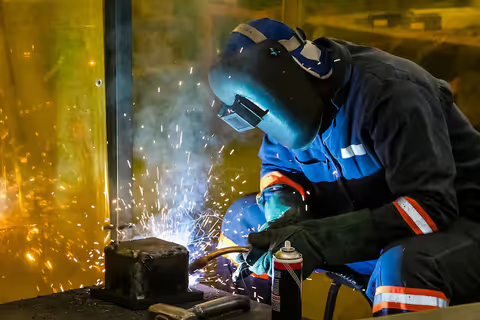
Automotive production relies on automation development for robotic welding, painting, material handling, and production sequencing.
Food and beverage facilities use automation tools to manage mixing, filling, packaging, temperature control, and sanitation processes.
Pharmaceutical manufacturing uses automated systems to maintain precise production conditions, batch control, and regulatory documentation.
Energy and utilities apply automation software for power distribution, substations, water treatment plants, renewable energy systems, and industrial monitoring.
Warehouse automation uses these tools for automated storage systems, conveyors, barcode systems, robotic sorting, and logistics operations.
Each industry adapts automation development tools according to operational requirements while maintaining reliability and safety.
Industrial Communication and System Integration
Automation development tools play a major role in connecting different industrial devices through communication protocols.
Industrial communication enables controllers, sensors, actuators, drives, HMIs, and SCADA systems to exchange information continuously.
Development software helps configure communication networks, assign device addresses, monitor network health, and diagnose communication issues.
Modern automation environments often support Ethernet-based industrial networking alongside traditional fieldbus communication systems. This improves connectivity between production equipment and higher-level information systems.
Integration capabilities also allow automation software to exchange production data with manufacturing execution systems, maintenance platforms, quality management software, and enterprise applications.
This connected environment creates a more transparent and data-driven industrial operation.
Recent Trends in Industrial Automation Development Tools
Industrial automation development tools have evolved significantly during the past year as industries continue adopting digital manufacturing technologies.
Artificial intelligence is becoming integrated into automation software to support predictive maintenance, anomaly detection, intelligent diagnostics, and production optimization.
Digital twin technology is allowing engineers to create virtual replicas of machines and production systems for simulation, testing, and performance analysis before deployment.
Cloud-enabled engineering platforms now provide remote project access, collaborative development, centralized backups, and distributed engineering workflows.
Cybersecurity has become a stronger focus within automation software, with improved authentication, secure communication, encrypted connections, and access management features.
Low-code engineering capabilities are also emerging, helping engineers build automation workflows through configurable templates while reducing repetitive programming tasks.
These developments reflect the industry's shift toward smarter, more connected industrial environments.
Choosing the Right Industrial Automation Development Tools
Selecting automation development software depends on technical, operational, and long-term maintenance requirements.
Compatibility with existing industrial hardware is one of the most important considerations. Development tools should support controllers, communication devices, sensors, and industrial equipment already used within the facility.
Ease of programming is another important factor. Clear interfaces, reusable libraries, debugging tools, and documentation simplify engineering work and reduce learning time.
Scalability helps organizations expand automation systems without rebuilding existing projects. Flexible software supports future production growth and additional equipment integration.
Reliable diagnostics and monitoring capabilities improve maintenance efficiency by providing detailed operational visibility.
Training resources, documentation, and standardized programming methods also contribute to successful long-term automation projects.
Best Practices for Automation Development Projects
Successful automation projects begin with clear planning and structured system design.
Engineers should define process requirements before writing control logic. Well-organized project structures make future maintenance easier.
Reusable programming modules reduce duplication and improve consistency across machines.
Simulation and testing before deployment help identify logic errors and communication problems before equipment enters production.
Proper documentation of variables, devices, communication settings, alarms, and operating sequences simplifies troubleshooting and future upgrades.
Regular software backups and version management protect projects from accidental data loss during maintenance or system modifications.
Following standardized programming practices also improves collaboration between engineering, maintenance, and operations teams.
The Future of Industrial Automation Development
Industrial automation development tools are becoming more intelligent, connected, and collaborative. Future automation platforms are expected to combine AI-assisted programming, advanced simulation, cloud engineering, edge computing, and real-time analytics into unified development environments.
As factories become increasingly data-driven, automation software will play a larger role in connecting operational technology with information technology systems. Engineers will be able to develop, monitor, and optimize industrial processes from centralized digital platforms while maintaining secure and reliable industrial operations.
The continued growth of smart manufacturing, industrial IoT, robotics, and predictive maintenance will further increase the importance of flexible automation development tools across industries of every size.
Frequently Asked Questions
What are industrial automation development tools?
Industrial automation development tools are software applications used to design, program, configure, test, deploy, and maintain automated industrial control systems and connected equipment.
Which industries use automation development tools?
They are widely used in manufacturing, automotive, food processing, pharmaceuticals, energy, utilities, logistics, warehouse automation, chemical processing, and many other industrial sectors.
What is the difference between PLC, HMI, and SCADA development tools?
PLC tools create control logic for machines, HMI tools build operator interfaces for machine interaction, and SCADA tools monitor and control multiple industrial systems from centralized platforms.
Why is simulation important in industrial automation software?
Simulation allows engineers to test automation programs in a virtual environment before connecting physical equipment, reducing commissioning time and minimizing programming errors.
Do industrial automation development tools support Industry 4.0 technologies?
Yes. Modern development tools increasingly support industrial IoT connectivity, cloud integration, AI-based diagnostics, digital twins, real-time monitoring, and advanced industrial communication protocols.
Conclusion
Industrial automation development tools form the foundation of modern automated manufacturing and industrial control systems. They help engineers transform complex industrial processes into reliable, repeatable, and efficient automated operations through programming, simulation, monitoring, and diagnostics.
As industrial technology continues evolving, these tools are becoming more integrated with artificial intelligence, cloud platforms, digital twins, and industrial IoT ecosystems. Their ability to connect machines, collect operational data, improve maintenance, and optimize production makes them an essential part of digital manufacturing strategies.
Understanding how industrial automation development tools work, their core features, programming methods, communication capabilities, and emerging trends helps organizations build scalable automation systems that support productivity, safety, and long-term operational efficiency.