Blower Selection Tips: How to Choose the Right Blower
Choosing the right blower is important for maintaining reliable airflow, pressure, process performance, and energy efficiency. Blowers are used in many industrial and commercial applications, including ventilation, pneumatic conveying, wastewater treatment, combustion air supply, dust collection, drying systems, and material handling.
A blower should not be selected only by looking at its motor size or airflow rating. The correct choice depends on several operating conditions, including required airflow, pressure, temperature, gas characteristics, installation environment, operating schedule, and control requirements.
A well-planned selection process helps ensure that the blower can meet the application's actual requirements without being unnecessarily oversized or undersized. Understanding these factors makes it easier to compare blower types and identify a configuration that matches the intended operating conditions.
Understand Airflow and Pressure Requirements
The first step in blower selection is identifying the required airflow and pressure. Airflow describes how much gas the blower needs to move over a specific period, while pressure indicates the resistance the blower must overcome.
Airflow is commonly expressed using units such as cubic feet per minute or cubic meters per hour. Pressure may be expressed as pressure rise, static pressure, differential pressure, or similar measurements depending on the application.
Both values should be considered together. A blower capable of producing high airflow may not provide enough pressure for a system with significant resistance. Similarly, selecting equipment with substantially more capacity than required can create unnecessary energy consumption and operating problems.
The system's total pressure requirement should include losses from ducts, pipes, filters, valves, bends, heat exchangers, silencers, and other components. Understanding the complete system resistance is therefore essential before choosing a blower.
Select the Appropriate Blower Type
Different blower designs are intended for different combinations of airflow, pressure, control requirements, and operating conditions. Common categories include centrifugal blowers, positive displacement blowers, regenerative blowers, and specialized industrial blower designs.
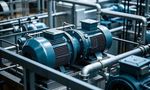
Centrifugal blowers use rotating impellers to increase the velocity of air or gas and convert that velocity into pressure. They are widely used in ventilation, combustion air, cooling, dust collection, and industrial process systems.
Positive displacement blowers move a relatively defined volume of gas during each operating cycle. Rotary lobe blowers are a common example and are often used where consistent airflow and moderate pressure requirements are important.
Regenerative or side-channel blowers can be suitable for applications requiring relatively clean air and moderate pressure or vacuum. Their compact design can make them useful for certain air-handling and process applications.
The best blower type depends on the complete operating profile rather than a single specification. Comparing blower curves and application requirements is more useful than selecting a design simply because it is commonly used in a particular industry.
Check the Operating Point
The operating point is one of the most important considerations in blower selection. It represents the combination of airflow and pressure at which the blower is expected to operate.
Manufacturers generally provide performance curves showing how airflow and pressure change under different conditions. The desired operating point should be compared with the blower's performance curve to determine whether the equipment can provide the required capacity.
A blower that operates close to an appropriate design point can generally provide more predictable performance. Selecting a blower based only on its maximum airflow or maximum pressure can produce misleading results because these maximum values may not occur at the same operating condition.
It is also useful to consider whether the application will operate at one fixed point or across a range of conditions. Variable operating requirements may influence the choice of blower and control system.
Consider Gas and Air Characteristics
The material being moved through the blower can significantly affect selection. Clean atmospheric air is relatively straightforward, but industrial processes may involve heated air, humid air, dust-laden air, corrosive gases, or other unusual conditions.
Temperature affects gas density and can influence blower performance. High-temperature applications may require components and materials designed for elevated operating temperatures.
Moisture can also affect equipment selection, particularly when condensation is possible. Dust and particulate matter may require additional protection or a blower design appropriate for contaminated air.
For corrosive or chemically active gases, the construction materials must be compatible with the gas being handled. Information about gas composition, concentration, temperature, humidity, and particulate content should therefore be available before final selection.
Evaluate Efficiency and Energy Use
Blowers can operate for long periods, making energy performance an important part of the selection process. The blower, motor, transmission, and control system should be considered as a complete system rather than independently.
A blower that is larger than necessary may consume more energy than required, particularly when the system frequently operates below its intended capacity. On the other hand, an undersized blower may operate continuously at its limits and fail to provide sufficient process performance.
The system design also matters. Excessive pressure losses caused by undersized ducts, unnecessary bends, restricted filters, or poorly designed piping can force the blower to work harder.
Where operating demand changes throughout the day, variable-speed control may allow airflow to be adjusted according to actual requirements. This can be particularly useful in systems with changing production loads or ventilation demands.
Consider Installation Conditions
Physical installation requirements should be evaluated before selecting a blower. Available floor space, mounting arrangements, inlet and outlet orientation, duct connections, ambient temperature, ventilation, and access for maintenance can all affect the practical suitability of a particular design.
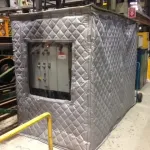
Noise and vibration should also be considered. Some applications are located close to workers or sensitive equipment, making acoustic performance an important factor.
The installation environment can influence motor and electrical requirements as well. Dust, moisture, outdoor exposure, high ambient temperatures, or restricted ventilation may require additional protection.
Planning these factors early can prevent situations where a technically suitable blower becomes difficult to install or maintain.
Think About Controls and System Integration
Modern blower systems often require more than a motor and rotating assembly. Controls can be used to regulate airflow, pressure, startup, shutdown, and operating speed.
A fixed-speed arrangement may be appropriate when airflow requirements remain relatively constant. Applications with changing demand may benefit from variable-speed control, provided the blower and motor are suitable for that operating method.
Pressure sensors, airflow measurement, temperature monitoring, and other instrumentation can also help operators understand system performance. Proper controls can improve process consistency and make it easier to identify changes in operating conditions.
The control strategy should therefore be considered during blower selection rather than added as an afterthought.
Plan for Maintenance and Reliability
Maintenance requirements are another important selection factor. Blowers contain moving components that may require inspection, lubrication, cleaning, alignment checks, bearing attention, or replacement of wear components depending on their design.
Accessibility is particularly important in industrial environments. A blower that is difficult to inspect or service may increase downtime during routine maintenance.
The expected operating schedule should also influence the selection. Equipment operating continuously may require a different reliability approach from a blower used intermittently.
It is useful to consider the availability of replacement components, technical documentation, maintenance procedures, and compatible accessories before finalizing the equipment specification.
Avoid Common Blower Selection Mistakes
One common mistake is choosing a blower solely from its advertised maximum airflow. Maximum capacity does not necessarily represent performance at the application's required pressure.
Another mistake is ignoring the complete system resistance. Ducts, filters, valves, silencers, and other components can create substantial pressure losses that must be included in the calculation.
Selecting excessive capacity as a safety margin can also create problems. Oversized equipment may operate away from its most appropriate operating range and may require additional control measures.
Finally, relying on assumptions instead of accurate application data can lead to incorrect selection. Airflow, pressure, temperature, gas composition, operating hours, and installation conditions should be clearly defined whenever possible.
A Practical Approach to Blower Selection
A practical selection process begins by defining the required airflow and pressure at the actual operating conditions. The next step is to identify the gas characteristics and environmental conditions. Suitable blower types can then be compared using their performance curves.
The evaluation should include efficiency, motor requirements, controls, noise, vibration, installation dimensions, maintenance access, and expected operating schedule. It is also useful to examine the system as a whole because improving duct design or reducing unnecessary pressure losses can influence the blower requirement.
The final selection should be based on the actual operating point and the application's long-term requirements rather than a single headline specification.
Conclusion
Blower selection is a system-level decision that involves much more than choosing an airflow rating. The required airflow, pressure, operating point, blower type, gas characteristics, temperature, efficiency, installation conditions, controls, and maintenance requirements all contribute to the final choice.
By defining operating requirements accurately and comparing blower performance under realistic conditions, users can avoid common sizing problems and achieve more predictable system performance. A careful selection process also helps support efficient operation, reliable airflow, easier maintenance, and better integration with the overall process.
The most useful blower selection approach is therefore one that starts with the application, evaluates the complete system, and then identifies equipment capable of meeting those requirements under real operating conditions.

You May Also Like