Industrial Robotics Explained: Types, Uses, Benefits, and Future Trends
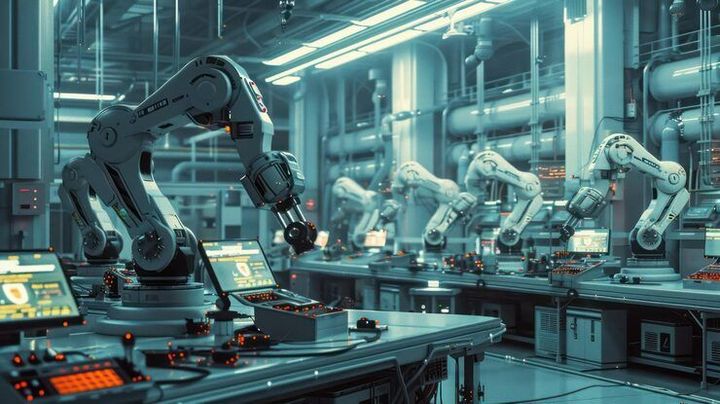
Industrial robotics has become one of the most important technologies shaping modern manufacturing and production. From assembling vehicles to packaging food and inspecting electronic devices, robots are now performing tasks that require speed, accuracy, and consistency. As industries continue adopting automation, understanding industrial robotics helps businesses, students, and professionals stay informed about the future of production and technology.
This guide explains what industrial robotics is, how it works, the different types of industrial robots, their applications across industries, benefits, challenges, and emerging trends. The goal is to provide a clear and practical understanding of industrial robotics in simple language.
What Is Industrial Robotics?
Industrial robotics refers to the use of programmable machines that perform manufacturing and industrial tasks automatically or with minimal human intervention. These robotic systems are designed to handle repetitive, precise, or physically demanding work that would otherwise require manual labor.
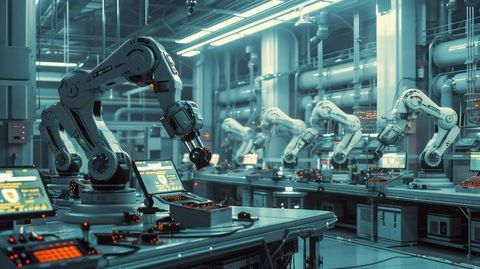
An industrial robot is typically made up of mechanical arms, sensors, controllers, software, and tools that allow it to perform specific operations. Unlike traditional machines built for a single fixed function, industrial robots can often be programmed and reprogrammed for different tasks.
Industrial robotics is widely used in factories, warehouses, logistics centers, pharmaceutical production, food processing, electronics manufacturing, and many other industries.
Why Industrial Robotics Matters Today
Automation has become increasingly important because industries face growing demands for higher productivity, improved quality, and workplace safety. Industrial robots help organizations meet these demands by performing tasks consistently and efficiently.
Industrial robotics matters because it helps:
Increase production speed.
Improve product quality and consistency.
Reduce workplace accidents.
Support manufacturing of complex products.
Handle hazardous or repetitive tasks safely.
Improve operational efficiency.
As technology advances, robots are becoming more intelligent, flexible, and capable of working alongside humans rather than replacing every manual process.
How Industrial Robotics Works
Industrial robotic systems combine hardware and software to perform programmed actions. Each component has a specific role in the overall system.
Robot Arm
The robotic arm provides movement and positioning. It consists of multiple joints and links that mimic the motion of a human arm.
Controller
The controller acts as the robot's brain. It receives programmed instructions and coordinates movements, speed, and precision.
Sensors
Sensors help robots detect position, distance, force, temperature, pressure, or nearby objects. They improve accuracy and safety during operations.
End Effector
The end effector is the tool attached to the robot's arm. Depending on the task, it may be a gripper, welding tool, vacuum suction cup, paint sprayer, cutting tool, or screwdriver.
Programming Software
Software allows engineers to define movement paths, task sequences, safety rules, and operating parameters. Many modern robots support graphical programming and simulation before deployment.
Main Types of Industrial Robots
Different industries require different robotic designs depending on the task.
Articulated Robots
Articulated robots have multiple rotating joints and offer excellent flexibility. They are commonly used for welding, assembly, painting, and material handling.
SCARA Robots
SCARA robots are designed for fast horizontal movements and precision assembly tasks. They are widely used in electronics manufacturing and packaging.
Cartesian Robots
Cartesian robots move along straight X, Y, and Z axes. They are commonly used for CNC operations, pick-and-place systems, and 3D printing.
Delta Robots
Delta robots feature lightweight arms connected to a central base. They are ideal for high-speed sorting, packaging, and food processing.
Cylindrical Robots
Cylindrical robots combine rotational and linear movements. They are often used for machine loading, assembly, and material transfer.
Collaborative Robots (Cobots)
Collaborative robots are designed to safely work alongside humans. They include built-in safety features and are increasingly popular among small and medium-sized manufacturers.
Common Applications of Industrial Robotics
Industrial robotics supports a wide range of manufacturing and operational processes.
Assembly Operations
Robots assemble products with consistent precision, reducing errors in industries like electronics, automotive, and consumer goods.
Welding
Robotic welding improves accuracy, reduces defects, and enhances worker safety by handling high-temperature operations.
Painting and Coating
Robots apply paint and coatings evenly while reducing waste and maintaining consistent finishes.
Material Handling
Robots lift, transport, stack, and organize materials in factories and warehouses with greater efficiency.
Packaging and Palletizing
Industrial robots package products, label containers, and stack goods onto pallets for storage or shipping.
Inspection and Quality Control
Vision systems and sensors allow robots to inspect products for defects, measurements, and quality standards.
Machine Tending
Robots load and unload CNC machines, injection molding machines, and production equipment automatically.
Industries That Use Industrial Robotics
Industrial robotics is expanding into many sectors beyond traditional manufacturing.
Automotive Industry
The automotive sector is one of the largest users of industrial robots for welding, assembly, painting, inspection, and material transport.
Electronics Manufacturing
Robots assemble circuit boards, smartphones, semiconductors, and other precision electronic components.
Food and Beverage Industry
Industrial robots assist with sorting, packaging, palletizing, and handling food products while maintaining hygiene standards.
Pharmaceutical Industry
Robots support medicine manufacturing, packaging, laboratory automation, and sterile handling processes.
Metal and Heavy Manufacturing
Industrial robots perform cutting, grinding, polishing, welding, and heavy material handling operations.
Logistics and Warehousing
Robotic systems help automate storage, sorting, order fulfillment, and warehouse transportation tasks.
Benefits of Industrial Robotics
Industrial robotics offers advantages for both manufacturers and workers.
Higher Productivity
Robots can operate continuously with minimal downtime, increasing production output and reducing delays.
Improved Accuracy
Automated systems perform tasks with high precision, helping reduce manufacturing defects and improve consistency.
Better Workplace Safety
Robots handle hazardous materials, heavy lifting, extreme temperatures, and repetitive movements, reducing employee exposure to risks.
Consistent Quality
Robots repeat the same task using identical movements and settings, producing uniform product quality.
Reduced Operational Errors
Automation minimizes human errors in repetitive manufacturing processes.
Flexibility in Manufacturing
Modern robots can be reprogrammed for new products, production lines, or manufacturing processes.
Challenges of Industrial Robotics
Despite its advantages, industrial robotics also presents certain challenges.
Initial Investment
Installing robotic systems requires planning, equipment integration, software development, and workforce training.
Skilled Workforce Requirements
Organizations need technicians, programmers, engineers, and maintenance professionals to manage robotic systems.
Maintenance and Downtime
Regular maintenance is essential to keep robots operating efficiently and prevent unexpected production interruptions.
Integration Complexity
Combining robots with existing machinery, sensors, and production software can require careful system design.
Cybersecurity Considerations
As industrial robots become connected through industrial networks and cloud platforms, protecting automation systems from cyber threats becomes increasingly important.
Industrial Robotics vs Traditional Automation
Although both improve manufacturing efficiency, industrial robotics and traditional automation differ in important ways.
Industrial Robotics | Traditional Automation |
| Programmable for multiple tasks. | Usually designed for one fixed process. |
| Flexible movement through robotic arms. | Limited movement based on machine design. |
| Can adapt to changing production requirements. | Requires major modifications for new tasks. |
| Often includes sensors and vision systems. | Typically relies on fixed mechanical controls. |
| Suitable for diverse manufacturing operations. | Best for repetitive fixed production lines. |
Many factories now combine traditional automation with robotic systems for greater flexibility and efficiency.
Key Components of an Industrial Robotics System
A complete industrial robotics setup includes several interconnected technologies.
Robotic Manipulator
Provides movement and positioning for performing tasks.
Drive Systems
Electric, hydraulic, or pneumatic drives generate motion for robot joints.
Vision Systems
Cameras and image processing software help robots recognize objects and inspect products.
Motion Control Software
Controls movement paths, speed, acceleration, and task coordination.
Human-Machine Interface
Operators monitor, configure, and manage robotic operations through user-friendly interfaces.
Safety Systems
Emergency stops, protective barriers, light curtains, and collision detection systems improve operational safety.
The Role of Artificial Intelligence in Industrial Robotics
Artificial intelligence is making industrial robots smarter and more adaptable.
AI-powered robots can:
Recognize objects using computer vision.
Learn from production data.
Detect quality defects automatically.
Optimize movement paths.
Predict maintenance requirements.
Adapt to changing production conditions.
Machine learning allows robotic systems to improve performance over time by analyzing operational data and identifying patterns.
Collaborative Robots: Working Alongside Humans
Collaborative robots, commonly called cobots, are changing how automation is implemented.
Unlike traditional industrial robots that often operate inside safety cages, cobots are designed to interact safely with human workers under appropriate safety standards.
Benefits of collaborative robots include:
Easier installation.
Flexible programming.
Smaller workspace requirements.
Support for repetitive manual tasks.
Improved worker productivity.
Cobots are commonly used in electronics assembly, packaging, laboratory automation, and light manufacturing.
Safety Standards in Industrial Robotics
Safety remains a critical part of industrial robotics implementation.
Organizations typically focus on:
Risk assessment before deployment.
Emergency stop mechanisms.
Collision detection technology.
Safety sensors and scanners.
Operator training.
Routine equipment inspection.
Modern robotic systems are designed to comply with international industrial safety standards depending on industry and region.
Emerging Trends in Industrial Robotics
Industrial robotics continues evolving as new technologies become available.
Smart Factories
Robots are becoming part of connected manufacturing environments where machines exchange real-time production data.
Internet of Things Integration
Connected sensors allow robots to communicate with production equipment, inventory systems, and maintenance platforms.
Digital Twins
Manufacturers create virtual models of robotic systems to simulate production, detect issues, and optimize performance before deployment.
Predictive Maintenance
Sensors continuously monitor robotic components and identify maintenance needs before failures occur.
Autonomous Mobile Robots
Mobile robots transport materials throughout warehouses and manufacturing facilities without fixed tracks.
Sustainable Manufacturing
Robotic systems help reduce material waste, energy consumption, and production inefficiencies through optimized operations.
Skills Needed for a Career in Industrial Robotics
As robotics adoption grows, demand for skilled professionals continues increasing across industries.
Useful skills include:
Robotics programming.
PLC programming.
Mechanical engineering fundamentals.
Electrical systems knowledge.
Automation control systems.
Sensor integration.
Machine vision basics.
Artificial intelligence and data analysis.
Industrial safety practices.
Career opportunities exist in manufacturing engineering, automation engineering, robotics maintenance, quality control, software development, and systems integration.
Common Misconceptions About Industrial Robotics
Several myths create confusion about industrial robotics.
Robots replace all human jobs: In practice, robots often automate repetitive or hazardous tasks while humans continue handling supervision, programming, maintenance, design, and complex decision-making.
Industrial robots only work in automotive factories: Robotics is now widely used in healthcare manufacturing, food processing, electronics, logistics, pharmaceuticals, and consumer goods production.
Robots never make mistakes: Robot performance depends on programming, maintenance, calibration, sensors, and production conditions.
Only large companies use industrial robotics: Smaller manufacturers increasingly adopt compact robotic systems and collaborative robots for flexible automation.
The Future of Industrial Robotics
Industrial robotics is expected to become more intelligent, connected, and adaptable. Future systems will increasingly combine robotics, artificial intelligence, cloud computing, machine vision, and industrial data analytics to support more efficient production environments.
Manufacturers are also moving toward flexible production lines where robots can switch between products with minimal reprogramming. Human workers and collaborative robots are likely to work together more closely, combining automation with human problem-solving and oversight.
As industries continue modernizing, industrial robotics will remain a key technology supporting productivity, quality improvement, workplace safety, and innovation across global manufacturing.
Conclusion
Industrial robotics has transformed the way products are manufactured, assembled, inspected, and delivered across many industries. These programmable machines improve efficiency, precision, consistency, and workplace safety while supporting increasingly complex production processes.
Understanding the different types of industrial robots, their applications, benefits, challenges, and future trends provides valuable insight into how automation is shaping modern industry. As technologies such as artificial intelligence, smart factories, collaborative robots, and predictive maintenance continue advancing, industrial robotics will play an even greater role in creating flexible, intelligent, and sustainable manufacturing systems for the future.