Industrial Power Machinery: Complete Guide to Types, Uses, Benefits, and Modern Industry Trends
Industrial power machinery is the backbone of manufacturing, construction, mining, agriculture, energy production, and many other industries. These machines provide the power needed to move materials, operate equipment, manufacture products, and support large-scale industrial operations. Without industrial power machinery, modern factories and infrastructure projects would struggle to achieve the speed, precision, and efficiency required in today's economy.
As industries continue adopting automation, digital monitoring, and energy-efficient systems, industrial power machinery is also evolving. New technologies are helping businesses improve productivity while reducing downtime, maintenance requirements, and energy consumption. Understanding how these machines work and where they are used helps businesses, students, engineers, and equipment operators make informed decisions.
This guide explains industrial power machinery in simple language, covering its purpose, major categories, applications, maintenance practices, safety considerations, and recent developments shaping the future of industrial operations.
What Is Industrial Power Machinery?
Industrial power machinery refers to heavy-duty mechanical equipment designed to generate, transmit, or convert power for industrial tasks. These machines transform electrical, hydraulic, pneumatic, or mechanical energy into useful motion that drives industrial equipment and production systems.
Power machinery can operate continuously for long periods under demanding conditions. Unlike household machines, industrial machinery is engineered for durability, precision, and high-capacity workloads.
These systems are commonly integrated into production lines, warehouses, manufacturing plants, power stations, processing facilities, and construction sites. They may work independently or as part of a larger automated system connected through sensors and industrial control equipment.
Industrial power machinery performs tasks such as lifting, rotating, compressing, pumping, cutting, mixing, drilling, conveying, and generating energy.
Why Industrial Power Machinery Is Important Today
Industrial development depends on reliable machinery that can perform repetitive and high-load operations with consistent performance. As industries grow, the demand for machines that improve operational efficiency also increases.
Industrial power machinery plays an important role in increasing production capacity while reducing manual labor. It helps industries maintain consistent product quality, improve workplace safety, and meet growing customer demand.
Modern industries also focus on sustainability. Energy-efficient machinery reduces electricity consumption, lowers emissions, and helps facilities achieve environmental goals. Smart monitoring systems allow operators to identify maintenance needs before equipment failures occur, reducing costly downtime.
Reliable machinery has become essential for industries transitioning toward automated manufacturing and Industry 4.0 technologies.
How Industrial Power Machinery Works
Industrial power machinery works by receiving energy from a power source and converting it into mechanical motion. Depending on the machine, this energy may come from electricity, hydraulic pressure, compressed air, combustion engines, or renewable energy systems.
Electric motors convert electrical energy into rotational movement. Hydraulic systems use pressurized fluid to generate powerful movement for lifting and pressing operations. Pneumatic systems rely on compressed air for fast and lightweight mechanical actions. Mechanical transmissions such as gears, shafts, belts, and couplings transfer power from one component to another.
Modern industrial machinery often combines several power systems with electronic controllers, programmable logic controllers (PLCs), and sensors that continuously monitor operating conditions.
This integration allows machines to operate with greater precision, efficiency, and safety.
Common Types of Industrial Power Machinery
Industrial facilities use different machinery depending on the application and power requirements.
Electric Motors
Electric motors are among the most widely used industrial power machines. They drive conveyor systems, compressors, pumps, fans, mixers, production equipment, and machine tools. They are valued for reliability, efficiency, and compatibility with automation systems.
Industrial Pumps
Industrial pumps move liquids, chemicals, wastewater, oils, and other fluids through pipelines and processing equipment. Different pump designs support different pressure and flow requirements across industries.
Air Compressors
Air compressors generate compressed air that powers pneumatic tools, packaging equipment, robotic systems, and manufacturing machinery. They are essential in automotive, textile, pharmaceutical, and food processing industries.
Hydraulic Power Units
Hydraulic systems generate high-force movement for presses, lifting equipment, construction machinery, injection molding machines, and industrial machinery requiring controlled heavy loads.
Industrial Generators
Generators provide backup or primary electrical power for factories, mining operations, construction projects, hospitals, and remote industrial facilities where continuous power is essential.
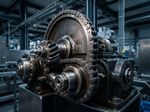
Gearboxes and Transmission Systems
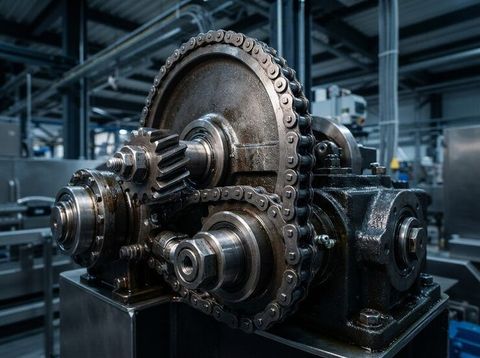
Gearboxes adjust speed and torque between motors and machinery. They help industrial equipment deliver the required power for conveyors, crushers, mills, and production systems.
Turbines
Industrial turbines convert fluid or gas energy into rotational power for electricity generation and large industrial processes.
Each category serves a specific industrial purpose while contributing to overall production efficiency.
Industries That Depend on Industrial Power Machinery
Industrial power machinery supports nearly every major industrial sector.
Manufacturing plants rely on machinery for assembly lines, machining, packaging, and material handling. Construction companies use powered equipment for excavation, lifting, drilling, and concrete processing. Mining operations depend on crushers, conveyors, drilling equipment, and heavy hydraulic machinery.
Agriculture uses powered irrigation systems, processing equipment, harvesting machinery, and grain handling systems. Energy facilities operate turbines, generators, pumps, compressors, and cooling systems.
Food processing industries use mixers, conveyors, refrigeration equipment, filling machines, and packaging systems powered by industrial motors and compressors.
Chemical, pharmaceutical, textile, and logistics industries also rely heavily on industrial power machinery for daily operations.
Main Components of Industrial Power Machinery
Industrial machinery includes several interconnected components that work together to deliver reliable performance.
Power sources generate the energy required for operation. Transmission systems distribute mechanical power through gears, belts, shafts, and couplings. Bearings reduce friction and support rotating components.
Control systems manage speed, pressure, temperature, and operational sequences using sensors and programmable controllers. Cooling and lubrication systems maintain proper operating temperatures and reduce wear on moving parts.
Protective components such as guards, emergency stop mechanisms, overload protection devices, and monitoring systems improve operational safety.
Each component contributes to machine efficiency, lifespan, and reliability.
Benefits of Modern Industrial Power Machinery
Modern industrial machinery offers significant operational advantages.
High-performance machines increase production speed while maintaining consistent quality. Automation reduces manual intervention, helping operators focus on monitoring and quality control rather than repetitive tasks.
Energy-efficient motors and intelligent drive systems reduce electricity consumption during operation. Predictive maintenance systems monitor vibration, temperature, pressure, and motor performance, allowing maintenance teams to address issues before failures occur.
Advanced machinery also improves workplace safety by reducing direct human interaction with hazardous processes.
Digital connectivity allows facility managers to monitor equipment remotely, analyze performance data, and optimize production schedules.
Energy Efficiency and Sustainable Industrial Operations
Energy efficiency has become a major focus across industrial sectors. Power machinery consumes a significant portion of industrial electricity, making efficiency improvements valuable for both operational performance and environmental responsibility.
Variable speed drives allow motors to operate only at the speed required by the application instead of running continuously at full capacity. High-efficiency motors reduce energy losses during operation.
Modern compressors automatically adjust output according to air demand, minimizing wasted energy. Smart pumps regulate flow based on system requirements instead of operating continuously at maximum output.
Industrial monitoring software tracks energy consumption across equipment, helping operators identify inefficient machines and optimize production processes.
These improvements contribute to more sustainable industrial operations without compromising productivity.
Industrial Power Machinery and Automation
Automation is transforming industrial machinery into intelligent production systems.
Sensors continuously collect information about vibration, temperature, pressure, motor load, and operational efficiency. Programmable logic controllers coordinate machine sequences across production lines.
Industrial Internet of Things technology connects machinery to centralized monitoring platforms where operators can view performance dashboards in real time.
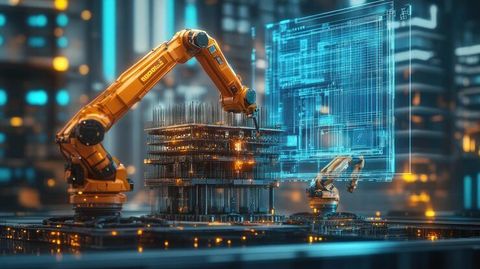
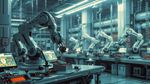
Robotics integrated with industrial machinery performs repetitive manufacturing tasks with greater accuracy. Machine vision systems inspect products automatically during production.
Automation improves production consistency while reducing unexpected equipment downtime and maintenance interruptions.
Maintenance Practices That Improve Machine Lifespan
Regular maintenance is essential for keeping industrial power machinery operating safely and efficiently.
Preventive maintenance includes scheduled inspections, lubrication, filter replacement, alignment checks, cleaning, and calibration. These routine activities help identify wear before major failures occur.
Predictive maintenance uses sensors and performance data to detect abnormal vibration, overheating, pressure changes, or unusual motor behavior. Maintenance teams can repair components before unexpected shutdowns happen.
Operators should also monitor lubrication quality, cooling systems, electrical connections, hydraulic pressure, and rotating components throughout the machine's operating life.
Proper maintenance reduces repair frequency, improves reliability, and extends equipment lifespan.
Safety Considerations When Operating Industrial Machinery
Industrial power machinery operates with high loads, rotating parts, electrical systems, and pressurized components. Safe operation requires proper procedures and regular inspections.
Operators should receive equipment-specific training before using machinery. Safety guards should remain in place during operation, and emergency stop systems should be tested regularly.
Routine inspections help identify loose components, damaged cables, hydraulic leaks, overheating, and excessive vibration before they become safety hazards.
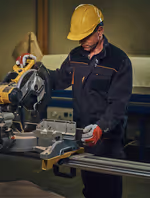
Personal protective equipment varies depending on the machine and working environment but generally includes protective helmets, gloves, eye protection, hearing protection, and appropriate footwear.
A well-maintained safety culture reduces workplace incidents and supports continuous industrial operations.
Recent Developments in Industrial Power Machinery
During the past year, industrial machinery has continued evolving through digitalization, automation, and energy optimization.
Manufacturers are introducing smart motors with built-in condition monitoring that continuously measure operating performance. Artificial intelligence is increasingly being used to analyze equipment data and predict maintenance requirements more accurately.
Industrial facilities are expanding the use of digital twins, allowing engineers to simulate machine performance before implementing operational changes.
Energy-efficient motor standards continue influencing equipment design, encouraging industries to replace older systems with more efficient alternatives.
Remote monitoring platforms have also become more common, allowing maintenance teams to supervise machinery across multiple facilities from centralized control centers.
These developments support improved productivity, reduced downtime, and more sustainable industrial operations.
Choosing Industrial Power Machinery for Different Applications
Selecting industrial machinery depends on operational requirements rather than machine size alone.
The application determines required power capacity, operating speed, load conditions, environmental exposure, and duty cycle. Indoor manufacturing facilities may prioritize energy efficiency and automation compatibility, while outdoor construction equipment requires durability under harsh conditions.
Compatibility with existing production systems is also important. Modern facilities often choose machinery that integrates with automation software, industrial sensors, and monitoring systems.
Maintenance accessibility, spare component availability, and long-term operational efficiency are practical considerations when planning industrial equipment upgrades.
Choosing equipment that matches operational needs helps improve reliability and production performance over time.
The Future of Industrial Power Machinery
Industrial power machinery is moving toward smarter, cleaner, and more connected systems. Automation, artificial intelligence, predictive maintenance, and energy-efficient technologies are becoming standard features across many industrial sectors.
Electrification is expanding in industries traditionally dependent on combustion-powered equipment. Renewable energy integration is influencing generators, pumps, compressors, and industrial drive systems. Data analytics is helping organizations optimize machine performance with greater accuracy.
Future industrial facilities are expected to rely more heavily on connected machinery that communicates with production management systems, enabling faster decision-making and improved operational efficiency.
As technology continues advancing, industrial power machinery will remain a critical foundation for manufacturing, infrastructure development, logistics, energy production, and sustainable industrial growth.
Frequently Asked Questions
What is industrial power machinery used for?
Industrial power machinery generates or transfers power to operate equipment used in manufacturing, construction, mining, agriculture, energy production, material handling, and industrial processing.
What powers industrial machinery?
Industrial machinery can be powered by electricity, hydraulic systems, pneumatic systems, combustion engines, turbines, or renewable energy sources depending on the application.
Why is preventive maintenance important?
Preventive maintenance helps identify wear, overheating, leaks, and alignment issues before equipment failures occur, improving reliability and extending machine lifespan.
How does automation improve industrial machinery?
Automation uses sensors, controllers, robotics, and monitoring software to improve accuracy, reduce manual intervention, increase productivity, and minimize unexpected downtime.
What makes modern industrial power machinery more energy efficient?
Modern machines use high-efficiency motors, variable speed drives, intelligent control systems, predictive monitoring, and optimized operating cycles to reduce energy consumption while maintaining performance.
Conclusion
Industrial power machinery forms the foundation of modern industrial operations by providing the mechanical power needed for production, transportation, processing, and infrastructure development. From electric motors and hydraulic systems to compressors, generators, pumps, and turbines, these machines support a wide range of industries with reliable and continuous performance.
As industrial technology advances, machinery is becoming more intelligent, energy efficient, and connected through automation and digital monitoring systems. Regular maintenance, safe operating practices, and efficient equipment selection help organizations maximize productivity while reducing downtime and operational risks.
Understanding industrial power machinery provides valuable knowledge for anyone interested in manufacturing, engineering, industrial operations, or modern infrastructure, making it an essential topic in today's rapidly evolving industrial landscape.