Espresso Machine Guide: Types, Features & Brewing Basics
An espresso machine is designed to brew concentrated coffee by forcing hot water through finely ground coffee under controlled pressure. Unlike many other brewing methods, espresso combines water temperature, pressure, grind size, coffee dose, and extraction time to produce a small, concentrated drink with a rich aroma and layered flavor.
For someone exploring espresso for the first time, choosing a machine can be confusing because models differ considerably in their operating systems, controls, automation, and intended use. Some require hands-on preparation, while others automate much of the brewing process.
Understanding how espresso machines work and what their major features do makes it easier to select a machine based on actual needs rather than simply choosing the most feature-heavy option.
What Is an Espresso Machine?
An espresso machine is a coffee-brewing appliance that heats water and pushes it through a compact bed of finely ground coffee. The brewing process produces espresso, which can be enjoyed on its own or used as the base for drinks such as cappuccinos, lattes, macchiatos, and Americanos.
A typical espresso machine includes several important components:
- Water reservoir: Holds the water used for brewing and steaming.
- Heating system: Brings water to an appropriate temperature.
- Pump or pressure system: Moves water through the coffee grounds.
- Group head: Directs brewing water into the coffee-filled portafilter.
- Portafilter: Holds the ground coffee during extraction.
- Steam wand: Produces steam for heating and texturing milk on compatible machines.
- Control system: Allows the user to start, stop, adjust, or automate brewing.
The interaction between these components has a major effect on the final cup.
How Does an Espresso Machine Work?
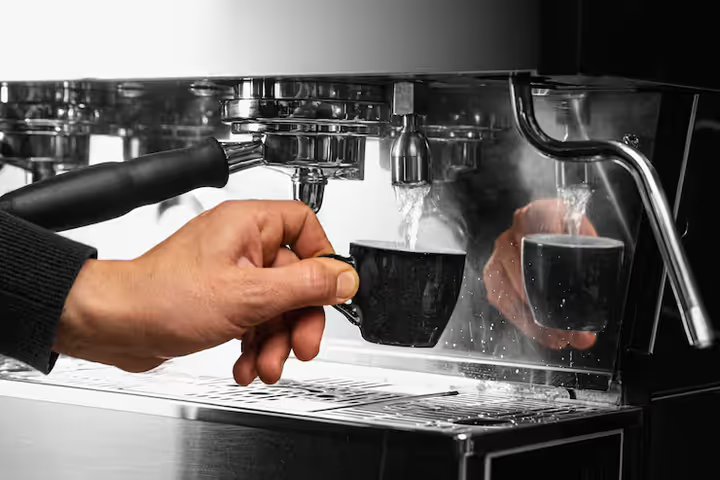
The basic process begins when water from the reservoir enters the machine's heating system. Once the water reaches the required brewing temperature, the machine sends it toward the coffee puck inside the portafilter.
The finely ground coffee creates resistance as water passes through it. The machine's pressure system helps push water through the grounds, extracting soluble compounds, oils, aromas, and other flavor components.
A balanced extraction depends on several variables working together. If the coffee is ground too coarsely, water may pass through too quickly. If it is ground excessively fine, water can struggle to flow through the coffee evenly.
This is why espresso preparation is not simply about pressing a button. Even small changes in grind size, coffee quantity, tamping, water temperature, and extraction time can influence the result.
Main Types of Espresso Machines
Espresso machines can generally be divided into several categories based on how much control they provide.
Manual Espresso Machines
Manual machines give the user substantial control over the brewing process. The operator may control water flow, extraction, and other aspects of preparation.
These machines can be useful for people who enjoy experimenting with espresso and learning the details of brewing. However, they require more practice and consistency than highly automated systems.
Semi-Automatic Espresso Machines
Semi-automatic machines are widely used because they combine hands-on preparation with automated pressure and water delivery. The user generally grinds the coffee, fills and tamps the portafilter, and starts the extraction.
This format provides a useful balance between control and convenience.
Automatic Espresso Machines
Automatic machines can control portions of the brewing process, including water delivery and extraction duration. They reduce the number of manual steps while still producing espresso from freshly prepared coffee grounds.
They can be suitable for users who want more consistency without handling every stage manually.
Super-Automatic Espresso Machines
Super-automatic machines automate much of the process, often including grinding, dosing, brewing, and, on some models, milk preparation.
Their primary advantage is convenience. They are particularly useful when multiple people want coffee with minimal preparation between drinks.
Capsule or Pod-Based Machines
Capsule machines use pre-portioned coffee capsules or pods rather than loose coffee grounds. Preparation is generally straightforward, with less grinding, dosing, and cleanup.
The trade-off is that users have less control over the coffee preparation process compared with machines using a traditional portafilter.
Important Features to Understand
Espresso machines can include many specifications, but not every feature matters equally to every user.
Heating system: Thermoblock systems, boilers, and other heating technologies can differ in how they manage brewing and steaming. Temperature stability is important because inconsistent water temperature can affect extraction.
Pressure system: Pressure helps move water through the coffee. However, higher pressure alone does not automatically mean better espresso. Consistent pressure and appropriate preparation are more important than focusing on a single specification.
Portafilter size: Portafilter dimensions affect the amount of coffee that can be prepared and the accessories that are compatible with the machine.
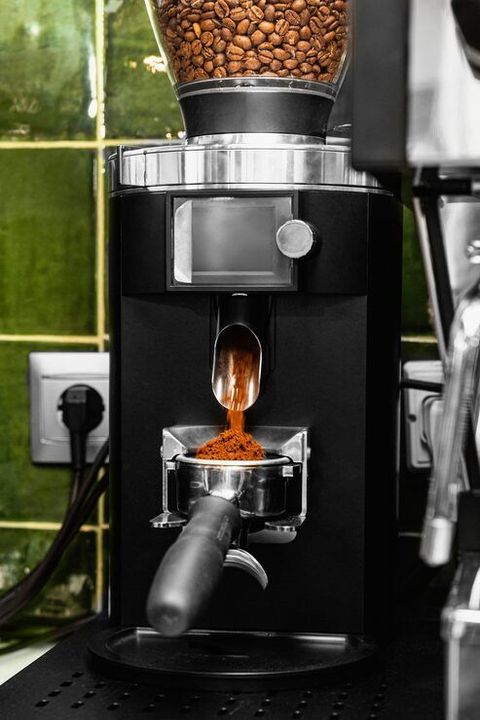
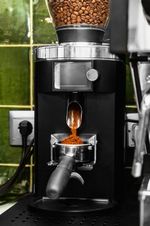
Grinder: Some machines include built-in grinders. A consistent grind is important because espresso requires relatively fine and uniform coffee particles.
Steam wand: Users who prepare milk-based beverages should consider the steam wand's control and performance. Producing good milk texture requires some technique.
Temperature controls: Adjustable temperature settings can be useful for experienced users who want to fine-tune extraction.
Programmable controls: These can simplify repeated brewing by allowing users to save or select preferred brewing parameters.
How to Choose an Espresso Machine
The right espresso machine depends more on usage habits than on the number of features.
Start by considering how often the machine will be used. Occasional users may prefer a simpler setup, while frequent users may benefit from faster preparation and greater automation.
Next, consider how much control you want. If learning espresso preparation is part of the experience, a semi-automatic machine can provide greater involvement. If convenience is the priority, an automatic or super-automatic machine may require less effort.
Think about the types of drinks you normally prepare. Someone who mainly drinks espresso may have different requirements from someone who regularly makes cappuccinos and lattes.
Also consider counter space, cleaning requirements, water capacity, grinder needs, and maintenance. A machine that fits your routine is generally more practical than one with features you rarely use.
Espresso Brewing Basics
Good espresso begins with suitable coffee and consistent preparation. Freshly ground coffee is generally easier to adjust because grind size can be changed according to extraction results.
A basic workflow is:
- Fill the machine with suitable water.
- Allow the machine to reach its operating temperature.
- Grind an appropriate amount of coffee.
- Distribute the grounds evenly in the portafilter.
- Tamp the coffee consistently.
- Lock the portafilter into the group head.
- Start the extraction.
- Observe the flow and adjust the grind or dose when necessary.
- Clean the brewing components after use.
The goal is not simply to extract coffee quickly. The objective is to achieve a balanced extraction in which desirable flavors are developed without excessive bitterness, sourness, or weak flavor.
Common Espresso-Making Mistakes
Several basic mistakes can make espresso inconsistent. Using an unsuitable grind size is one of the most common. Uneven distribution of coffee grounds can also create channels through which water flows too easily.
Another issue is inconsistent tamping or changing several variables at once. When adjusting espresso, it is usually easier to change one factor at a time and observe the result.
Neglecting cleaning can also affect flavor and machine performance. Coffee oils and residue can accumulate around brewing components, while milk residue can create hygiene problems if steam equipment is not cleaned properly.
Cleaning and Maintenance
Regular maintenance is an important part of owning an espresso machine. The portafilter and basket should be cleaned regularly, and the group head should be cleared of coffee residue.
Steam wands should be wiped and purged after milk use. Water reservoirs should also be emptied and cleaned according to the machine's instructions.
Some machines require periodic descaling to remove mineral buildup. The frequency depends on water quality and machine design. Following the manufacturer's maintenance instructions helps protect the equipment and maintain consistent brewing performance.
Conclusion
Choosing an espresso machine becomes easier when the decision is based on brewing habits rather than specifications alone. Manual and semi-automatic machines provide greater hands-on control, while automatic and super-automatic systems emphasize convenience. Capsule machines simplify preparation further.
Understanding extraction, grind size, temperature, pressure, milk steaming, cleaning, and maintenance can help users get better results from almost any suitable machine. The most practical choice is one that matches the user's preferred drinks, preparation style, available space, and willingness to learn the brewing process.