Laboratory Equipment Guide: Types, Uses and Safety
Laboratory equipment plays an essential role in scientific research, education, healthcare, industrial testing, and quality control. These instruments and tools help laboratory professionals measure substances, prepare samples, conduct experiments, examine materials, and analyze results. Understanding laboratory equipment is important for students, researchers, technicians, and anyone interested in how scientific testing works.
Different laboratories use different equipment depending on their purpose. A school science laboratory may contain microscopes, glassware, thermometers, and basic measuring instruments. A medical laboratory may use centrifuges, analyzers, and specialized sample-handling equipment, while an industrial laboratory may rely on testing machines, precision balances, and instruments for material analysis.
Choosing and using laboratory equipment correctly helps improve measurement accuracy, maintain consistent procedures, and reduce the risk of contamination or accidents. Familiarity with each instrument's purpose, limitations, operating requirements, and maintenance needs is therefore an important part of effective laboratory work.
What Is Laboratory Equipment?
Laboratory equipment refers to the instruments, apparatus, tools, and machines used to perform scientific procedures and technical investigations. It supports activities such as measuring, mixing, heating, cooling, separating, observing, and analyzing materials.
Some equipment is designed for simple tasks, such as holding a liquid or measuring temperature. Other instruments perform complex functions, including identifying chemical compounds, examining microorganisms, measuring material properties, or detecting specific substances in a sample.
Laboratory equipment can be classified according to its function, operating method, or application. Common categories include measuring instruments, glassware, heating equipment, sample preparation tools, analytical instruments, and protective equipment.
The appropriate equipment depends on the procedure being performed. A tool suitable for general classroom experiments may not provide the precision, contamination control, or documentation required in a regulated testing laboratory.
Common Types of Laboratory Equipment and Their Uses
1. Laboratory Glassware
Laboratory glassware is widely used to contain, transfer, mix, and measure liquids. Common examples include beakers, test tubes, conical flasks, graduated cylinders, and volumetric flasks.
Beakers are useful for holding liquids, mixing solutions, and carrying out procedures that do not require highly precise volume measurements. Graduated cylinders are designed to measure liquid volumes more accurately than ordinary beakers.
Volumetric flasks are used to prepare solutions at a specified volume, making them useful when a defined concentration is required. Test tubes hold relatively small samples and support a variety of laboratory procedures.
Glassware must be selected according to its intended purpose, material compatibility, and temperature limits. Damaged glassware should not be used because cracks or chips can cause breakage, leakage, or contamination.
2. Microscopes
Microscopes make small structures visible by magnifying details that cannot be observed clearly with the unaided eye. They are used in biology, medical testing, microbiology, materials science, and education.
Optical microscopes use visible light and lenses to magnify specimens. More specialized instruments, including electron microscopes, use different technologies to examine structures at much smaller scales.
The quality of microscopic observation depends on factors such as magnification, resolution, illumination, specimen preparation, and instrument condition. Higher magnification does not automatically produce a clearer image if the resolution or sample preparation is inadequate.
Proper cleaning, careful focusing, and appropriate slide preparation help maintain image quality and protect the instrument.
3. Laboratory Balances
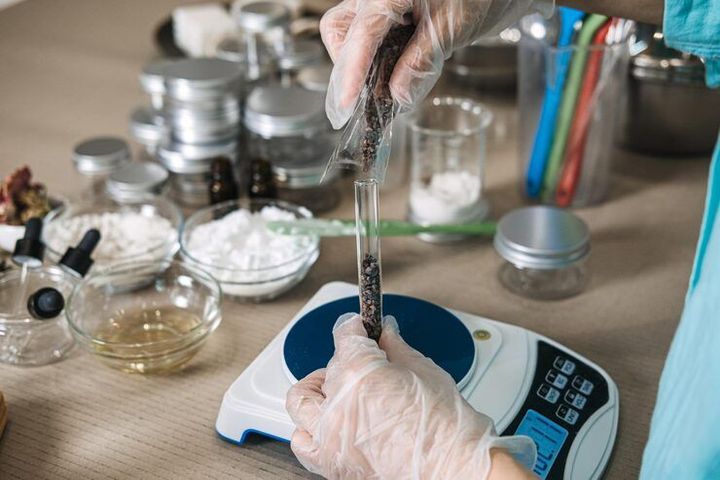
Laboratory balances measure the mass of samples and materials. They are important in chemical preparation, pharmaceutical testing, research, food analysis, and quality control.
An analytical balance is designed for highly precise measurements, while a general-purpose laboratory balance is suitable for applications with less demanding precision requirements.
Users should consider the balance's capacity, readability, calibration status, and environmental conditions. Air currents, vibration, temperature changes, and contamination can influence readings, particularly when very small quantities are measured.
Placing samples in suitable containers, keeping the weighing surface clean, and following the instrument's operating instructions can improve measurement reliability.
4. Centrifuges
Centrifuges separate components of a mixture by rotating samples at high speed. The resulting centrifugal force causes components to separate according to characteristics such as density, size, and shape.
These instruments are used in medical laboratories, biological research, chemical testing, and sample preparation. For example, a centrifuge may help separate cells from a liquid sample or isolate different fractions of a mixture.
Correct operation requires compatible tubes, balanced sample placement, suitable operating settings, and adherence to the manufacturer's instructions. The rotor and other components must be inspected as required, because damage or improper loading can create serious hazards.
5. Heating and Cooling Equipment
Heating and cooling equipment helps maintain samples at specific temperatures during experiments and testing procedures.
Laboratory hot plates provide controlled heating for compatible containers. Laboratory ovens are used for applications such as drying materials, while incubators maintain controlled environmental conditions for procedures that require stable temperatures.
Refrigerators and laboratory freezers preserve temperature-sensitive samples, reagents, and materials under specified conditions.
Temperature accuracy is important because excessive heat, insufficient cooling, or temperature fluctuations can change a sample's properties and affect experimental results. Equipment should be monitored and maintained according to its intended application.
6. Pipettes and Liquid Handling Tools
Pipettes transfer measured volumes of liquids and are widely used in chemical analysis, molecular biology, medical testing, and research.
Different pipettes support different volume ranges and accuracy requirements. Adjustable micropipettes are commonly used to transfer small liquid volumes, while larger-volume pipettes support other laboratory applications.
Correct technique is essential. Users should select a suitable pipette and compatible tips, avoid contamination between samples, and follow the instrument's operating instructions.
Pipettes may require periodic calibration or performance checks, depending on how they are used and the accuracy required. Damaged or poorly maintained liquid-handling equipment can introduce measurement errors.
7. Analytical Instruments
Analytical instruments help identify substances, measure concentrations, and evaluate the properties of materials. Common examples include spectrophotometers, pH meters, chromatographic systems, and specialized chemical analyzers.
A spectrophotometer measures how a sample interacts with light at selected wavelengths. A pH meter measures the acidity or alkalinity of a solution using an appropriate electrode and measurement system.
Chromatographic instruments separate components within a mixture, allowing individual substances to be analyzed. These techniques are used in environmental testing, food quality assessment, pharmaceutical analysis, and chemical research.
Analytical results depend on instrument calibration, sample preparation, method selection, and correct interpretation. Equipment alone cannot guarantee reliable results without appropriate procedures and quality controls.
How to Choose the Right Laboratory Equipment
Selecting laboratory equipment begins with understanding the purpose of the test or experiment. Users should identify the required measurement, sample type, expected operating conditions, and level of accuracy.
Measurement range and resolution are especially important. An instrument that cannot measure the required range may produce unsuitable results, while insufficient resolution can make small differences difficult to detect.
Material compatibility should also be considered. Chemicals, biological samples, heat, and cleaning agents can affect glassware, plastics, seals, and other equipment components. The selected materials must be appropriate for the intended procedure.
Laboratories should also evaluate ease of cleaning, calibration requirements, maintenance support, available workspace, and operator training. For specialized testing, it may be necessary to verify that equipment meets relevant quality standards or method-specific requirements.
The most appropriate instrument is the one that meets the actual technical requirements of the procedure while supporting reliable and safe operation.
Laboratory Safety and Proper Equipment Handling
Laboratory safety requires users to understand the hazards associated with the equipment, samples, chemicals, and procedures involved. Before operating an unfamiliar instrument, users should receive suitable training and review the relevant instructions.
Personal protective equipment may include laboratory coats, safety glasses, appropriate gloves, and closed footwear, depending on the task and risk assessment. Additional protection may be required for specific biological, chemical, thermal, or mechanical hazards.
Equipment should be inspected before use. Damaged electrical cords, cracked glassware, loose fittings, leaking connections, or malfunctioning controls should be reported and addressed before the equipment is used.
Proper labeling and sample identification help prevent mix-ups. Work surfaces should be kept organized, and equipment should be cleaned using compatible methods to reduce contamination.
Procedures involving heat, pressure, hazardous substances, or biological materials require controls appropriate to their risks. Users should know the location of relevant emergency equipment and follow established procedures for spills, exposure, or equipment failure.
Maintenance and Calibration of Laboratory Equipment
Regular maintenance helps laboratory equipment remain functional and dependable. Cleaning, inspection, performance checks, and servicing should follow the manufacturer's recommendations and the laboratory's operating procedures.
Calibration compares an instrument's measurements with suitable reference standards to determine whether its readings meet required criteria. It is particularly important for balances, thermometers, pipettes, pH meters, and other instruments used for quantitative measurements.
Calibration does not eliminate every source of error. Sample preparation, operator technique, environmental conditions, and the measurement method can still affect results.
Laboratories should maintain appropriate records of calibration, maintenance, repairs, and performance checks. These records help identify recurring issues and support traceability when results need to be reviewed.
Conclusion
Laboratory equipment supports scientific investigation by making it possible to measure, observe, prepare, separate, and analyze materials under controlled conditions. Glassware, microscopes, balances, centrifuges, pipettes, temperature-control equipment, and analytical instruments each serve specific purposes across research, healthcare, education, and industrial testing.
Reliable laboratory work depends on more than having the correct instruments. Equipment must be selected for the intended application, operated by trained users, maintained appropriately, and checked for accuracy when required.
By understanding laboratory equipment types, their functions, safety requirements, and maintenance practices, students and professionals can develop better laboratory skills and produce more consistent, meaningful results.