Industrial and Commercial Shredders: A Guide to Modern Waste Management
Industrial and commercial shredders play an important role in modern waste management by reducing bulky materials into smaller, more manageable pieces. These machines are used in manufacturing facilities, recycling plants, warehouses, commercial buildings, and waste processing centers to handle materials that require size reduction before disposal, recycling, or further treatment.
As businesses generate different types of waste, managing material volume and preparing waste for appropriate processing become important operational tasks. Industrial shredders help process materials such as cardboard, paper, plastics, wood, textiles, and certain types of industrial scrap. Specialized machines can also handle selected electronic waste and other materials when designed for those applications.
Understanding how industrial and commercial shredders work helps organizations select suitable equipment, improve waste handling procedures, and support resource recovery. The right system depends on the material being processed, the required output size, the volume of waste, and the intended next stage of treatment.
What Are Industrial and Commercial Shredders?
Industrial and commercial shredders are mechanical machines designed to cut, tear, shear, or break materials into smaller pieces. They generally use rotating shafts, cutting blades, hammers, or other specialized mechanisms to reduce the size of incoming material.
Commercial shredders are often used in offices, retail operations, distribution centers, and smaller waste processing environments. They may handle documents, packaging, cardboard, and other materials generated through routine business activities.
Industrial shredders are generally designed for larger workloads, tougher materials, and continuous or demanding operating conditions. They are commonly integrated into recycling plants, manufacturing operations, and industrial waste management systems.
Although the terms sometimes overlap, shredder capacity and design vary considerably. A machine intended for office paper should not be confused with heavy-duty equipment designed to process timber, plastic components, or industrial scrap.
The main purpose of shredding is size reduction. Depending on the application, it can also support material separation, recycling preparation, secure document destruction, and more efficient storage or transportation.
How Industrial Shredders Work
Most industrial shredders follow a straightforward process. Material is introduced through a designated feeding system and directed toward a cutting or tearing mechanism. The mechanism reduces the material into smaller fragments, which are then discharged for collection or further processing.
Different shredding technologies produce different results. Some machines use interlocking cutters to shear material, while others use rotating knives, hammers, or high-speed cutting mechanisms.
Many heavy-duty shredders operate at relatively low speeds with substantial torque. This arrangement can help process dense or bulky materials while controlling the force applied during cutting. Other applications use higher-speed systems suited to particular material characteristics and output requirements.
Some shredders include screens that help control the size of discharged material. If a process requires more uniform fragments, the output may pass through additional size-reduction equipment.
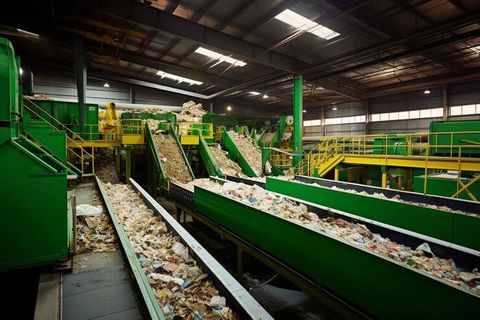
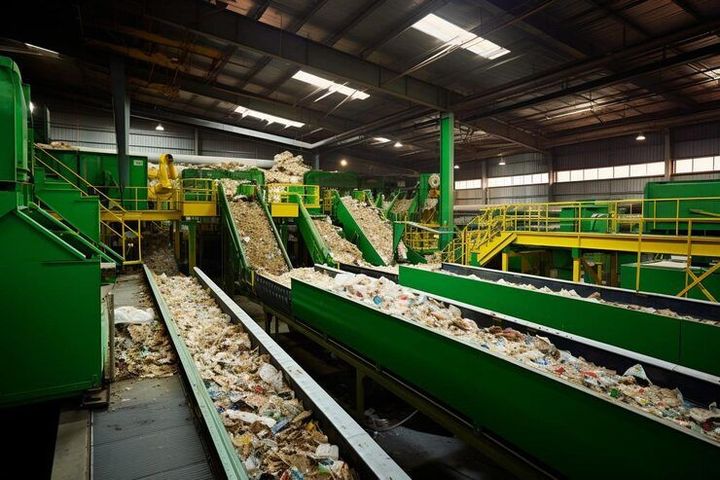
A complete waste processing line can also include conveyors, sorting systems, magnetic separators, dust extraction, and material collection equipment. Shredding is therefore often one stage in a wider waste management process rather than a complete recycling solution by itself.
Common Types of Industrial and Commercial Shredders
Single-Shaft Shredders
Single-shaft shredders generally use a rotating cutting shaft and a stationary cutting arrangement. Many models include a screen that helps regulate the size of the output material.
These machines are used for selected plastics, wood waste, packaging, and other compatible materials. Their suitability depends on the material's dimensions, strength, and processing characteristics.
Single-shaft systems are often selected when a controlled output size is important. However, their throughput depends on the machine design, feed method, material properties, and operating conditions.
Double-Shaft Shredders
Double-shaft shredders use two rotating shafts fitted with cutting elements. The shafts work together to pull in and shear material, making these machines suitable for many bulky and mixed waste streams.
Applications can include industrial scrap, selected plastic waste, bulky packaging, and certain construction or demolition materials when the machine is specifically designed for them.
Double-shaft shredders are frequently used for primary size reduction, where the initial goal is to make large objects easier to handle or process. The resulting material may require further sorting or shredding to meet recycling specifications.
Four-Shaft Shredders
Four-shaft shredders use multiple cutting shafts to process material through a more complex cutting arrangement. Some designs incorporate screening systems to help achieve a more consistent output size.
They may be used for selected plastics, electronic waste, industrial components, and other materials requiring controlled size reduction.
The additional cutting elements can support specific processing requirements, but the system's suitability still depends on material characteristics, contamination levels, and the desired output.
Paper and Document Shredders
Paper shredders are used in offices, commercial facilities, document processing centers, and secure information handling environments.
Depending on the design, they may cut documents into strips or smaller particles. Cross-cut and micro-cut systems can produce smaller pieces than basic strip-cut machines.
Organizations handling confidential records should select a shredder that meets their document security requirements and establish procedures for collecting and disposing of shredded material appropriately.
Specialized Material Shredders
Some waste streams require machines designed around specific material properties. Tire shredders, wood shredders, metal scrap shredders, and electronic waste shredders are examples.
Tire processing equipment may reduce tires into smaller pieces for subsequent material recovery. Wood shredders process suitable timber waste, while metal shredders are designed to handle compatible scrap components.
Electronic waste requires particular attention because it may contain batteries, circuit boards, metals, and hazardous substances. Only suitable equipment and established processing procedures should be used to handle these materials safely.
Applications in Waste Management and Recycling
Industrial and commercial shredders support waste management across several sectors.
In manufacturing, shredders can reduce production offcuts, rejected plastic components, packaging waste, and selected material residues. The processed material may be returned to a production process or sent to a suitable recycling facility, depending on its composition and quality.
In commercial buildings and distribution centers, cardboard and packaging shredders help prepare waste for collection or further processing. Reducing material size can simplify handling, although the best approach depends on the facility's collection and recycling arrangements.
Construction and demolition operations generate bulky waste such as wood, selected plastics, and other materials. Appropriate shredding equipment can reduce the size of compatible materials before sorting or recovery.
Recycling facilities use shredders to prepare materials for downstream processes. For example, plastic waste may be shredded before washing, sorting, or granulation. The shredding stage helps create a more manageable material stream, but successful recycling also depends on contamination control and material identification.
Shredding can also support waste volume reduction. However, the actual reduction in storage space or transportation requirements varies according to the material's density, shape, moisture content, and the processing method.
Benefits of Industrial Shredders
One major benefit of industrial shredders is improved material handling. Smaller fragments are often easier to convey, collect, store, and transport than large or irregular objects.
Shredding can also help prepare materials for recycling. By reducing waste to a suitable size, it can make subsequent separation, washing, sorting, and processing more practical.
Operational efficiency is another consideration. Facilities that generate consistent volumes of compatible waste may benefit from integrating shredders into their material handling systems. Automated feeding and discharge arrangements can reduce some manual handling requirements when properly designed.
Industrial shredders may also help organizations maintain more organized waste storage areas. Processing bulky materials can improve how collection containers and designated storage spaces are used.
However, shredding does not automatically make a material recyclable or environmentally beneficial. Contamination, mixed material composition, energy consumption, equipment wear, and the availability of suitable recycling facilities all influence the overall result.
How to Choose the Right Shredder
Selecting an industrial or commercial shredder begins with identifying the material to be processed. Paper, flexible plastics, rigid plastics, timber, metal scrap, and electronic waste have different physical properties and may require different cutting technologies.
The expected throughput is another important factor. Organizations should estimate the quantity of waste generated during normal operations and consider periods of higher demand. The machine must be suitable for the required workload without exceeding its design limits.
Output requirements also matter. Some applications need coarse fragments for transportation, while others require a more uniform size for washing, sorting, or further processing.
Additional considerations include available floor space, electrical requirements, feeding arrangements, noise, dust control, maintenance access, and compatibility with existing conveyors or collection systems.
Before making a selection, organizations should review technical specifications, material acceptance limits, safety features, expected maintenance requirements, and the manufacturer's operating guidance.
Safety and Maintenance Requirements
Shredders contain moving cutting elements and can create serious hazards if operated incorrectly. Appropriate guarding, emergency stops, controlled feeding systems, and access restrictions are important parts of a safe installation.
Operators should receive training on normal operation, material limitations, emergency procedures, and fault reporting. Hands and tools must never be placed inside an operating shredder, and jams should be cleared only under the approved isolation and lockout procedures.
Dust, noise, flying fragments, and hazardous material exposure may also require specific controls. Personal protective equipment should be selected according to the risk assessment and machine instructions.
Regular maintenance helps identify worn cutting elements, damaged guards, loose components, lubrication problems, and other issues that may affect performance. Before inspection or maintenance, all relevant energy sources must be isolated and stored energy controlled according to established procedures.
A maintenance schedule based on manufacturer recommendations and operating conditions can help support consistent performance and reduce unexpected downtime.
Conclusion
Industrial and commercial shredders are valuable components of modern waste management systems. They reduce the size of compatible materials, improve handling, and prepare selected waste streams for recycling, recovery, or further treatment.
Different shredder designs serve different purposes, from office document destruction to heavy-duty processing of industrial scrap, plastics, wood, and specialized waste materials. Choosing the appropriate machine requires careful consideration of material properties, throughput, output size, operating conditions, and safety requirements.
When integrated with suitable sorting, collection, and recycling processes, industrial shredders can help organizations manage waste more systematically. Their effectiveness ultimately depends on selecting the right technology, maintaining equipment properly, and ensuring that processed materials have an appropriate destination.