Industrial Automation Sensors: Types, Working Principles, Applications, and Benefits Guide (2026)
Industrial automation sensors are one of the most important technologies behind modern manufacturing and industrial operations. They allow machines, equipment, and automated systems to detect changes in their environment, measure physical conditions, and communicate real-time information for better decision-making.
From factory production lines and robotics to warehouses and energy systems, sensors help industries improve accuracy, reduce downtime, enhance safety, and increase operational efficiency. As industries continue adopting smart manufacturing and Industry 4.0 technologies, industrial automation sensors have become essential components of connected industrial systems.
This guide explains what industrial automation sensors are, how they work, the different types available, where they are used, and why they play a critical role in modern industrial automation.
What Are Industrial Automation Sensors?
Industrial automation sensors are devices that detect physical, chemical, or environmental changes and convert those changes into electrical signals that machines or control systems can process.
These sensors continuously monitor conditions such as temperature, pressure, motion, position, humidity, vibration, light, liquid levels, and proximity. The collected information is sent to controllers such as Programmable Logic Controllers (PLCs), Industrial PCs, or Distributed Control Systems (DCS), enabling automated responses without human intervention.
Unlike general-purpose sensors found in consumer electronics, industrial sensors are designed to operate reliably in demanding environments that may involve dust, moisture, vibration, extreme temperatures, chemicals, or heavy machinery.
How Industrial Automation Sensors Work
Industrial sensors follow a straightforward process to collect and transmit information.
The sensor detects a physical or environmental change.
It converts the detected condition into an electrical signal.
The signal is transmitted to a controller or monitoring system.
The controller processes the information and performs a programmed action if necessary.
For example, a proximity sensor may detect that an object has reached a conveyor belt checkpoint. The PLC receives the signal and immediately activates another machine to move, inspect, or package the object.
This continuous sensing and communication create automated workflows with minimal manual intervention.
Why Industrial Automation Sensors Are Important
Automation sensors provide industries with real-time visibility into equipment and production processes. Instead of relying on manual inspections, organizations can monitor systems continuously and respond quickly to changing conditions.
Some major reasons these sensors are important include:
Improved process accuracy and consistency.
Faster production with fewer interruptions.
Enhanced workplace safety through hazard detection.
Predictive maintenance using equipment monitoring.
Reduced operational waste and energy consumption.
Better product quality through automated inspections.
As industrial facilities become more connected, sensors also provide valuable data for analytics, machine learning, and remote monitoring systems.
Main Types of Industrial Automation Sensors
Different industrial processes require different sensing technologies. Each sensor type is designed for specific measurement tasks.
1. Proximity Sensors
Proximity sensors detect nearby objects without making physical contact.
They are commonly used for object detection, counting products, positioning machine components, and monitoring conveyor systems.
Common proximity sensor technologies include inductive, capacitive, magnetic, and ultrasonic sensors.
2. Temperature Sensors
Temperature sensors monitor heat levels in industrial equipment and processes.
They help maintain safe operating temperatures for motors, furnaces, boilers, refrigeration systems, and manufacturing equipment.
Popular industrial temperature sensors include thermocouples, RTDs, infrared sensors, and thermistors.
3. Pressure Sensors
Pressure sensors measure gas or liquid pressure inside industrial systems.
Applications include hydraulic equipment, pneumatic systems, pipelines, compressors, pumps, and chemical processing.
Accurate pressure monitoring helps prevent leaks, equipment failures, and unsafe operating conditions.
4. Level Sensors
Level sensors determine the amount of liquid or solid material inside tanks, silos, and containers.
Industries use them for water treatment, food production, pharmaceuticals, fuel storage, and chemical manufacturing.
Different technologies include float sensors, ultrasonic sensors, radar sensors, and capacitive level sensors.
5. Flow Sensors
Flow sensors measure the movement rate of liquids or gases through pipes and industrial systems.
They support accurate monitoring of water distribution, oil and gas operations, cooling systems, and industrial processing plants.
6. Motion and Position Sensors
These sensors track movement, rotation, speed, and position of machinery.
Examples include encoders, accelerometers, gyroscopes, and displacement sensors.
They are widely used in robotics, CNC machines, elevators, packaging systems, and automated assembly lines.
7. Photoelectric Sensors
Photoelectric sensors use light beams to detect objects.
They are useful for counting products, detecting transparent materials, package alignment, and automated sorting systems.
These sensors offer fast detection speeds and are commonly found in high-speed production environments.
8. Vibration Sensors
Vibration sensors monitor machinery health by detecting unusual movement patterns.
Industries use vibration monitoring to identify bearing wear, motor imbalance, shaft misalignment, and mechanical failures before breakdowns occur.
Industrial Automation Sensor Categories at a Glance
| Sensor Type | Primary Function | Common Applications |
|---|---|---|
| Proximity Sensor | Detect nearby objects | Conveyors, robotics, packaging |
| Temperature Sensor | Measure temperature | Boilers, motors, HVAC, manufacturing |
| Pressure Sensor | Measure fluid or gas pressure | Pipelines, hydraulic systems, compressors |
| Level Sensor | Measure liquid or material level | Tanks, silos, water treatment |
| Flow Sensor | Measure fluid flow | Water systems, chemical processing |
| Photoelectric Sensor | Detect objects using light | Sorting, counting, packaging |
| Vibration Sensor | Monitor equipment vibration | Predictive maintenance, motors |
| Position Sensor | Measure movement or location | Robotics, CNC, automation equipment |
Where Industrial Automation Sensors Are Used
Industrial automation sensors support nearly every manufacturing and processing industry.
Manufacturing
Factories use sensors for automated assembly, machine positioning, quality inspection, and material handling.
Automotive Industry
Sensors help robots weld, paint, assemble components, inspect vehicle parts, and monitor production quality.
Food and Beverage Processing
Temperature, pressure, humidity, and level sensors maintain food safety and process consistency during production and packaging.
Oil and Gas
Industrial sensors monitor pipelines, storage tanks, drilling equipment, compressors, and refinery operations.
Pharmaceutical Manufacturing
Sensors provide precise environmental monitoring for clean rooms, production equipment, and storage facilities.
Warehousing and Logistics
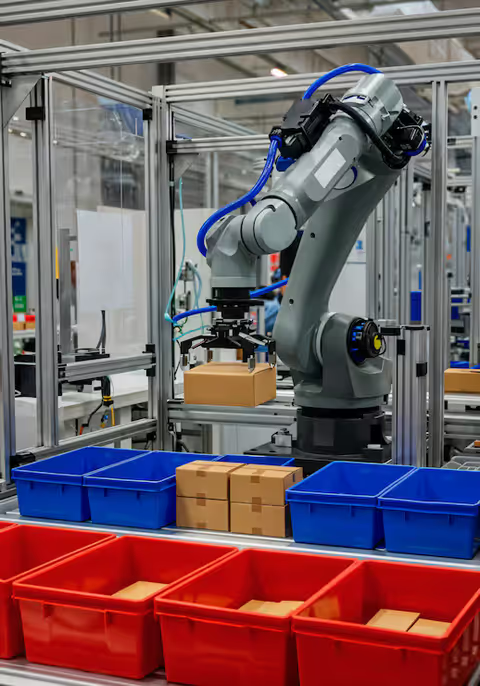
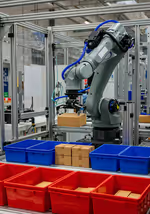
Automated warehouses use sensors for conveyor control, package detection, robotic navigation, and inventory movement.
Water and Wastewater Treatment
Sensors continuously monitor water levels, chemical concentrations, pressure, and flow rates to improve treatment efficiency.
Benefits of Industrial Automation Sensors
Improved Operational Efficiency
Real-time monitoring reduces manual inspections and helps automated systems operate continuously with minimal interruptions.
Better Product Quality
Sensors maintain consistent production conditions and detect defects early, reducing waste and improving quality control.
Enhanced Workplace Safety
Industrial environments often involve hazardous machinery and chemicals. Sensors detect unsafe conditions such as overheating, gas leaks, excessive pressure, or equipment malfunctions.
Predictive Maintenance
Instead of waiting for equipment to fail, sensors monitor machine health continuously and identify early warning signs of wear or failure.
This helps reduce unexpected downtime and maintenance costs.
Reduced Energy Consumption
Monitoring temperature, pressure, airflow, and machine performance helps industries optimize energy usage across operations.
Real-Time Decision Making
Sensor data enables operators to identify production issues immediately and respond faster through automated control systems.
Choosing the Right Industrial Automation Sensor
Selecting the appropriate sensor depends on the application and operating environment.
Important factors include:
Measurement type required.
Detection range.
Environmental conditions such as dust, moisture, or heat.
Required accuracy and response speed.
Compatibility with PLCs or industrial communication protocols.
Installation space and mounting requirements.
Long-term durability and maintenance needs.
Carefully matching sensor specifications with operational requirements improves reliability and system performance.
Industrial Communication and Smart Sensors
Modern industrial sensors are no longer isolated devices. Many support digital communication protocols that allow seamless integration with industrial automation networks.
Common industrial communication technologies include:
IO-Link.
Modbus.
Ethernet/IP.
PROFINET.
CAN Bus.
OPC UA integration through controllers.
Smart sensors can provide diagnostic information, calibration status, performance history, and maintenance alerts in addition to measurement data.
This enables centralized monitoring through Industrial Internet of Things (IIoT) platforms.
Industrial Automation Sensors and Industry 4.0
Industry 4.0 focuses on connected manufacturing where machines communicate, analyze data, and optimize production automatically.
Sensors are the foundation of this transformation.
They collect operational data from machines and transmit it to cloud platforms, industrial gateways, or edge computing devices for analysis.
Industry 4.0 applications include:
Real-time production monitoring.
Digital twins.
Predictive maintenance analytics.
Automated quality inspection.
Asset performance monitoring.
Energy optimization.
Without reliable sensor data, advanced industrial automation systems cannot function effectively.
Common Challenges in Industrial Sensor Implementation
Although sensors improve automation, industries also face implementation challenges.
Environmental Conditions
Extreme temperatures, chemicals, vibration, and moisture may affect sensor performance if unsuitable models are selected.
Calibration Requirements
Some sensors require periodic calibration to maintain measurement accuracy over time.
Electrical Interference
Industrial equipment may generate electromagnetic interference that impacts signal quality without proper shielding.
Integration Complexity
Older machinery may require additional controllers or communication modules to integrate modern digital sensors.
Maintenance Planning
Sensors themselves need inspection, cleaning, and replacement during equipment maintenance cycles.
Proper installation and maintenance help maximize sensor lifespan and reliability.
Best Practices for Maintaining Industrial Automation Sensors
Regular maintenance helps ensure accurate measurements and uninterrupted automation.
Recommended practices include:
Inspect sensors for dust, moisture, and physical damage.
Clean sensing surfaces when necessary.
Verify wiring and connector integrity.
Perform scheduled calibration for precision sensors.
Monitor diagnostic alerts from smart sensors.
Replace damaged cables or worn mounting hardware promptly.
Keep firmware updated for intelligent sensor systems where applicable.
Preventive maintenance improves both sensor performance and equipment reliability.
Emerging Trends in Industrial Automation Sensors
Industrial sensing technology continues evolving alongside digital manufacturing.
Smart Wireless Sensors
Wireless industrial sensors simplify installation in locations where wiring is difficult or expensive.
AI-Driven Sensor Analytics
Artificial intelligence analyzes sensor data to identify patterns, predict failures, and improve production efficiency.
Edge Computing Integration
Sensors increasingly process data closer to machines, reducing latency and enabling faster automated responses.
Miniaturized High-Precision Sensors
Smaller sensors provide greater accuracy while fitting into compact industrial equipment and robotic systems.
Sustainable Industrial Monitoring
Sensors are being used to optimize resource consumption, reduce emissions, and improve environmental compliance across industrial facilities.
These innovations support more intelligent, flexible, and data-driven manufacturing operations.
Frequently Asked Questions About Industrial Automation Sensors
What is the primary purpose of industrial automation sensors?
Industrial automation sensors detect physical or environmental changes and provide data that helps machines and control systems automate industrial processes.
Which industries use industrial automation sensors?
Manufacturing, automotive, pharmaceuticals, food processing, oil and gas, logistics, mining, water treatment, energy, and chemical industries all rely heavily on automation sensors.
What is the difference between a sensor and a PLC?
A sensor collects information from the physical environment, while a PLC processes sensor inputs and controls machines based on programmed logic.
Are industrial automation sensors used for predictive maintenance?
Yes. Vibration, temperature, pressure, and current sensors continuously monitor equipment health and help identify maintenance needs before failures occur.
Can industrial sensors connect to IoT systems?
Many modern industrial sensors support digital communication protocols and integrate with Industrial Internet of Things (IIoT) platforms for remote monitoring and analytics.
Conclusion
Industrial automation sensors are the foundation of modern automated industries. They provide the real-time information needed for machines, controllers, and monitoring systems to operate efficiently, safely, and accurately. Whether measuring temperature, detecting motion, monitoring pressure, or tracking equipment performance, sensors enable smarter industrial decision-making across countless applications.
As manufacturing continues moving toward Industry 4.0 and connected industrial ecosystems, automation sensors will play an even greater role in predictive maintenance, intelligent production, energy management, and data-driven operations. Understanding the different types of industrial automation sensors and their applications helps businesses and professionals build more reliable, efficient, and future-ready industrial systems.