Port Solutions Guide: Types, Technology and Operations
Ports are essential connection points between sea transport and inland supply networks. They handle the movement of containers, bulk materials, vehicles, energy products, and other types of cargo while coordinating ships, terminals, warehouses, transport operators, customs processes, and logistics systems.
As global trade becomes more connected, ports are evolving beyond traditional loading and unloading facilities. Modern port solutions combine physical infrastructure with automation, digital platforms, monitoring systems, equipment, security technologies, and data-driven operations.
Understanding these solutions can help businesses, logistics professionals, researchers, and general readers recognize how modern ports operate and why different technologies are used. This port solutions guide explains the main components, technologies, operational considerations, and future developments shaping today's port environment.
What Are Port Solutions?
Port solutions refer to the infrastructure, equipment, technology, software, and operational methods used to improve the movement and management of cargo and vessels within a port environment.
A port may require several solutions at the same time. Vessel traffic management helps coordinate ship movements, while terminal operating systems manage cargo information and yard activities. Cranes and other handling equipment move physical goods, whereas automated identification and tracking technologies provide information about cargo locations.
The right combination depends on the port's size, cargo type, geographical conditions, traffic levels, infrastructure, regulatory requirements, and operational objectives.
Main Types of Port Infrastructure
Port infrastructure forms the physical foundation of maritime operations. It typically includes berths, quay walls, breakwaters, navigation channels, storage yards, warehouses, gates, roads, rail connections, and utility systems.
Berths provide designated areas where vessels can dock for loading, unloading, passenger movement, or other operations. Navigation channels allow ships to reach port facilities safely, while breakwaters can help protect harbor areas from waves and severe water conditions.
Behind the waterfront, storage yards and warehouses provide temporary space for cargo. Road and rail connections are equally important because a port does not operate independently from the inland transportation network.
Efficient port planning therefore considers the entire movement of goods, from vessel arrival through terminal handling and onward transportation.
Cargo Handling Solutions
Cargo handling is one of the most visible parts of port operations. Different cargo types require different equipment and procedures.
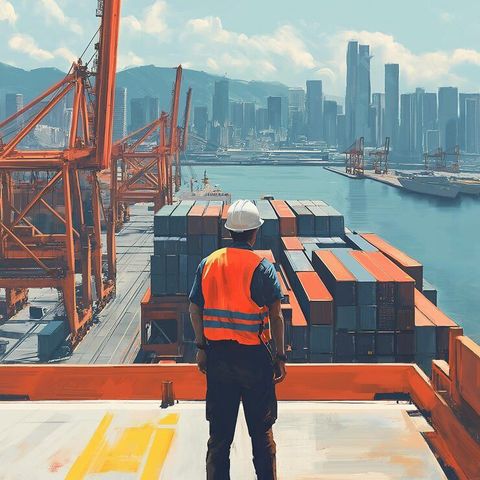
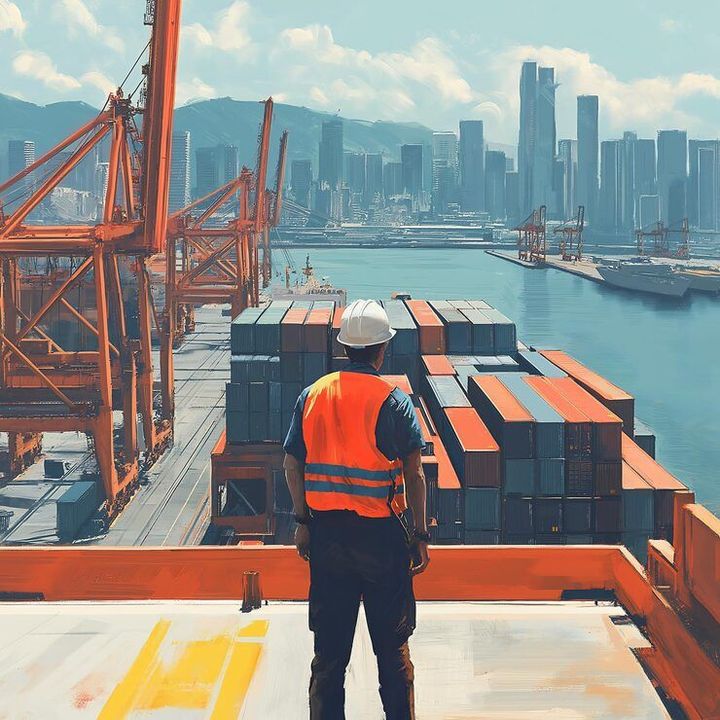
Container terminals commonly use ship-to-shore cranes to transfer containers between vessels and the terminal. Yard equipment then moves containers between storage locations, inspection areas, and transportation points.
Bulk cargo terminals require specialized systems because materials such as grain, minerals, coal, and other commodities may be handled in large quantities. Conveyors, hoppers, loading systems, unloading equipment, and storage facilities can be integrated into these operations.
Vehicle terminals have different requirements, including vehicle storage areas, controlled access, inspection processes, and specialized movement procedures.
The objective across these environments is to maintain a coordinated flow while reducing unnecessary handling and waiting time.
Port Automation and Smart Technology
Automation is becoming an increasingly important part of modern port development. Automated equipment can perform repetitive movement tasks according to predefined instructions, while digital systems coordinate activities across different areas of a terminal.
Automated stacking cranes, guided transport equipment, optical recognition systems, sensors, and remote equipment-control technologies can support terminal operations.
Smart port systems also collect operational information from equipment, vehicles, vessels, and cargo. This data can help operators understand traffic patterns, equipment performance, yard utilization, and potential operational bottlenecks.
However, automation is not simply a matter of installing new machines. It requires suitable infrastructure, reliable communication networks, trained personnel, cybersecurity controls, and carefully planned operational procedures.
Port Management and Terminal Operating Systems
A terminal operating system, often called a TOS, is a central digital component of many modern container terminals. It can coordinate information related to vessel schedules, container locations, yard planning, equipment assignments, gate movements, and cargo status.
Instead of managing each activity separately, an integrated system can provide a shared operational view. This helps different teams work from consistent information and makes it easier to coordinate activities.
Port management platforms may also connect with customs systems, transportation networks, shipping information, warehouse platforms, and other digital infrastructure.
Data integration is particularly valuable when many organizations participate in the same supply chain. Better information flow can reduce duplication and improve visibility across different stages of cargo movement.
Port Connectivity and Communication
Reliable communication is fundamental to port operations. A modern port may contain thousands of connected devices, vehicles, machines, sensors, cameras, and information systems.
Communication networks allow operational data to move between equipment and control platforms. Depending on the application, ports may use fiber networks, wireless communication, private networks, Internet of Things technologies, and other connectivity solutions.
Real-time communication can support vessel coordination, equipment monitoring, cargo tracking, environmental monitoring, and security operations.
As the number of connected devices increases, network reliability and cybersecurity become increasingly important. A connected port needs controls that protect operational systems while maintaining appropriate access for authorized users.
Port Safety and Security Solutions
Safety is a fundamental consideration in port design and operation because ports combine heavy equipment, large vessels, moving vehicles, cargo, water environments, and complex working areas.
Safety solutions can include access-control systems, surveillance cameras, equipment monitoring, warning systems, traffic management, emergency communication, navigation aids, and worker safety procedures.
Security systems also help control access to restricted areas and monitor activities around cargo and critical infrastructure. Modern ports increasingly combine physical security measures with digital monitoring and cybersecurity practices.
Effective safety management is not dependent on technology alone. Clear procedures, employee training, equipment maintenance, risk assessment, and emergency planning remain important parts of a safe port environment.
Environmental and Sustainable Port Solutions
Ports are also adapting to environmental expectations. Maritime and terminal activities can contribute to emissions, noise, water pollution, and energy consumption, making environmental management an important part of modern port planning.
Some ports are introducing energy-efficient equipment, renewable energy systems, electric vehicles, shore-side electricity infrastructure, cleaner cargo-handling equipment, and improved waste-management processes.
Digital monitoring can also help track energy consumption, emissions, water quality, and other environmental indicators.
Sustainable port development requires consideration of both environmental performance and operational requirements. Infrastructure decisions made today can influence energy use and environmental impact for many years.
How to Choose the Right Port Solution
There is no single port solution suitable for every facility. The appropriate approach begins with understanding the port's operational requirements.
Important considerations include cargo type, vessel characteristics, terminal capacity, available land, existing infrastructure, traffic patterns, equipment requirements, connectivity, safety conditions, environmental objectives, and future expansion plans.
Compatibility with existing systems is also important. A new technology that cannot communicate effectively with current infrastructure may create additional complexity rather than improving operations.
Scalability should also be considered. Port traffic can change over time, so infrastructure and digital systems should ideally accommodate future operational requirements without unnecessary disruption.
The Future of Port Solutions
The future of port operations is likely to involve greater integration between physical infrastructure and digital technology. Artificial intelligence, predictive maintenance, autonomous equipment, digital twins, advanced sensors, and real-time data analysis may increasingly support planning and decision-making.
Artificial intelligence can help analyze large volumes of operational data and identify patterns that may not be immediately visible to human operators. Predictive maintenance can use equipment data to identify potential problems before they result in unexpected downtime.
Digital twins may also become useful for simulating port activities and evaluating possible infrastructure or operational changes before implementation.
At the same time, human expertise will remain important. Technology can improve information and automation, but experienced personnel are still needed to manage complex situations, interpret operational conditions, maintain equipment, and make critical decisions.
Conclusion
Modern ports are complex ecosystems where infrastructure, equipment, people, transportation networks, and digital systems work together. Port solutions therefore extend far beyond cargo-handling equipment and include terminal management, automation, communication, safety, security, environmental monitoring, and data integration.
A well-planned port solution starts with the specific operational requirements of a facility and considers how individual systems can work together. As maritime trade and technology continue to evolve, ports are likely to become increasingly connected, automated, data-driven, and environmentally conscious.
Understanding these developments provides a useful foundation for anyone researching port infrastructure, terminal operations, maritime technology, logistics systems, or the future of smart ports.