Industrial Air Handling Units: Complete Guide to Types, Working, Benefits, and Applications
Industrial Air Handling Units (AHUs) play an important role in maintaining air quality, temperature, humidity, and ventilation inside industrial buildings. From manufacturing plants and pharmaceutical facilities to food processing units and data centers, these systems help create safe and controlled indoor environments where equipment and people can operate efficiently.
As industries continue to focus on energy efficiency, indoor air quality, and environmental compliance, Industrial Air Handling Units have become more advanced and adaptable. Modern systems are designed to deliver consistent airflow while reducing energy consumption and supporting different industrial processes.
This guide explains what Industrial Air Handling Units are, how they work, their major components, common types, applications, maintenance practices, and recent developments shaping the industry.
Understanding Industrial Air Handling Units
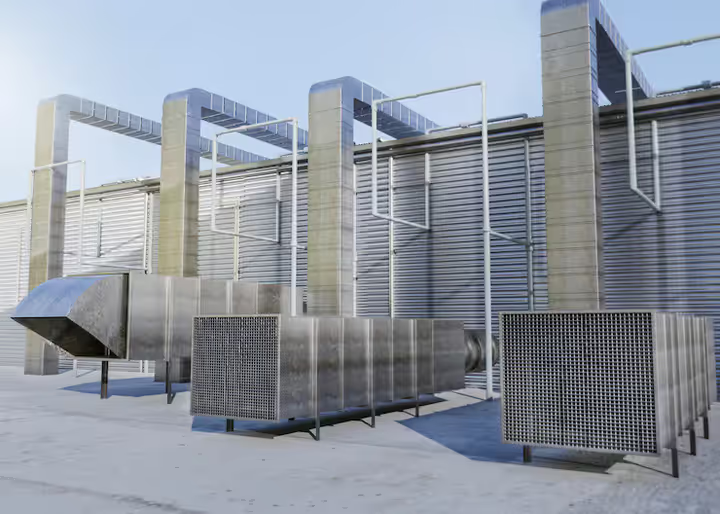
An Industrial Air Handling Unit is a large mechanical system that conditions and circulates air throughout a building or industrial facility. It works as a central part of an HVAC (Heating, Ventilation, and Air Conditioning) system by drawing in fresh or recirculated air, filtering it, adjusting temperature and humidity, and distributing it through ductwork.
Unlike residential air handling systems, industrial AHUs are built to handle larger spaces, heavier workloads, and specialized environmental requirements. They are commonly customized based on airflow volume, filtration standards, humidity levels, and operating conditions.
The primary purpose of an Industrial Air Handling Unit is to provide controlled indoor air that supports worker comfort, equipment performance, and production quality.
Why Industrial Air Handling Units Are Important
Air quality affects nearly every industrial operation. Dust, moisture, temperature fluctuations, and airborne contaminants can reduce productivity and damage products or equipment. Industrial AHUs help manage these challenges by maintaining stable environmental conditions.
Their importance extends across multiple areas:
Improving indoor air quality through filtration.
Controlling temperature in production environments.
Managing humidity for sensitive manufacturing processes.
Supporting ventilation and fresh air exchange.
Reducing airborne contaminants in clean environments.
Helping facilities meet workplace safety and environmental standards.
A well-designed AHU contributes to operational efficiency while creating healthier indoor conditions for employees.
How an Industrial Air Handling Unit Works
An Industrial Air Handling Unit follows a structured airflow process to condition and distribute air.
Air Intake
The system draws fresh outdoor air, return air from the building, or a combination of both through intake dampers.
Air Filtration
Incoming air passes through filters that capture dust, pollen, smoke particles, and other airborne contaminants before air moves deeper into the system.
Heating or Cooling
The filtered air flows across heating or cooling coils. Depending on the facility's needs, the air temperature is increased or reduced.
Humidity Control
Some AHUs include humidifiers or dehumidification systems to maintain required moisture levels for industrial processes.
Air Distribution
Conditioned air is pushed by supply fans into ducts and distributed throughout the building. Return fans may collect indoor air and send it back for recirculation or exhaust.
This continuous cycle helps maintain consistent indoor environmental conditions.
Main Components of an Industrial Air Handling Unit
Each AHU contains several integrated components that work together.
Component | Function |
| Air Filters | Remove dust, particles, and contaminants from incoming air. |
| Cooling Coils | Lower air temperature using chilled water or refrigerant. |
| Heating Coils | Warm the air using hot water, steam, or electric heating. |
| Supply Fans | Move conditioned air through duct systems. |
| Return Fans | Recirculate indoor air or exhaust it from the facility. |
| Dampers | Control airflow and regulate fresh and return air mixing. |
| Humidifiers | Add moisture to maintain humidity levels when required. |
| Drain Pans | Collect condensation generated during cooling. |
| Control Sensors | Monitor airflow, pressure, humidity, and temperature. |
Together, these components help maintain reliable airflow and environmental control.
Types of Industrial Air Handling Units
Different industries require different AHU configurations depending on building size and operating requirements.
Packaged Air Handling Units
These units combine major components into a single factory-built enclosure. They are commonly used in industrial buildings where installation space is limited.
Modular Air Handling Units
Modular AHUs consist of multiple sections that can be assembled on-site. They offer flexibility for large manufacturing plants and facilities with customized airflow requirements.
Rooftop Air Handling Units
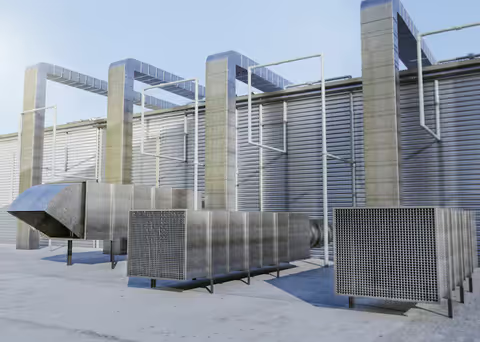
Installed on rooftops, these units save indoor floor space while supplying conditioned air to large buildings through duct networks.
Cleanroom Air Handling Units
Designed for environments requiring extremely low contamination levels, these AHUs use advanced filtration systems and precise airflow control.
Hygienic Air Handling Units
Used in pharmaceutical, healthcare, and food industries, hygienic AHUs are designed for easy cleaning and contamination prevention.
Energy Recovery Air Handling Units
These systems recover heat or cooling energy from exhaust air before releasing it, helping reduce overall energy consumption.
Common Applications Across Industries
Industrial Air Handling Units are used wherever environmental control is essential.
Manufacturing Facilities
Factories require temperature and ventilation control for production equipment, workers, and product quality.
Pharmaceutical Industry
Strict air cleanliness, humidity, and pressure control help maintain sterile manufacturing environments.
Food and Beverage Processing
Controlled airflow helps protect food quality and supports hygiene standards during processing and packaging.
Chemical Plants
Ventilation systems help remove fumes, maintain airflow, and support safer working conditions.
Electronics Manufacturing
Sensitive electronic components require stable humidity and dust-free environments.
Warehouses and Logistics Centers
Large storage facilities use AHUs to improve ventilation and maintain suitable indoor conditions for products and workers.
Data Centers
Air handling systems remove excess heat generated by servers and help maintain equipment reliability.
Benefits of Industrial Air Handling Units
Industrial AHUs provide operational and environmental advantages across many sectors.
Better Indoor Air Quality
Multi-stage filtration removes airborne particles, helping create cleaner indoor environments.
Temperature Stability
Consistent temperatures improve worker comfort and protect equipment from overheating or excessive cooling.
Humidity Management
Maintaining proper humidity helps protect sensitive products, machinery, and production processes.
Energy Efficiency
Modern AHUs use variable-speed fans, efficient motors, and smart controls to optimize airflow and reduce energy waste.
Process Reliability
Stable environmental conditions reduce production interruptions caused by temperature or moisture fluctuations.
Workplace Safety
Proper ventilation helps reduce airborne contaminants and improves overall indoor environmental quality.
Choosing the Right Industrial Air Handling Unit
Selecting an AHU depends on several technical and operational factors rather than building size alone.
Important considerations include:
Required airflow volume.
Indoor temperature requirements.
Humidity control needs.
Filtration efficiency standards.
Indoor air quality objectives.
Building layout and duct design.
Energy efficiency goals.
Maintenance accessibility.
Industry-specific compliance requirements.
Facilities often evaluate these requirements during HVAC system planning to ensure long-term performance.
Energy Efficiency Features in Modern AHUs
Energy efficiency has become a major focus in industrial ventilation systems. New technologies help reduce electricity use without compromising airflow quality.
Variable Frequency Drives (VFDs)
VFDs adjust fan speed according to real-time airflow demand, reducing unnecessary energy consumption.
EC Motors
Electronically commutated motors provide higher efficiency compared to conventional motors and offer better speed control.
Heat Recovery Systems
Heat exchangers transfer thermal energy between incoming and outgoing air streams, lowering heating and cooling loads.
Smart Sensors
Sensors monitor occupancy, temperature, humidity, and air quality to optimize system performance automatically.
Demand-Controlled Ventilation
Airflow adjusts according to indoor air quality or occupancy instead of operating continuously at maximum capacity.
These features help industrial facilities improve overall HVAC efficiency.
Maintenance Best Practices
Routine maintenance helps Industrial Air Handling Units operate reliably and efficiently throughout their service life.
Inspect Filters Regularly
Dirty filters reduce airflow and increase energy consumption. Regular inspection helps maintain air quality and system efficiency.
Clean Cooling and Heating Coils
Dust buildup on coils reduces heat transfer efficiency and affects temperature control.
Check Fan Performance
Inspect fans, belts, bearings, and motors for wear, vibration, or unusual noise.
Monitor Drainage Systems
Condensation drains should remain clean to prevent water accumulation and microbial growth.
Inspect Dampers and Sensors
Proper damper movement and accurate sensor readings ensure balanced airflow and environmental control.
Schedule Preventive Maintenance
Regular inspections help identify potential issues before they become major operational problems.
Consistent maintenance also extends equipment lifespan and improves reliability.
Common Challenges and How AHUs Help Address Them
Industrial environments often face air management challenges that AHUs are designed to reduce.
Challenge | How AHUs Help |
| High dust levels | Filtration systems capture airborne particles before distribution. |
| Uneven temperatures | Balanced airflow maintains consistent indoor temperatures. |
| Excess humidity | Dehumidification systems maintain target moisture levels. |
| Dry indoor environments | Humidification systems add controlled moisture when required. |
| Airborne contaminants | Multi-stage filtration improves indoor air cleanliness. |
| High energy consumption | Smart controls optimize airflow and equipment operation. |
Addressing these issues improves both productivity and environmental quality.
Recent Trends in Industrial Air Handling Units (2025–2026)
Industrial HVAC technology continues to evolve with stronger emphasis on efficiency, automation, and sustainability.
Smart Building Integration
Modern AHUs connect with Building Management Systems (BMS) for centralized monitoring and automated performance adjustments.
Advanced Air Quality Monitoring
Integrated sensors continuously measure particulate matter, carbon dioxide, humidity, and temperature to improve indoor environmental control.
Energy Recovery Ventilation
More facilities are adopting energy recovery technologies to reduce heating and cooling demand while maintaining ventilation.
Improved Filtration Standards
Industries requiring cleaner environments are increasingly using higher-efficiency filtration systems to improve air quality.
Predictive Maintenance
Connected sensors and analytics help detect equipment wear before failures occur, reducing unexpected downtime.
Sustainable HVAC Designs
Manufacturers continue developing AHUs with recyclable materials, efficient motors, and environmentally responsible system designs.
These developments reflect the growing demand for reliable and energy-conscious industrial ventilation systems.
Frequently Asked Questions
What is the primary purpose of an Industrial Air Handling Unit?
Its primary purpose is to condition and circulate air by controlling temperature, humidity, filtration, and ventilation within industrial buildings.
How is an Air Handling Unit different from an HVAC system?
An HVAC system includes multiple components for heating, cooling, and ventilation, while an AHU is one major component responsible for handling and distributing conditioned air.
Where are Industrial Air Handling Units commonly used?
They are widely used in manufacturing plants, pharmaceutical facilities, food processing units, hospitals, warehouses, chemical industries, cleanrooms, and data centers.
Do Industrial Air Handling Units improve indoor air quality?
Yes. Their filtration systems remove airborne particles and contaminants while maintaining proper ventilation and airflow.
Why is preventive maintenance important for AHUs?
Regular maintenance helps maintain airflow efficiency, improve energy performance, reduce equipment wear, and extend the operational lifespan of the system.
Conclusion
Industrial Air Handling Units are essential systems for creating controlled, clean, and efficient indoor environments across a wide range of industries. By managing airflow, temperature, humidity, and filtration, these units help support production quality, employee comfort, equipment performance, and environmental compliance.
As industrial facilities adopt smarter HVAC technologies and energy-efficient infrastructure, modern Air Handling Units continue to evolve with intelligent controls, advanced filtration, heat recovery, and predictive maintenance capabilities. Understanding how these systems work and maintaining them properly helps organizations improve operational reliability while supporting long-term sustainability and indoor air quality goals.