Industrial Conveyor Rollers Explained: Types, Materials, Applications and Maintenance Guide
Industrial conveyor rollers are one of the most important components used in material handling systems across manufacturing, warehousing, logistics, mining, food processing, and many other industries. They are cylindrical components that allow products, raw materials, and packaged goods to move efficiently along conveyor systems with minimal friction. Although they appear simple, conveyor rollers play a significant role in improving productivity, reducing manual handling, and supporting continuous industrial operations.
As industries continue to automate production and transportation processes, conveyor roller technology has also evolved. Modern rollers are designed to handle different load capacities, operating environments, temperatures, and production speeds. Choosing the right conveyor roller helps improve operational efficiency, equipment reliability, and workplace safety while reducing maintenance interruptions.
Industrial conveyor rollers are available in various designs, materials, and sizes to match different conveyor systems. Understanding how they work and where they are used helps businesses make informed decisions when designing or upgrading material handling systems.
Why Industrial Conveyor Rollers Matter in Modern Industries
Material movement is a critical part of almost every industrial process. Whether transporting heavy machinery parts, packaged consumer goods, agricultural products, or construction materials, conveyor rollers make continuous movement possible without excessive manual effort.
The importance of industrial conveyor rollers has grown alongside industrial automation and smart manufacturing. Modern factories require systems that move products consistently between machines, storage areas, packaging stations, and shipping departments. Conveyor rollers reduce delays caused by manual transportation and help maintain a steady production flow.
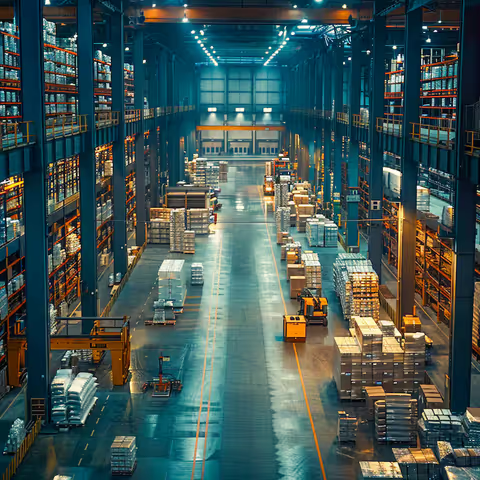
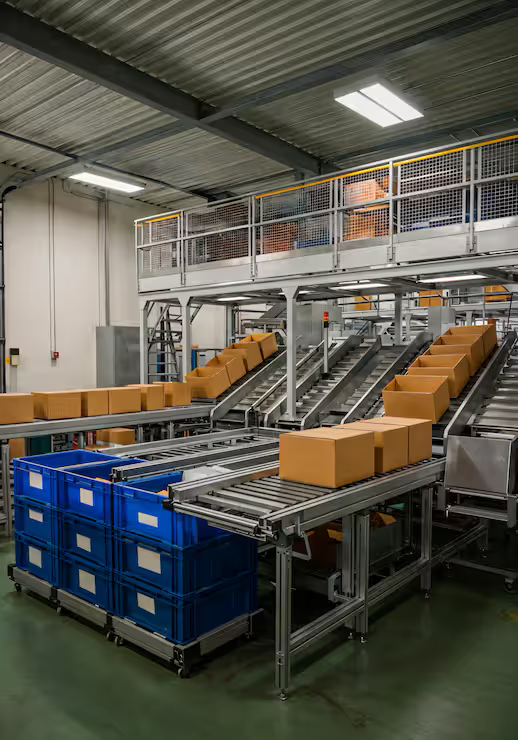
Warehouses and distribution centers also depend heavily on conveyor roller systems. As e-commerce continues to expand globally, fulfillment centers process thousands of packages every hour. Conveyor rollers help organize, sort, and transport products efficiently throughout these facilities.
In industries where heavy loads are common, such as mining and steel manufacturing, conveyor rollers are engineered to withstand harsh environments while maintaining smooth operation. Their durability helps reduce equipment wear and improves the lifespan of conveyor systems.
How Industrial Conveyor Rollers Work
Industrial conveyor rollers operate by supporting and guiding materials as they move along a conveyor frame. Each roller rotates around its shaft while products travel over its surface. Depending on the conveyor design, rollers may rotate freely or be driven by motors, belts, or chains.
Gravity roller conveyors use freely rotating rollers that move products using gravity or manual pushing. These systems are commonly installed on slightly inclined surfaces where products naturally roll from one location to another.
Powered roller conveyors use motors connected through belts, chains, or gear systems to rotate the rollers. These conveyors move products automatically at controlled speeds, making them suitable for production lines and automated warehouses.
The spacing, diameter, and load rating of each roller influence conveyor performance. Proper roller selection ensures products remain stable during transportation while minimizing vibration and unnecessary friction.
Different Types of Industrial Conveyor Rollers
Industrial conveyor rollers are manufactured for specific applications and working conditions. Each type offers unique advantages depending on the operating environment and load requirements.
Gravity rollers are widely used in warehouses and packaging facilities where products move manually or through gravity-assisted systems. They provide a simple and energy-efficient transportation solution for cartons, bins, and lightweight materials.
Driven rollers are connected to power transmission systems that move products automatically. These rollers are common in manufacturing plants, distribution centers, and automated assembly lines where consistent movement is essential.
Impact rollers are installed in conveyor loading zones where materials are dropped onto the conveyor. Their design absorbs shock and protects conveyor belts and frames from damage caused by heavy or abrasive materials.
Tapered rollers are used in curved conveyor systems. Their shape helps products maintain proper orientation while moving through conveyor bends without shifting or falling.
Grooved rollers include grooves that accommodate belts or O-rings used for power transmission. They are commonly found in packaging and sorting systems.
Heavy-duty rollers are designed for mining, construction, steel processing, and bulk material handling. These rollers support substantial loads while resisting dust, moisture, and mechanical wear.
Materials Used in Industrial Conveyor Rollers
The material used to manufacture conveyor rollers affects durability, weight, corrosion resistance, and application suitability. Selecting the appropriate material depends on operating conditions and industry requirements.
Steel rollers are among the most commonly used options because they offer high strength and durability. They are suitable for heavy industrial applications where rollers must withstand continuous loads and demanding environments.
Stainless steel rollers are preferred in industries that require corrosion resistance and hygienic surfaces, including food processing, pharmaceuticals, and chemical manufacturing. Their smooth finish also supports easier cleaning.
Aluminum rollers provide a lightweight solution for applications where reducing conveyor weight is important. They are commonly used in packaging, electronics manufacturing, and light-duty transportation systems.
Plastic rollers are resistant to moisture and certain chemicals, making them suitable for food packaging, agricultural processing, and environments where corrosion is a concern. They also produce lower operating noise compared to metal rollers.
Rubber-coated rollers improve grip and protect delicate products from scratches during transportation. These rollers are often used when handling glass, electronics, printed materials, and fragile packaged goods.
Common Applications Across Industries
Industrial conveyor rollers support a wide variety of industries because nearly every production process involves moving materials between stages. Their design flexibility allows them to handle products of different sizes, shapes, and weights.
Manufacturing facilities use conveyor rollers to transport components between machining, assembly, inspection, and packaging stations. This improves production consistency and reduces manual handling.
Warehousing and logistics centers rely on conveyor rollers for package sorting, inventory movement, and shipping preparation. Automated fulfillment systems integrate powered rollers with barcode scanners and sorting equipment to improve operational efficiency.
Mining operations use heavy-duty conveyor rollers to transport ores, coal, minerals, and aggregates over long distances. These rollers are designed to operate in dusty, abrasive, and high-impact environments.
Food and beverage processing facilities use corrosion-resistant rollers for transporting packaged foods, bottled beverages, and raw agricultural products while maintaining hygiene standards.
Airport baggage handling systems also depend on conveyor rollers for reliable luggage transportation between check-in counters, security screening, and aircraft loading areas.
Agriculture, recycling plants, automotive manufacturing, and construction material production are additional industries where conveyor roller systems improve productivity and material flow.
Factors to Consider When Choosing Conveyor Rollers
Selecting industrial conveyor rollers involves more than choosing a specific size or material. Several operational factors influence long-term performance and maintenance requirements.
Load capacity is one of the most important considerations. Rollers must support the maximum weight of transported materials without excessive deflection or premature wear.
Roller diameter affects carrying capacity and conveyor efficiency. Larger diameters generally support heavier loads and reduce rolling resistance for bulky products.
Environmental conditions also influence roller selection. Moisture, dust, chemicals, temperature changes, and outdoor exposure require materials and bearing designs that match those operating environments.
Bearing quality plays a significant role in roller lifespan. High-quality bearings reduce friction, improve rotational efficiency, and help rollers operate smoothly under continuous loads.
Speed requirements should also match the conveyor system design. High-speed production lines require rollers engineered for stable rotation and minimal vibration during operation.
Noise levels may also be important in indoor warehouses, packaging plants, and facilities where quieter equipment improves the working environment.
Maintenance Practices for Longer Roller Life
Regular maintenance helps conveyor rollers operate efficiently and reduces unexpected equipment downtime. A preventive maintenance approach also extends the lifespan of conveyor systems.
Routine inspections help identify worn bearings, damaged roller surfaces, loose shafts, and alignment issues before they develop into larger mechanical problems. Early detection prevents conveyor failures that may interrupt production.
Cleaning rollers removes dust, debris, grease buildup, and product residue that may increase friction or interfere with smooth rotation. Cleaning frequency depends on the operating environment and transported materials.
Proper lubrication supports bearing performance in applications where sealed bearings are not used. Following manufacturer recommendations helps avoid excessive lubrication or contamination.
Checking conveyor alignment is equally important because misaligned rollers increase wear on conveyor belts, bearings, and support frames. Maintaining proper alignment improves energy efficiency and product stability.
Replacing damaged rollers promptly prevents unnecessary stress on surrounding conveyor components and helps maintain consistent conveyor performance across the entire system.
Recent Trends in Industrial Conveyor Roller Technology
Industrial conveyor roller technology has continued to evolve with automation, sustainability, and smart manufacturing initiatives during the past year. Industries are increasingly adopting conveyor systems equipped with sensors that monitor roller rotation, temperature, vibration, and bearing performance in real time. These monitoring systems support predictive maintenance by identifying potential issues before equipment failures occur.
Energy-efficient conveyor designs have also become more common as manufacturers seek to reduce electricity consumption. Low-friction bearings and lightweight roller materials contribute to improved energy performance in automated facilities.
Sustainability has influenced material selection as well. Manufacturers are exploring recyclable materials, longer-lasting roller coatings, and production methods that reduce environmental impact throughout the equipment lifecycle.
Automation and robotics integration continues to expand in warehouses and manufacturing plants. Conveyor rollers now work alongside robotic picking systems, automated guided vehicles, and intelligent sorting equipment to improve overall operational efficiency.
Digital monitoring platforms also allow maintenance teams to track conveyor health remotely, supporting faster maintenance scheduling and reducing unplanned downtime.
Benefits of Using High-Quality Industrial Conveyor Rollers
High-quality conveyor rollers contribute to smoother operations, improved equipment reliability, and better material handling performance. Reliable rollers reduce friction, allowing products to move consistently without unnecessary interruptions.
Durable rollers also reduce maintenance frequency because quality materials and bearings withstand continuous industrial operation more effectively. This helps improve equipment availability and production efficiency.
Well-designed rollers improve workplace safety by supporting stable product movement and reducing the need for manual lifting or transportation. Consistent conveyor performance also minimizes product damage during handling.
In automated facilities, dependable conveyor rollers improve synchronization between conveyors, sensors, scanners, and robotic systems. This creates a more efficient production and distribution workflow while supporting modern industrial automation goals.
The Future of Industrial Conveyor Rollers
Industrial conveyor rollers will continue evolving as industries adopt smarter, more connected manufacturing environments. Future roller systems are expected to incorporate advanced condition monitoring, improved bearing technology, and materials designed for greater durability and lower energy consumption.
Automation, predictive maintenance, and digital manufacturing platforms will further increase the importance of conveyor rollers in industrial operations. As factories and warehouses become more intelligent, conveyor rollers will remain essential components that support continuous material movement with greater efficiency and reliability.
Conclusion
Industrial conveyor rollers are fundamental components of modern material handling systems across manufacturing, logistics, mining, food processing, and many other industries. Their ability to transport materials efficiently improves productivity, supports automation, and reduces manual handling throughout industrial operations.
Understanding roller types, materials, applications, and maintenance practices helps organizations choose solutions that match their operational requirements and environmental conditions. With ongoing advancements in automation, predictive maintenance, and sustainable manufacturing, industrial conveyor rollers continue to become more durable, efficient, and intelligent.
As industrial operations grow increasingly automated and interconnected, reliable conveyor roller systems will remain an essential part of efficient production, warehousing, and distribution processes for years to come.