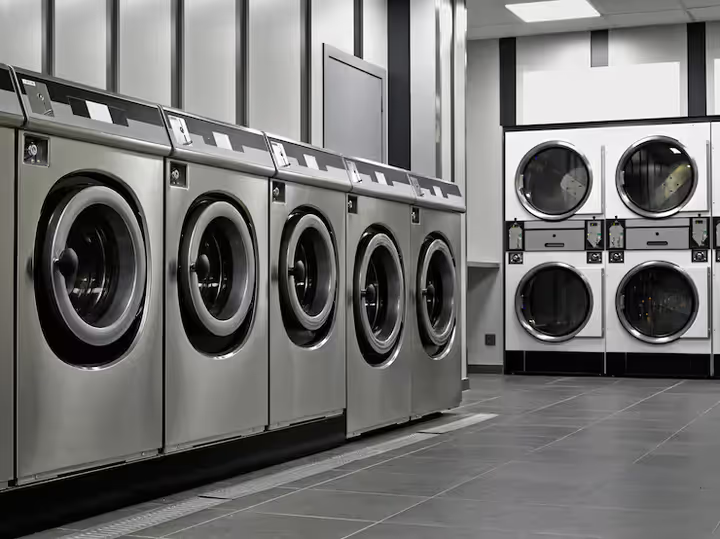
Industrial Dryers Explained: Types, Working Principles, Benefits, and Applications
Industrial dryers play an essential role in modern manufacturing by removing moisture from raw materials, processed products, and finished goods. Drying is one of the most common industrial processes because moisture can affect product quality, storage life, transportation, and manufacturing efficiency. From food production and pharmaceuticals to chemicals, textiles, minerals, and agriculture, industrial dryers help create consistent and reliable products across many industries.
As industries continue to focus on productivity, energy efficiency, and product quality, industrial drying technology has become more advanced. Modern systems are designed to dry materials quickly while maintaining precise control over temperature, airflow, humidity, and drying time. This improves manufacturing consistency while reducing energy waste and operational downtime.
This guide explains what industrial dryers are, how they work, why they are important, recent developments in drying technology, industry regulations, available tools, frequently asked questions, and future trends in industrial drying systems.
Understanding Industrial Dryers and Their Purpose
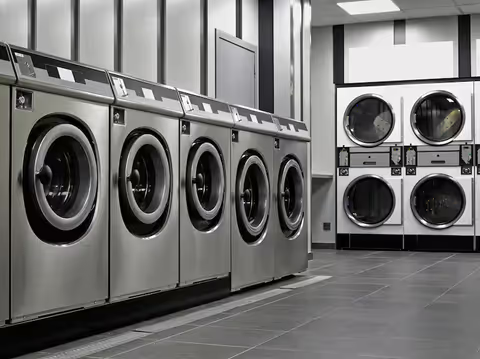
An industrial dryer is a machine or processing system designed to remove moisture from solid materials, liquids, powders, or gases through controlled heating and airflow. Unlike household dryers, industrial dryers are built for continuous operation and large-scale production environments where thousands of kilograms of material may require drying every day.
The drying process is important because excess moisture can reduce product stability, encourage microbial growth, affect chemical reactions, increase product weight, or interfere with packaging and storage.
Industrial dryers are commonly used for drying grains after harvesting, removing moisture from pharmaceutical ingredients, preparing chemical powders, curing coatings, drying textiles after washing, processing wood products, and reducing moisture in minerals before further processing.
Different industries require different drying methods depending on the material being processed, moisture content, desired final quality, and production capacity.
Why Industrial Dryers Are Important in Manufacturing
Drying is much more than removing water. It is a quality control process that directly affects the performance, durability, and safety of many products.
Industrial dryers help manufacturers achieve consistent moisture levels, which improves product quality and reduces production variations. A controlled drying process also helps preserve the physical and chemical properties of sensitive materials.
Moisture reduction also increases storage stability by minimizing spoilage, mold growth, and bacterial contamination in suitable applications. For many products, drying makes transportation easier because moisture adds unnecessary weight and volume.
Manufacturers also use industrial dryers to improve production speed. Automated drying systems reduce manual handling, shorten production cycles, and integrate with continuous manufacturing lines.
As industries adopt sustainability goals, energy-efficient drying systems also contribute to reduced energy consumption and lower environmental impact.
How Industrial Dryers Work
Industrial dryers operate by transferring heat to a material while allowing moisture to evaporate and escape through controlled airflow or vacuum systems. Although drying technologies differ, the basic principle remains similar.
The process usually begins when wet material enters the dryer through conveyors, hoppers, drums, or trays. Heat is applied using hot air, steam, electricity, infrared radiation, microwave energy, or other heat sources. As moisture evaporates, airflow removes humid air from the drying chamber while fresh air enters to continue drying.
Sensors continuously monitor temperature, humidity, airflow, and moisture content. Modern industrial dryers use automated control systems to maintain optimal drying conditions throughout the process.
The drying cycle ends when the material reaches its required moisture level, after which it moves to cooling, packaging, storage, or the next manufacturing stage.
Common Types of Industrial Dryers
Industrial dryers are available in several designs, each suitable for different manufacturing applications.
Rotary Dryers
Rotary dryers use a rotating cylindrical drum that moves material while hot air flows through it. These dryers are widely used for minerals, fertilizers, biomass, sand, and agricultural materials because they handle large volumes efficiently.
Fluid Bed Dryers
Fluid bed dryers suspend particles in a stream of heated air, creating uniform drying across powders and granules. They are commonly used in pharmaceutical manufacturing, food processing, and chemical industries.
Spray Dryers
Spray dryers convert liquid solutions into dry powder by spraying fine droplets into a chamber filled with hot air. This technology is widely used for milk powder, coffee, detergents, flavors, and pharmaceutical ingredients.
Belt Dryers
Belt dryers transport materials on moving conveyor belts while warm air circulates through multiple drying zones. Fruits, vegetables, herbs, wood products, and food ingredients are common applications.
Vacuum Dryers
Vacuum dryers remove moisture under reduced pressure, allowing drying at lower temperatures. This protects heat-sensitive materials such as pharmaceuticals, specialty chemicals, and laboratory products.
Tray Dryers
Tray dryers place materials on stacked trays inside heated chambers. These systems are suitable for batch processing where precise drying conditions are required for smaller production volumes.
Each dryer design offers different advantages depending on production requirements, material characteristics, and desired drying quality.
Industries That Use Industrial Dryers
Industrial drying technology supports a wide range of manufacturing sectors around the world.
Industry | Typical Drying Applications |
| Food Processing | Fruits, vegetables, grains, spices, dairy products, coffee, and snacks. |
| Pharmaceuticals | Powders, granules, tablets, active ingredients, and laboratory materials. |
| Chemicals | Fertilizers, pigments, polymers, catalysts, and specialty chemicals. |
| Textiles | Fabric drying, garment finishing, dye curing, and fiber processing. |
| Agriculture | Seeds, grains, animal feed, biomass, and crop processing. |
| Mining and Minerals | Sand, limestone, ores, clay, and mineral concentrates. |
| Wood Industry | Lumber drying, wood chips, pellets, and engineered wood products. |
Each industry selects drying equipment based on production capacity, moisture targets, and product sensitivity.
Key Components of an Industrial Dryer
An industrial dryer combines several systems that work together to achieve efficient moisture removal.
The heating system generates thermal energy using steam, electricity, gas, biomass, or waste heat. Air handling systems distribute heated air evenly throughout the drying chamber while maintaining airflow balance.
The drying chamber holds the material during processing and is designed for uniform heat distribution. Exhaust systems remove humid air and maintain airflow efficiency.
Sensors monitor temperature, humidity, airflow speed, and moisture levels in real time. Automated controllers adjust operating parameters to maintain consistent drying conditions.
Many modern dryers also include dust collection systems, insulation panels, moisture analyzers, safety controls, and digital monitoring interfaces.
Factors That Influence Drying Performance
Several variables determine how effectively an industrial dryer removes moisture.
Material properties play an important role because particle size, density, shape, and initial moisture content affect drying speed. Heat-sensitive materials require lower drying temperatures than minerals or agricultural products.
Air temperature influences evaporation rate, but excessively high temperatures may damage sensitive products. Airflow speed affects how quickly moisture leaves the drying chamber.
Humidity inside the dryer also impacts efficiency because dry incoming air absorbs moisture more effectively than humid air.
Residence time determines how long material stays inside the dryer. Proper balance between temperature and drying time helps maintain product quality while preventing over-drying or under-drying.
Automation systems optimize these variables continuously to improve consistency and reduce energy consumption.
Benefits of Modern Industrial Dryers
Modern industrial dryers provide significant operational advantages across manufacturing industries.
Consistent drying improves product quality by maintaining uniform moisture levels throughout production batches. Automated systems reduce human intervention and improve production efficiency during continuous manufacturing.
Energy-efficient technologies reduce fuel and electricity consumption through better heat recovery, airflow optimization, and insulation.
Industrial dryers also improve storage stability by reducing moisture-related deterioration in suitable materials. Lower moisture content often improves packaging efficiency and transportation handling.
Advanced monitoring systems help manufacturers maintain process consistency, reduce waste, and identify operational issues before they affect production quality.
These benefits contribute to improved manufacturing reliability without compromising product integrity.
Recent Trends in Industrial Drying Technology
Industrial drying technology has evolved significantly during the past year as manufacturers adopt smarter and more sustainable production systems.
One major trend is the integration of Industrial Internet of Things (IIoT) sensors that continuously monitor moisture content, airflow, and equipment performance. These sensors provide real-time operational insights and improve preventive maintenance planning.
Artificial intelligence is also being used to optimize drying cycles automatically based on historical production data and changing environmental conditions.
Energy recovery systems have become increasingly common, allowing manufacturers to reuse waste heat generated during production processes. This improves overall plant energy efficiency.
Hybrid drying technologies combine multiple heat sources such as infrared, microwave, and hot air drying to reduce drying time while protecting product quality.
Manufacturers are also adopting digital twins that simulate drying performance before production begins, helping engineers improve efficiency and reduce process variations.
Sustainability continues to influence dryer design through lower emissions, improved insulation, and renewable energy compatibility.
Energy Efficiency and Sustainability
Industrial drying is one of the most energy-intensive manufacturing operations, making efficiency an important design consideration.
Modern systems reduce energy consumption by improving heat transfer, minimizing heat loss, and recovering exhaust heat. Variable-speed fans and automated airflow controls help match energy use with production demand.
Better insulation reduces thermal losses while moisture sensors prevent unnecessary drying beyond target moisture levels.
Some manufacturing facilities integrate solar thermal systems, biomass heating, or waste heat from other industrial equipment into drying operations.
Sustainable drying practices help reduce environmental impact while supporting long-term operational efficiency and resource conservation.
Maintenance and Operational Best Practices
Regular maintenance helps industrial dryers operate safely and consistently over long production cycles.
Cleaning airflow passages prevents dust accumulation and maintains proper ventilation. Inspecting burners, heaters, and heat exchangers helps ensure efficient heat generation.
Sensors and moisture analyzers should be calibrated periodically for accurate process control. Conveyor belts, rotating drums, bearings, and motors also require routine inspection to prevent mechanical failures.
Monitoring exhaust systems helps maintain airflow efficiency and reduce moisture buildup inside the equipment.
Preventive maintenance schedules reduce unexpected downtime and extend equipment lifespan while maintaining drying quality.
Safety Standards and Industry Compliance
Industrial dryers operate under strict safety requirements because they involve heat, airflow, electrical systems, and combustible materials in some applications.
Manufacturers generally follow occupational safety standards related to equipment operation, ventilation, temperature control, emergency shutdown systems, and electrical safety.
Dust-producing industries often use explosion prevention systems, dust collection equipment, and ventilation controls to reduce combustible dust risks.
Food and pharmaceutical industries require hygienic dryer designs that support cleaning procedures and contamination control. Stainless steel construction and sanitary components are common in these environments.
Environmental regulations also encourage efficient emissions control and responsible energy use during industrial drying operations.
Tools and Technologies Supporting Industrial Dryers
Modern industrial drying systems are increasingly supported by intelligent digital technologies.
Moisture sensors provide continuous measurement during drying without interrupting production. Programmable Logic Controllers automate temperature and airflow adjustments throughout the drying cycle.
Human-Machine Interface panels allow operators to monitor performance, receive alerts, and adjust operating parameters easily.
Supervisory monitoring software collects production data for analysis, maintenance planning, and quality reporting.
Thermal imaging tools help engineers identify heat loss, insulation issues, and uneven temperature distribution inside drying equipment.
These technologies improve process visibility and help manufacturers make informed operational decisions.
Frequently Asked Questions
What is the main purpose of an industrial dryer?
The primary purpose is to remove controlled amounts of moisture from materials so they meet quality, storage, processing, or manufacturing requirements.
Which industries use industrial dryers the most?
Food processing, pharmaceuticals, chemicals, agriculture, textiles, mining, wood processing, and manufacturing industries all rely heavily on industrial drying systems.
How do industrial dryers improve product quality?
They maintain consistent moisture levels, reduce spoilage risk where applicable, improve stability, and help ensure uniform manufacturing results.
Are industrial dryers energy intensive?
Yes, drying requires significant energy, but modern systems use heat recovery, automation, insulation, and efficient airflow management to reduce energy consumption.
What is the difference between batch and continuous dryers?
Batch dryers process materials in separate loads, while continuous dryers move materials through the drying system without stopping production.
Conclusion
Industrial dryers are a critical part of modern manufacturing because they help control moisture, improve product quality, increase production efficiency, and support reliable industrial processes. Different dryer technologies are designed for different materials, production capacities, and quality requirements, making drying one of the most adaptable manufacturing operations across industries.
Recent advances in automation, artificial intelligence, IIoT monitoring, energy recovery, and hybrid drying technologies are transforming industrial drying into a smarter and more sustainable process. At the same time, preventive maintenance, safety standards, and efficient operational practices continue to play an important role in maintaining reliable performance.
As industries focus on sustainability and digital manufacturing, industrial dryers will continue evolving with intelligent controls, energy-efficient designs, and data-driven process optimization that improve productivity while supporting long-term operational goals.