Industrial Gas Systems Explained: Types, Components, Applications, and Safety Guide (2026)
Industrial gas systems are an essential part of modern manufacturing, healthcare, food production, energy, and research industries. These systems safely store, transport, regulate, and distribute gases used in industrial operations. From oxygen and nitrogen in hospitals to compressed air and carbon dioxide in manufacturing facilities, industrial gas systems help businesses maintain efficiency, precision, and workplace safety.
Although many industrial processes rely on gases every day, the systems behind them often operate quietly in the background. Understanding how these systems work can help businesses improve operational reliability, reduce safety risks, and support better maintenance planning.
This guide explains industrial gas systems in simple terms, including their components, common applications, safety considerations, maintenance practices, and recent developments shaping the industry.
What Are Industrial Gas Systems?
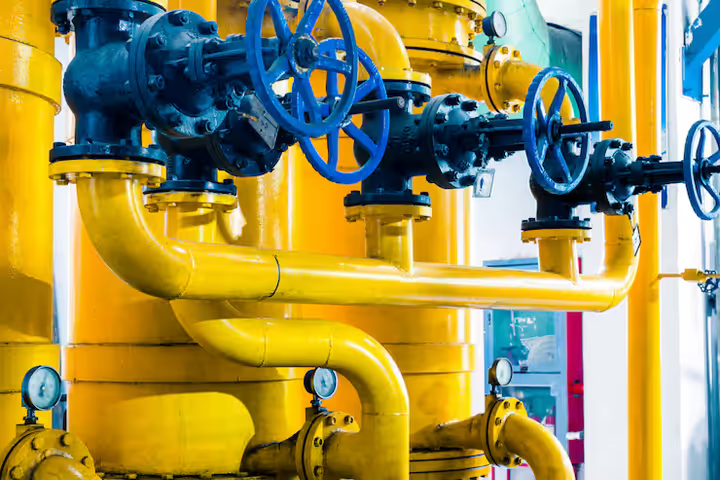
Industrial gas systems are engineered networks that store, control, and distribute gases for industrial or commercial use. They include storage tanks, pipelines, pressure regulators, valves, monitoring equipment, and safety devices that work together to deliver gases at controlled pressures and flow rates.
These systems are designed to handle different types of gases depending on the industry's operational needs. Some gases support combustion, while others provide cooling, shielding, preservation, or chemical processing functions.
An industrial gas system is not simply a gas container. It is a complete infrastructure that ensures gases move safely from storage to the point of use while maintaining consistent quality and pressure.
Why Industrial Gas Systems Are Important
Industrial gas systems play a critical role in maintaining productivity and operational consistency across many sectors.
Their importance includes:
Supporting continuous manufacturing processes.
Providing precise gas flow for automated production.
Maintaining product quality in food and pharmaceutical industries.
Enabling medical gas delivery in healthcare facilities.
Improving workplace safety through controlled gas distribution.
Reducing waste by regulating gas consumption efficiently.
Without a properly designed gas system, industries may experience pressure fluctuations, contamination, equipment damage, or safety hazards.
Common Types of Industrial Gases Used in Industry
Different industries require different gases based on their applications.
Oxygen
Oxygen is commonly used in steel manufacturing, metal cutting, welding, medical facilities, and wastewater treatment.
Nitrogen
Nitrogen is widely used for inerting, food packaging, electronics manufacturing, chemical processing, and laboratory applications because it reduces oxidation.
Carbon Dioxide
Carbon dioxide is used in beverage production, food preservation, refrigeration, welding, and fire suppression systems.
Hydrogen
Hydrogen supports petroleum refining, fuel production, semiconductor manufacturing, chemical synthesis, and emerging clean energy applications.
Argon
Argon is frequently used in welding, metal fabrication, electronics production, and scientific research where an inert atmosphere is required.
Compressed Air
Although not always classified alongside specialty gases, compressed air systems are one of the most widely used industrial gas systems for powering pneumatic tools, automation equipment, and production machinery.
Main Components of an Industrial Gas System
Every industrial gas system includes several interconnected components that ensure reliable gas delivery.
Gas Storage Tanks or Cylinders
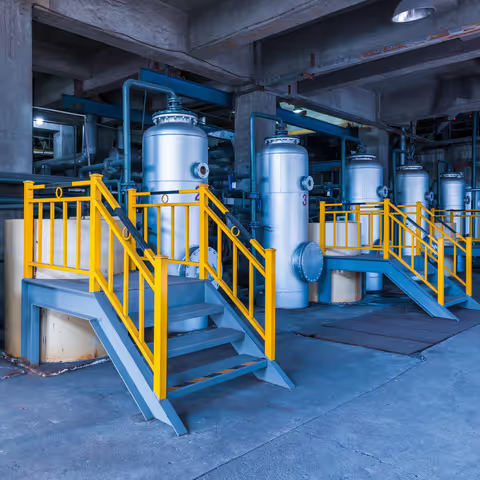
Storage vessels hold gases either in compressed or liquefied form depending on the gas type and application.
Pressure Regulators
Pressure regulators reduce high storage pressure to safe operating pressure for equipment and pipelines.
Pipeline Distribution Network
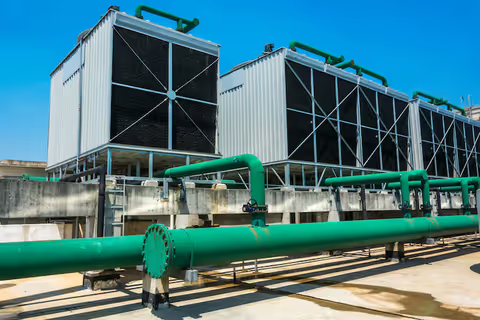
Pipelines transport gas throughout a facility from the storage area to different workstations or production equipment.
Valves and Flow Control Devices
Valves isolate sections of the system, regulate flow, and provide emergency shutdown capability.
Monitoring and Detection Systems
Sensors monitor gas pressure, flow rate, temperature, and gas leaks to improve operational safety.
Safety Relief Devices
Pressure relief valves protect equipment and pipelines from excessive pressure buildup.
How Industrial Gas Systems Work
Industrial gas systems follow a structured flow from storage to end use.
Stage | Purpose |
| Gas Storage | Safely stores compressed or liquefied gases. |
| Pressure Regulation | Adjusts pressure for safe distribution. |
| Distribution | Delivers gas through pipelines to equipment. |
| Flow Control | Maintains required gas volume and pressure. |
| Monitoring | Tracks performance and detects abnormalities. |
| End Application | Gas is used in industrial equipment or processes. |
This controlled sequence helps maintain consistent gas quality and operational efficiency.
Industries That Use Industrial Gas Systems
Industrial gas systems support a wide variety of industries around the world.
Manufacturing
Manufacturers use industrial gases for welding, cutting, heat treatment, metal fabrication, and automation.
Healthcare
Hospitals rely on medical gas systems for oxygen, nitrous oxide, vacuum systems, and compressed medical air.
Food and Beverage
Industrial gases help preserve freshness, package food, carbonate beverages, and support refrigeration processes.
Chemical Processing
Chemical plants use gases for reactions, inert atmospheres, oxidation, and purification.
Electronics and Semiconductor Manufacturing
High-purity gases are essential for wafer fabrication, chip manufacturing, and cleanroom operations.
Energy Sector
Power plants, hydrogen production facilities, and renewable energy projects depend on industrial gas systems for multiple operational processes.
Benefits of Well-Designed Industrial Gas Systems
A properly engineered gas system offers operational, environmental, and safety advantages.
Improved Operational Efficiency
Stable gas supply minimizes interruptions during production.
Better Process Accuracy
Consistent pressure improves manufacturing precision and product quality.
Enhanced Safety
Built-in safety controls reduce the likelihood of leaks, overpressure incidents, and accidental exposure.
Reduced Gas Waste
Flow regulation helps optimize gas consumption and reduce unnecessary losses.
Easier Maintenance
Well-organized systems simplify inspection, servicing, and component replacement.
Safety Practices for Industrial Gas Systems
Safety is one of the most important aspects of industrial gas management.
Proper Ventilation
Facilities using industrial gases should maintain adequate ventilation to prevent gas accumulation.
Leak Detection
Gas detection systems help identify leaks before they become hazardous.
Pressure Monitoring
Continuous pressure monitoring helps prevent equipment damage and unsafe operating conditions.
Correct Cylinder Handling
Gas cylinders should be stored securely, transported carefully, and protected from physical damage.
Emergency Shut-Off Systems
Accessible emergency valves allow operators to isolate gas supply during emergencies.
Employee Training
Workers should understand gas properties, emergency procedures, and safe equipment operation.
Common Challenges in Industrial Gas Systems
Industrial gas systems can experience operational issues if maintenance or design is inadequate.
Pressure Fluctuations
Incorrect regulator settings or pipeline restrictions may reduce system performance.
Gas Contamination
Moisture, dust, or impurities can affect sensitive manufacturing processes.
Pipeline Leaks
Small leaks may increase gas consumption and reduce workplace safety.
Equipment Wear
Valves, seals, regulators, and connectors naturally wear over time and require inspection.
Storage Capacity Management
Facilities must balance storage volume with operational demand to avoid shortages or excess inventory.
Early detection and preventive maintenance help minimize these challenges.
Maintenance Best Practices
Routine maintenance improves both safety and equipment lifespan.
Recommended maintenance activities include:
Inspecting regulators and valves regularly.
Testing gas leak detection equipment.
Checking pipeline connections for wear or corrosion.
Monitoring pressure gauges for abnormal readings.
Cleaning filters and removing contaminants.
Calibrating monitoring instruments according to maintenance schedules.
A preventive maintenance program is generally more effective than waiting for equipment failures.
Environmental Considerations
Industrial gas systems are becoming more efficient as industries focus on sustainability.
Important environmental practices include:
Minimizing gas leaks to reduce emissions.
Recovering and reusing certain industrial gases where appropriate.
Improving pipeline efficiency to reduce waste.
Using energy-efficient compressors in compressed air systems.
Monitoring consumption through digital management systems.
These practices support both operational efficiency and environmental responsibility.
Recent Trends in Industrial Gas Systems (2025–2026)
Industrial gas technology continues to evolve as industries adopt smarter and cleaner operations.
Smart Monitoring Systems
Facilities increasingly use digital sensors and automated monitoring to track pressure, temperature, and gas flow in real time.
Industrial Internet of Things (IIoT)
Connected gas systems integrate with factory automation platforms, allowing predictive maintenance and remote monitoring.
Hydrogen Infrastructure Growth
Growing investment in hydrogen production and storage is expanding industrial gas infrastructure in manufacturing and energy sectors.
High-Purity Gas Demand
Electronics, pharmaceutical manufacturing, and semiconductor industries continue increasing demand for ultra-high-purity gas systems.
Energy-Efficient Gas Distribution
New designs focus on reducing pressure losses and improving overall system efficiency through optimized pipeline layouts and intelligent controls.
These trends reflect a broader shift toward automation, sustainability, and operational resilience.
Choosing the Right Industrial Gas System
Selecting an industrial gas system depends on operational requirements rather than one universal design.
Factors to evaluate include:
Consideration | Why It Matters |
| Gas Type | Different gases require different storage and handling methods. |
| Pressure Requirements | Equipment must receive gas at appropriate operating pressure. |
| Flow Rate | System size depends on expected gas consumption. |
| Purity Level | Sensitive industries require contamination-free gas delivery. |
| Safety Features | Leak detection, relief valves, and monitoring systems improve protection. |
| Scalability | Systems should accommodate future production expansion. |
Proper planning ensures the system remains reliable as operational needs grow.
Frequently Asked Questions About Industrial Gas Systems
What is an industrial gas system used for?
Industrial gas systems safely store, regulate, and distribute gases used in manufacturing, healthcare, food processing, chemical production, research, and energy industries.
What gases are commonly used in industrial systems?
Common industrial gases include oxygen, nitrogen, carbon dioxide, hydrogen, argon, helium, and compressed air, depending on the application.
Why is pressure regulation important?
Pressure regulation ensures equipment receives gas at safe and consistent operating levels, protecting machinery and maintaining process quality.
How often should industrial gas systems be inspected?
Inspection frequency depends on the facility, gas type, operating conditions, and maintenance policies, but routine preventive inspections are essential for safe operation.
What is the difference between compressed gas and liquefied gas systems?
Compressed gas systems store gases under high pressure in gaseous form, while liquefied gas systems store gases in liquid form under controlled pressure and temperature conditions.
Conclusion
Industrial gas systems are a vital part of modern industrial infrastructure, supporting everything from manufacturing and healthcare to food production and advanced technology industries. These systems do much more than store gases—they regulate pressure, ensure safe distribution, maintain gas purity, and help industrial processes operate efficiently and reliably.
As industries continue adopting automation, digital monitoring, and energy-efficient technologies, industrial gas systems are becoming smarter and more sustainable. Understanding their components, applications, safety practices, and maintenance requirements helps businesses build safer workplaces, reduce operational downtime, and improve long-term performance.
A well-designed industrial gas system combines engineering, safety, and efficiency to deliver consistent gas supply while supporting the evolving needs of modern industry.