Industrial Instrumentation Explained: Types, Components, Applications, and Modern Industry Guide
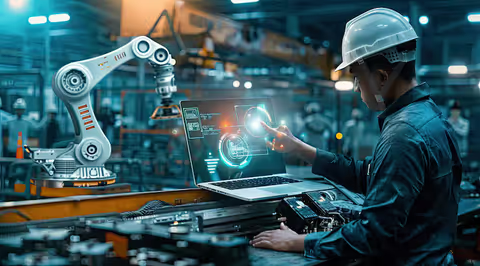
Industrial instrumentation is the foundation of modern manufacturing, processing, and automation systems. It refers to the devices, technologies, and systems used to measure, monitor, and control industrial processes. From temperature and pressure to flow and level measurement, instrumentation helps industries maintain accurate operations, improve product quality, and ensure workplace safety.
Every industrial facility relies on instrumentation to collect real-time information from machines and production processes. The collected data allows operators and automated systems to make informed decisions, detect abnormalities, and maintain consistent performance. Whether in chemical plants, power stations, food processing facilities, pharmaceutical manufacturing, or oil and gas operations, industrial instrumentation plays a central role in day-to-day operations.
As industries continue adopting automation, digital monitoring, and smart manufacturing technologies, instrumentation systems have become more intelligent, connected, and capable of supporting efficient industrial operations.
Why Industrial Instrumentation Matters in Modern Industry
Industrial processes involve complex operations where even small measurement errors can affect quality, productivity, or safety. Industrial instrumentation helps maintain control over these operations by providing accurate measurements and automated responses.
The importance of instrumentation extends beyond monitoring equipment. It creates a communication bridge between physical processes and control systems. Sensors detect changes in the environment, transmitters convert those readings into usable signals, controllers analyze the information, and actuators perform corrective actions when required.
This continuous measurement and control process reduces operational risks, minimizes waste, improves energy efficiency, and supports compliance with industrial standards. Accurate instrumentation also enables predictive maintenance by identifying performance changes before equipment failures occur.
With increasing demand for automation and data-driven manufacturing, industrial instrumentation has become essential for improving operational reliability and long-term productivity.
How Industrial Instrumentation Works
Industrial instrumentation follows a structured measurement and control process that transforms physical conditions into actionable information.
The process begins with sensing. A sensor detects a physical variable such as temperature, pressure, flow rate, or liquid level. This measurement is converted into an electrical or digital signal through a transmitter.
The transmitter sends the signal to a control system, such as a programmable logic controller (PLC) or distributed control system (DCS). The controller compares the measured value with the desired operating value, known as the setpoint.
If a difference exists between the actual value and the setpoint, the controller generates an output signal. This signal operates devices such as valves, motors, pumps, or actuators to adjust the industrial process.
This closed-loop system continuously measures, analyzes, and controls industrial operations, helping maintain stable production conditions.
Main Components of an Industrial Instrumentation System
Industrial instrumentation systems consist of multiple interconnected components that work together to monitor and control industrial processes.
Sensors
Sensors are the first point of measurement in an instrumentation system. They detect physical conditions and convert them into measurable signals.
Common sensors include temperature sensors, pressure sensors, proximity sensors, humidity sensors, vibration sensors, and level sensors. Different industries select sensors based on process requirements and environmental conditions.
Transmitters
Transmitters receive information from sensors and convert it into standardized electrical signals suitable for industrial control systems.
Modern transmitters often support analog and digital communication protocols, allowing accurate data transmission over long distances while reducing signal interference.
Controllers
Controllers process measurement data and determine whether corrective actions are required.
Programmable Logic Controllers (PLCs), Distributed Control Systems (DCS), and industrial control units perform automated decision-making based on predefined control logic.
Final Control Elements
Final control elements physically adjust industrial processes according to controller instructions.
Examples include control valves, electric motors, dampers, actuators, variable frequency drives, and automated switches.
These devices regulate process variables and maintain desired operating conditions.
Types of Measurements in Industrial Instrumentation
Industrial instrumentation measures different process variables depending on industrial applications.
Measurement Type | Purpose in Industrial Processes |
| Temperature Measurement | Monitors heating, cooling, reactors, furnaces, and storage systems. |
| Pressure Measurement | Measures pressure inside pipelines, vessels, compressors, and hydraulic systems. |
| Flow Measurement | Determines liquid, gas, or steam movement through pipelines. |
| Level Measurement | Measures liquid or solid levels inside tanks, silos, and containers. |
| Humidity Measurement | Controls environmental conditions in manufacturing facilities. |
| Vibration Measurement | Monitors rotating machinery for predictive maintenance. |
| pH and Chemical Measurement | Measures chemical composition and acidity in industrial processes. |
Each measurement supports process stability, product consistency, and equipment protection.
Common Industrial Instruments Used in Manufacturing
Industrial facilities use a wide range of instruments designed for specific measurement and control applications.
Temperature instruments include thermocouples, resistance temperature detectors (RTDs), infrared sensors, and temperature transmitters.
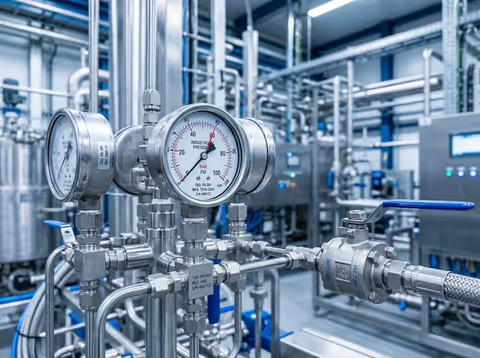
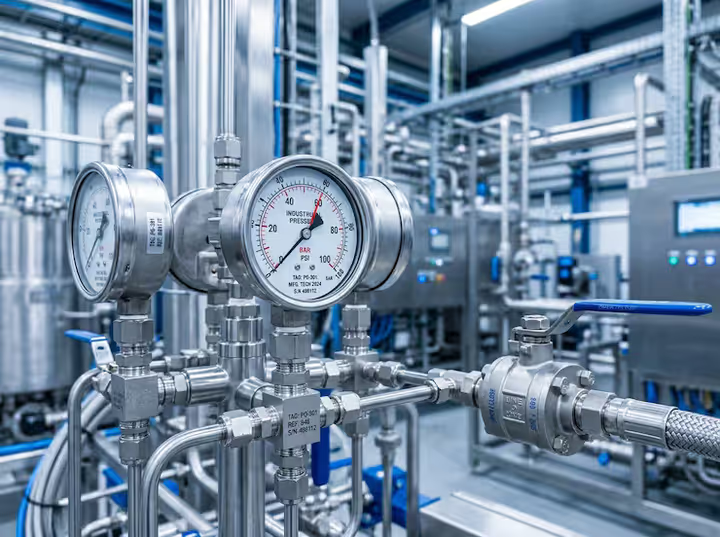
Pressure instruments include pressure gauges, differential pressure transmitters, pressure switches, and pressure sensors.
Flow instruments include magnetic flow meters, ultrasonic flow meters, turbine flow meters, vortex flow meters, and mass flow meters.
Level instruments include float level sensors, ultrasonic level transmitters, radar level sensors, capacitance level switches, and hydrostatic level transmitters.
Other commonly used instruments include control valves, positioners, signal converters, industrial indicators, data loggers, and vibration monitoring systems.
The selection of instruments depends on process conditions, fluid characteristics, operating temperature, pressure range, and required accuracy.
Industrial Instrumentation in Automation Systems
Automation and instrumentation work together to create efficient industrial control systems. Instrumentation provides accurate field data, while automation systems use that information to operate machinery with minimal human intervention.
Programmable Logic Controllers receive sensor inputs and execute programmed control sequences. Distributed Control Systems manage large industrial plants through multiple controllers connected across different production units.
Human Machine Interface (HMI) panels allow operators to visualize process information, monitor alarms, and control equipment through graphical interfaces.
Supervisory Control and Data Acquisition (SCADA) systems collect information from multiple industrial sites, enabling centralized monitoring, reporting, and remote operation.
This integration improves production visibility, reduces manual errors, and supports real-time operational decision-making.
Role of Calibration in Industrial Instrumentation
Calibration is the process of comparing an instrument's measurement with a known reference standard to verify its accuracy.
Over time, industrial instruments may drift due to environmental conditions, aging, vibration, or continuous operation. Calibration identifies these deviations and restores measurement accuracy.
Accurate calibration helps maintain product quality, process consistency, regulatory compliance, and equipment reliability.
Calibration schedules vary depending on instrument type, industry standards, operating conditions, and criticality of the measurement.
Industries often maintain calibration records to demonstrate compliance with quality management systems and operational procedures.
Communication Protocols in Industrial Instrumentation
Modern industrial instrumentation uses communication protocols to exchange information between field devices and control systems.
Analog communication traditionally uses 4–20 mA current signals for transmitting measurement values.
Digital communication protocols provide additional diagnostics, configuration capabilities, and improved accuracy.
Common industrial communication protocols include HART, Modbus, Profibus, Foundation Fieldbus, Ethernet/IP, PROFINET, and OPC UA.
These protocols enable interoperability between instruments from different manufacturers while supporting industrial automation and Industrial Internet of Things (IIoT) applications.
Applications of Industrial Instrumentation Across Industries
Industrial instrumentation supports operations across numerous industrial sectors where accurate measurement and control are essential.
Industry | Instrumentation Applications |
| Oil and Gas | Pipeline monitoring, pressure control, flow measurement, safety shutdown systems. |
| Power Generation | Boiler control, turbine monitoring, steam flow, temperature regulation. |
| Chemical Processing | Reaction control, level monitoring, chemical dosing, pressure safety. |
| Food and Beverage | Temperature control, hygiene monitoring, filling systems, quality assurance. |
| Pharmaceutical Manufacturing | Cleanroom monitoring, humidity control, batch processing, validation systems. |
| Water Treatment | Flow monitoring, pH measurement, chlorine dosing, reservoir level control. |
| Mining and Metals | Conveyor monitoring, pressure systems, vibration analysis, environmental monitoring. |
Instrumentation helps these industries improve safety, maintain production efficiency, and monitor environmental performance.
Recent Developments in Industrial Instrumentation
Industrial instrumentation continues evolving alongside Industry 4.0 technologies and digital manufacturing practices.
Smart sensors now provide built-in diagnostics, wireless communication, and health monitoring capabilities. These sensors help maintenance teams identify potential issues before failures occur.
Wireless instrumentation reduces wiring complexity and supports monitoring in remote or hazardous environments. Battery-powered field devices make installation more flexible in large industrial facilities.
Industrial Internet of Things platforms connect thousands of instruments into centralized monitoring systems. Real-time dashboards allow operators to analyze equipment performance from multiple locations.
Artificial intelligence and machine learning are increasingly used to interpret instrumentation data for predictive maintenance, process optimization, and anomaly detection.
Cloud-based monitoring platforms also improve access to industrial performance reports, historical trends, and maintenance planning.
These advancements make instrumentation systems more intelligent, scalable, and responsive.
Safety Systems and Industrial Instrumentation
Safety is one of the most important functions of industrial instrumentation. Instrumentation continuously monitors conditions that could create hazardous situations and activates protective actions when necessary.
Safety Instrumented Systems (SIS) operate independently from standard control systems to protect equipment and personnel during abnormal conditions.
Emergency shutdown systems isolate equipment when dangerous pressure, temperature, or flow conditions are detected.
Gas detectors monitor hazardous gases in industrial facilities and trigger alarms or ventilation systems when required.
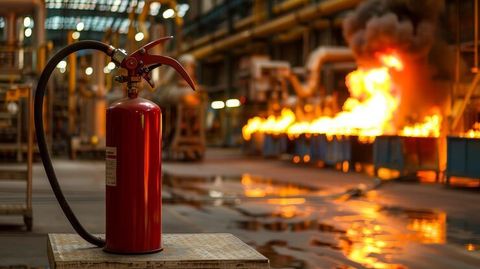
Fire detection instrumentation measures smoke, heat, and flame conditions in industrial environments.
Reliable instrumentation helps reduce operational risks while supporting compliance with industrial safety regulations and engineering practices.
Maintenance and Troubleshooting of Industrial Instruments
Proper maintenance helps instrumentation systems deliver accurate measurements over long operating periods.
Routine inspections identify damaged wiring, corrosion, leaks, loose connections, or environmental contamination.
Calibration verification ensures measurement accuracy remains within acceptable limits.
Cleaning sensors prevents contamination that may affect readings in dusty, wet, or chemical environments.
Diagnostic features in modern transmitters help identify communication failures, sensor drift, power supply issues, and configuration errors.
Troubleshooting often begins by verifying sensor signals, transmitter outputs, controller inputs, communication networks, and actuator responses.
Preventive maintenance reduces unexpected downtime and extends equipment life.
Challenges in Industrial Instrumentation
Industrial instrumentation systems operate in demanding environments that present several technical challenges.
Extreme temperatures, high pressure, vibration, moisture, corrosive chemicals, and electromagnetic interference can affect instrument performance.
Selecting compatible materials and appropriate protection ratings helps improve durability in harsh industrial conditions.
Maintaining calibration across large industrial facilities requires structured maintenance planning and documentation.
Cybersecurity has also become increasingly important as instrumentation systems connect to industrial networks and cloud platforms.
Addressing these challenges requires proper system design, regular maintenance, and secure communication infrastructure.
Future of Industrial Instrumentation
Industrial instrumentation is becoming increasingly digital, connected, and intelligent. Future systems are expected to provide greater automation, improved diagnostics, and enhanced integration with industrial analytics platforms.
Smart field devices will continue generating detailed operational data that supports predictive maintenance and process optimization. Edge computing will allow instruments to process information locally before transmitting only essential data to control systems.
Digital twins are expected to become more common, allowing engineers to simulate industrial processes using real-time instrumentation data. This improves equipment planning, maintenance scheduling, and operational efficiency.
Sustainability goals are also influencing instrumentation development through improved energy monitoring, emissions measurement, water management, and resource optimization technologies.
As industrial facilities continue adopting advanced automation and connected manufacturing, instrumentation will remain one of the most important technologies for achieving reliable, safe, and efficient industrial operations.
Frequently Asked Questions
What is industrial instrumentation?
Industrial instrumentation is the collection of devices and systems used to measure, monitor, and control industrial processes such as temperature, pressure, flow, level, and other operational variables.
What is the difference between instrumentation and automation?
Instrumentation focuses on measuring and monitoring process variables, while automation uses those measurements to control machines and industrial processes automatically through controllers and software systems.
Why is calibration important in industrial instrumentation?
Calibration ensures instruments provide accurate and reliable measurements by comparing them with reference standards and correcting any measurement drift.
Which industries use industrial instrumentation?
Industrial instrumentation is widely used in oil and gas, power generation, chemical processing, pharmaceuticals, food manufacturing, water treatment, mining, manufacturing, and many other industrial sectors.
What are smart industrial instruments?
Smart industrial instruments combine sensing, diagnostics, communication, and digital processing capabilities to provide accurate measurements, remote monitoring, and predictive maintenance information.
Conclusion
Industrial instrumentation is a critical technology that enables accurate measurement, reliable monitoring, and automated control across modern industries. It connects physical industrial processes with intelligent control systems, helping organizations improve safety, quality, productivity, and operational efficiency. From traditional sensors and transmitters to smart connected instruments powered by Industrial Internet of Things technologies, instrumentation continues to evolve alongside modern manufacturing and automation. Understanding its components, measurement methods, communication systems, calibration practices, and industrial applications provides a strong foundation for anyone interested in industrial operations, automation systems, or advanced manufacturing technologies in today's digital industrial environment.