Industrial Storage Systems Guide : Types, Benefits, Applications, and Planning
Industrial storage systems are organized storage solutions used in warehouses, factories, distribution centers, and manufacturing facilities to store raw materials, finished goods, tools, equipment, and inventory safely and efficiently. They are designed to maximize available space while making materials easy to access, move, and manage.
As industries continue to grow and supply chains become more complex, storage has become much more than simply placing products on shelves. Modern storage systems help businesses improve workflow, reduce clutter, protect valuable inventory, and support faster operations. Whether a facility handles heavy machinery, packaged products, spare parts, or industrial supplies, choosing the right storage system plays an important role in daily operations.
Industrial storage systems come in many designs and sizes because every warehouse or production facility has different storage requirements. The right solution depends on available floor space, ceiling height, inventory type, product weight, and material handling methods.
Why Industrial Storage Systems Matter Today
Efficient storage has become increasingly important as warehouses handle larger volumes of inventory and businesses expect faster order processing. Poor storage organization can lead to wasted space, damaged goods, slower picking times, and safety risks for workers.
Industrial storage systems help facilities use both horizontal and vertical space more effectively. Instead of expanding warehouse buildings, many businesses increase storage capacity by using taller racks and better storage layouts.
A well-designed storage system also improves inventory visibility. Workers can quickly locate products, reducing search time and improving operational efficiency. Organized storage minimizes misplaced inventory and supports smoother warehouse management.
Another important benefit is workplace safety. Proper storage systems reduce the chances of falling materials, blocked walkways, and overloaded shelves. Clear storage layouts also help equipment operators move safely through warehouses.
As automation becomes more common in logistics and manufacturing, storage systems are increasingly designed to work with forklifts, conveyors, automated guided vehicles, and warehouse management software.
How Industrial Storage Systems Work
Industrial storage systems organize inventory into designated storage locations based on product characteristics, movement frequency, and operational needs. Every product receives a specific location within the storage layout, making inventory easier to track and retrieve.
Warehouses often separate storage into receiving, storage, picking, packing, and shipping zones. Products arrive at receiving areas before being placed into storage racks or shelving systems. Inventory is later picked from these locations when needed for production or shipment.
Storage systems also work alongside inventory management practices such as first-in, first-out for products with expiration dates or last-in, first-out for selected industrial applications. Organized storage helps maintain inventory accuracy while supporting efficient stock rotation.
Material handling equipment such as forklifts, pallet jacks, stackers, and conveyors interacts with storage systems to move goods safely between locations.
Common Types of Industrial Storage Systems
Industrial storage systems are available in different configurations depending on storage capacity, accessibility, and warehouse design.
Pallet Racking Systems
Pallet racking is one of the most widely used industrial storage systems. It stores palletized goods vertically using multiple rack levels.
Selective pallet racks provide direct access to every pallet, making them suitable for warehouses with many different products. They are commonly used in manufacturing facilities, retail distribution centers, and logistics warehouses.
Drive-in and drive-through pallet racks increase storage density by allowing forklifts to enter rack lanes. These systems are useful for storing large quantities of similar products.
Cantilever Storage Systems
Cantilever racks are designed for storing long, bulky materials that cannot fit traditional shelving.
Common materials include steel pipes, timber, metal sheets, furniture components, and construction materials. Open-front designs make loading and unloading easier for oversized items.
Shelving Systems
Industrial shelving stores smaller products, tools, spare parts, maintenance supplies, and packaged inventory.
Shelving systems are commonly used in workshops, maintenance departments, pharmaceutical warehouses, and electronics storage. Adjustable shelves allow facilities to accommodate products of different sizes.
Mezzanine Storage Systems
Mezzanine systems create additional storage levels inside existing warehouse buildings.
Instead of expanding warehouse floor space, businesses install elevated platforms for storage, offices, or picking areas. Mezzanine systems help maximize vertical warehouse capacity while improving space utilization.
Mobile Storage Systems
Mobile storage systems use movable shelving or racks that slide along floor tracks.
Only one access aisle remains open at a time, allowing more storage capacity within the same warehouse footprint. These systems are commonly used for archives, spare parts, and specialized inventory storage.
Automated Storage Systems
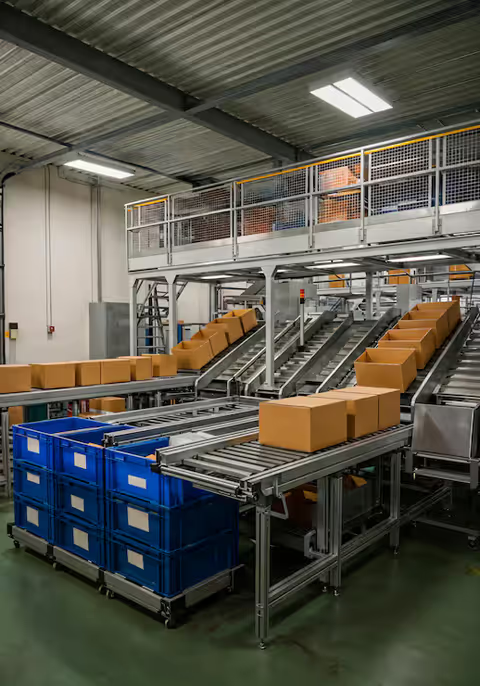
Automated storage systems use machines, conveyors, shuttles, or robotic equipment to store and retrieve inventory automatically.
These systems reduce manual handling, improve picking accuracy, and support high-volume warehouse operations. Automated storage is becoming increasingly common in e-commerce fulfillment centers and advanced manufacturing facilities.
Choosing the Right Industrial Storage System
Selecting the appropriate storage system requires understanding both operational needs and warehouse limitations.
The type of inventory is one of the first considerations. Heavy products require stronger storage structures, while lightweight items may only need shelving systems.
Warehouse dimensions also influence storage design. Facilities with high ceilings can benefit from vertical pallet racking or mezzanine systems.
Inventory turnover is another important factor. Frequently accessed products should remain easily reachable, while slower-moving inventory can be stored in higher or denser storage locations.
Material handling equipment must also match the storage design. Rack spacing, aisle width, and load capacity should accommodate forklifts and warehouse vehicles used inside the facility.
Planning for future inventory growth helps prevent storage limitations as operations expand.
Benefits of Industrial Storage Systems
Industrial storage systems provide advantages across warehouse operations, inventory management, safety, and productivity.
| Benefit | How It Helps |
|---|---|
| Better space utilization | Uses vertical and horizontal warehouse space efficiently. |
| Improved inventory organization | Creates designated storage locations for products and materials. |
| Faster warehouse operations | Reduces time spent locating and retrieving inventory. |
| Enhanced workplace safety | Supports organized storage and clear movement paths. |
| Reduced product damage | Stores inventory securely with proper load distribution. |
| Scalability | Allows warehouses to expand storage capacity without major building expansion. |
These benefits contribute to smoother warehouse operations while improving inventory accuracy and workflow efficiency.
Where Industrial Storage Systems Are Used
Industrial storage systems support many industries because storage needs vary across manufacturing, logistics, healthcare, retail, and construction.
Manufacturing facilities use storage systems for raw materials, components, work-in-progress inventory, and finished products.
Warehouses and distribution centers organize products before shipment to retailers or customers.
Automotive industries store vehicle parts, tools, tires, and maintenance equipment.
Food and beverage facilities use storage systems for packaged goods, ingredients, and refrigerated inventory where appropriate.
Pharmaceutical warehouses organize medicines, packaging materials, and medical equipment under controlled inventory systems.
Construction companies use cantilever racks and heavy-duty storage for pipes, steel sections, timber, and building materials.
E-commerce fulfillment centers rely on organized shelving, pallet racks, and automated storage to support fast order processing.
Safety Practices for Industrial Storage Systems
Warehouse safety depends heavily on proper storage installation and maintenance. Every storage system has a specified load capacity that should never be exceeded.
Heavy products should be stored on lower rack levels whenever possible to improve stability. Lighter products can occupy higher shelves based on storage design.
Workers should inspect racks regularly for bent beams, damaged columns, loose anchors, or corrosion. Damaged storage components should be repaired or replaced before continued use.
Clear aisle markings help forklifts and workers move safely through storage areas. Emergency exits, fire equipment, and access pathways should remain unobstructed.
Warehouse staff benefit from training on safe loading practices, rack inspection procedures, and material handling equipment operation.
Regular maintenance extends the lifespan of storage systems while reducing operational risks.
Planning an Efficient Warehouse Storage Layout
A storage system performs best when integrated into a well-planned warehouse layout.
Receiving areas should be located near unloading points to reduce unnecessary movement. Frequently picked products are typically stored closer to packing and shipping zones.
High-demand inventory is often placed at accessible heights to improve picking speed. Seasonal or slower-moving products may occupy upper storage levels.
Aisle width should balance storage density with forklift maneuverability. Narrow aisles increase storage capacity but require compatible handling equipment.
Warehouse layouts also benefit from clear labeling systems. Rack numbers, shelf labels, and location identifiers improve inventory tracking and reduce picking errors.
Planning storage zones according to inventory categories helps simplify warehouse navigation and stock management.
Recent Trends in Industrial Storage Systems (2025–2026)
Industrial storage systems continue evolving alongside automation, sustainability, and digital warehouse management.
One major trend is the adoption of automated storage and retrieval systems in large fulfillment centers. These systems improve inventory accuracy and reduce manual travel time inside warehouses.
Smart warehouses are increasingly integrating storage systems with warehouse management software, barcode scanning, RFID tracking, and inventory sensors. These technologies provide real-time inventory visibility and improve stock accuracy.
Modular storage systems are becoming more popular because they can be expanded or reconfigured as storage needs change. This flexibility helps facilities adapt to changing inventory volumes without redesigning entire warehouses.
Sustainability is also influencing storage design. Many facilities are choosing durable materials, recyclable steel racks, energy-efficient warehouse layouts, and optimized storage density to reduce environmental impact.
Another growing trend is the use of vertical storage solutions in urban warehouses where available floor space is limited.
Industrial Storage Systems and Warehouse Efficiency
Warehouse efficiency depends on how well storage systems support inventory movement from receiving to shipping.
Organized storage reduces unnecessary travel time for warehouse workers. Products stored in logical locations improve picking speed and reduce operational delays.
Inventory accuracy also improves because products remain assigned to specific storage locations. Warehouse management software can connect digital inventory records with physical storage positions.
Storage systems help reduce congestion by separating storage areas from picking and shipping operations. Clear organization creates smoother workflows and minimizes handling errors.
Efficient storage also supports inventory forecasting because warehouse teams can monitor available storage capacity and stock levels more accurately.
As warehouses grow larger and product ranges expand, storage efficiency becomes increasingly important for maintaining operational consistency.
Maintaining Industrial Storage Systems for Long-Term Performance
Industrial storage systems require routine inspection and maintenance to remain safe and reliable.
Warehouse managers often schedule periodic inspections to identify damaged beams, loose fasteners, worn safety locks, or structural movement. Cleaning storage areas also prevents dust buildup and improves inventory visibility.
Load limits should remain clearly displayed on storage racks so workers understand safe operating capacities. Regular reviews of inventory placement help ensure weight remains evenly distributed.
Maintenance also includes checking floor anchors, rack alignment, protective barriers, and forklift impact guards. Preventive maintenance helps reduce unexpected repairs and improves storage system longevity.
Well-maintained storage systems support consistent warehouse performance while protecting both inventory and personnel.
Conclusion
Industrial storage systems are a foundational part of modern warehouses, manufacturing facilities, and distribution centers. They help organize inventory, improve space utilization, support faster operations, and create safer workplaces. From pallet racking and shelving systems to mezzanine platforms and automated storage solutions, different storage designs meet different operational requirements.
As warehouse operations continue evolving through automation, digital inventory management, and smarter facility planning, industrial storage systems are becoming more flexible, scalable, and technology-friendly. Choosing a storage system that matches inventory type, warehouse layout, and future operational needs helps create an efficient storage environment that supports long-term productivity and organized inventory management.