The right boiler depends on factors such as required heat output, fuel availability, operating temperature, pressure requirements, installation conditions, efficiency expectations, maintenance needs, and the intended application.
Understanding the main boiler options can make the selection process easier and help users identify which characteristics matter most for their particular requirements.
Common Types of Boilers
Boilers can be categorized according to their design, heat-transfer method, fuel source, and application. Each type has different operating characteristics.
Fire-Tube Boilers
Fire-tube boilers circulate hot combustion gases through tubes surrounded by water. Heat transfers through the tube walls and raises the temperature of the surrounding water.
These boilers are commonly associated with heating and moderate steam requirements. Their relatively straightforward construction makes them a practical option for many applications where extreme pressure or very high steam production is not necessary.
Water-Tube Boilers
Water-tube boilers operate differently. Water flows through tubes while hot gases pass around them. This configuration allows efficient heat transfer and can support higher pressures and larger steam-generation requirements.
Water-tube designs are frequently considered for industrial applications where substantial thermal output and continuous operation are important.
Electric Boilers
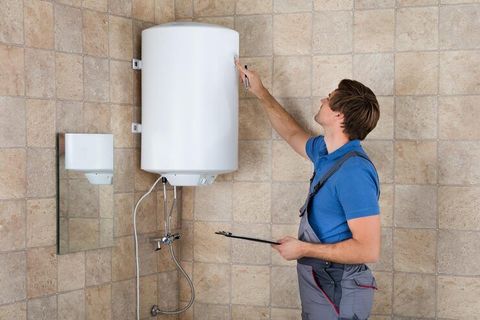
Electric boilers use electrical energy to heat water rather than burning a conventional fuel. They can have a compact design and may be suitable where electricity is readily available and combustion-based equipment is undesirable.
Their suitability depends heavily on electrical infrastructure, required output, operating conditions, and energy usage patterns.
Gas and Oil Boilers
Gas and oil boilers use combustion to generate heat. Natural gas, propane, and certain liquid fuels can be used depending on the boiler design and local requirements.
Fuel availability, combustion efficiency, ventilation, emissions considerations, and storage requirements are important factors when evaluating these options.
Biomass Boilers
Biomass boilers use organic materials such as wood pellets, wood chips, or other approved biomass fuels. They can be considered where renewable fuel resources are available and the application can accommodate fuel handling and storage.
Biomass systems generally require more attention to fuel quality, storage, ash management, and feeding systems than some conventional alternatives.
Choosing Between Hot Water and Steam Boilers
One of the most important decisions is determining whether an application requires hot water or steam.
Hot-water boilers are commonly used for building heating, domestic hot-water applications, and processes that require heated water. They typically operate within a defined temperature range and circulate water through a heating system.
Steam boilers generate steam that can be distributed through piping for heating or industrial processes. Steam can also provide useful thermal energy for applications where high-temperature heat transfer is required.
The choice should therefore begin with the actual heat-transfer requirement rather than the boiler's physical size or fuel type.
Boiler Capacity and Heat Output
Boiler capacity is another critical consideration. A boiler that is too small may struggle to meet demand, while an excessively large system can lead to inefficient operation, unnecessary cycling, and higher equipment requirements.
Capacity is generally evaluated according to the application's heat or steam demand. For buildings, factors may include floor area, insulation, climate, occupancy, hot-water demand, and heat loss. Industrial applications may require a more detailed assessment of process loads, operating schedules, pressure, and temperature.
A proper load calculation is therefore more useful than selecting a boiler based solely on the size of an existing heating system.
Boiler Efficiency and Energy Use
Efficiency describes how effectively a boiler converts its available energy into useful heat. Higher efficiency can reduce wasted energy, although actual performance depends on operating conditions, maintenance, load patterns, and system design.
Modern boiler systems may incorporate features such as improved heat exchangers, electronic controls, variable-speed components, and heat-recovery systems.
It is also important to consider seasonal or real-world efficiency rather than relying only on a single laboratory rating. A boiler operating significantly below its intended load may perform differently from one operating near its design conditions.
Fuel Options and Availability
Fuel selection can influence installation requirements, operating practices, emissions, and long-term energy consumption.
Natural gas may be convenient where pipeline infrastructure is available. Liquid fuels may provide flexibility in locations without gas connections but can require dedicated storage. Electricity can simplify combustion-related requirements but may require adequate electrical capacity. Biomass can be useful in appropriate locations but introduces fuel-handling considerations.
The most suitable fuel is therefore determined by more than energy content. Availability, infrastructure, storage, environmental requirements, reliability, and operating patterns should all be considered.
Boiler Controls and Automation
Modern boiler systems can include sophisticated controls that regulate temperature, pressure, combustion, and operating cycles.
Modulating burners can adjust heat input according to demand instead of simply switching between full output and shutdown. Automated controls can also coordinate pumps, valves, sensors, and safety systems.
For larger installations, monitoring systems can provide information about operating temperatures, pressure, fuel consumption, alarms, and maintenance conditions.
Good controls can improve system stability, but they should be matched to the complexity of the application. An overly complicated control system may add unnecessary maintenance requirements when the application is relatively simple.
Safety Features to Consider
Boilers operate with significant heat, and steam systems can also involve pressure. Safety should therefore be treated as a fundamental selection criterion.
Important safety provisions can include pressure-relief devices, temperature controls, flame monitoring, low-water protection, automatic shutdown systems, pressure gauges, and appropriate ventilation.
Installation should follow applicable codes, manufacturer requirements, and local regulations. Regular inspection and maintenance are equally important because safety equipment needs to remain functional throughout the boiler's operating life.
Users should also understand the difference between safety features built into the boiler and broader system-level protection involving piping, pumps, controls, ventilation, and water treatment.
Installation and Space Requirements
A boiler's physical dimensions are only one part of installation planning. Adequate clearance, ventilation, access for maintenance, fuel connections, exhaust arrangements, electrical connections, water treatment equipment, and piping space may all be required.
Replacement projects can be particularly challenging because an older boiler may have been installed under different standards or with different connection arrangements.
Considering the complete boiler room or equipment area before selecting a system can help avoid installation complications later.
Maintenance and Operating Considerations
Routine maintenance helps preserve performance and safety. Depending on the boiler type, maintenance may involve burner inspection, heat-exchanger cleaning, water-quality monitoring, pressure checks, control testing, and inspection of safety devices.
Water treatment is particularly important in many steam and hot-water systems because scale, corrosion, and impurities can reduce heat-transfer efficiency and damage components.
A boiler should therefore be evaluated not only for its initial technical specifications but also for how easily it can be inspected, maintained, monitored, and operated over time.
How to Compare Boiler Options
A practical comparison should begin by defining the application clearly. Consider the required heat output, operating temperature, steam pressure if applicable, expected operating hours, available fuel, available utilities, installation space, environmental requirements, and maintenance capabilities.
Next, compare boiler designs according to efficiency, controls, safety systems, expected operating conditions, and compatibility with the existing heating or process system.
For replacement projects, existing piping, pumps, electrical infrastructure, ventilation, and control systems should also be evaluated. In some cases, improving the surrounding system can have as much impact as selecting a newer boiler.
Conclusion
Choosing a boiler is primarily an exercise in matching technology to application. Fire-tube, water-tube, electric, gas, oil, and biomass boilers each have different characteristics, while hot-water and steam systems address different heating requirements.
The most suitable option should provide adequate capacity without unnecessary oversizing, work with practical fuel and utility resources, meet required safety standards, and remain manageable throughout its operating life. Evaluating efficiency, controls, installation requirements, maintenance, and operating conditions together provides a more reliable basis for making an informed boiler decision.