Robot Farming Guide: Technology, Benefits and Applications
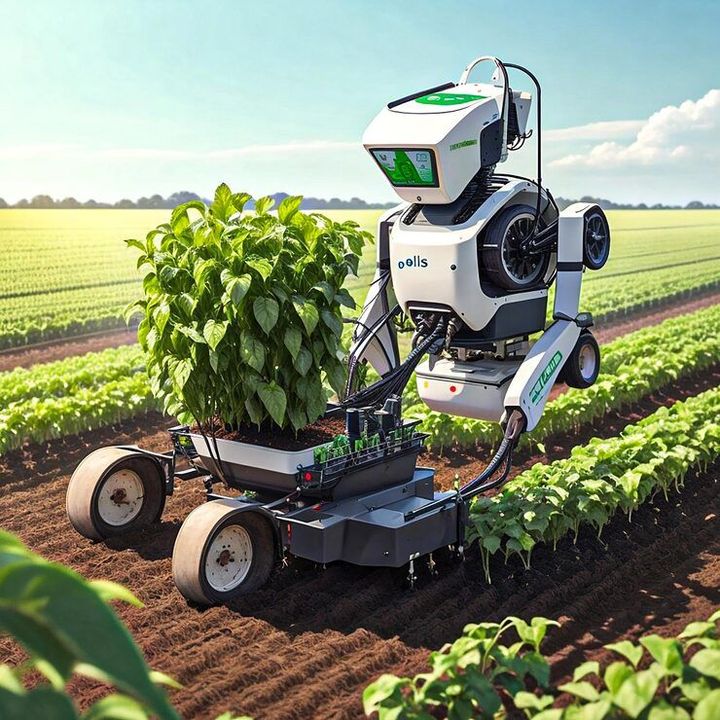
Robot farming is the use of robotic machines, sensors, artificial intelligence, computer vision, automation systems, and other technologies to perform or support agricultural activities. These systems can assist with tasks such as planting, crop monitoring, weed detection, harvesting, soil management, and livestock care.
Modern agriculture faces several challenges, including labor availability, changing weather conditions, pressure to use resources efficiently, and the need to produce more food from existing farmland. Robot farming is developing as one technological approach to these challenges.
Unlike traditional agricultural machinery that often performs a fixed mechanical task, agricultural robots can combine cameras, sensors, navigation systems, software, and machine learning to respond to changing field conditions. Some robots operate autonomously, while others require human supervision.
What Is Robot Farming?
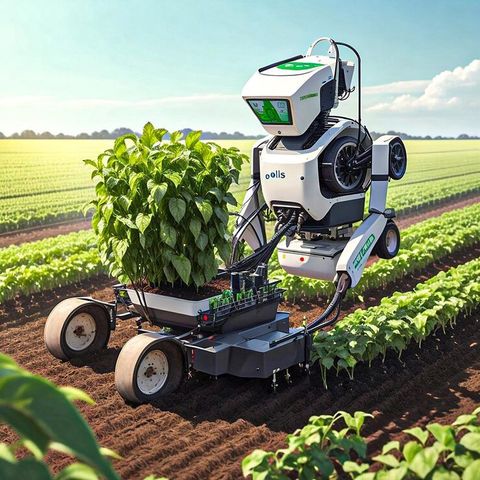
Robot farming refers to the integration of robotic technology into agricultural processes. A farming robot may be designed for one specific activity, such as removing weeds, or may combine several capabilities such as navigation, crop identification, and field monitoring.
The main idea is not necessarily to replace every human activity on a farm. Instead, agricultural robotics can automate repetitive, physically demanding, time-sensitive, or highly precise tasks while allowing farmers and agricultural professionals to focus on planning, decision-making, equipment management, and crop production.
Robot farming can be used in open fields, greenhouses, orchards, vineyards, nurseries, and livestock operations. The technology varies considerably depending on the crop, terrain, climate, and farming method.
How Does Robot Farming Work?
A typical agricultural robot combines several technologies that allow it to perceive its surroundings, make decisions, and perform physical actions.
Sensors collect information about soil, plants, weather, movement, distance, and other environmental conditions. Cameras can capture images of crops and identify differences between plants, weeds, soil, and damaged areas.
Computer vision allows a robotic system to interpret these images. For example, an agricultural robot may distinguish a crop plant from nearby weeds and determine where an action should take place.
Artificial intelligence and machine learning can help robots recognize patterns and improve their ability to interpret field conditions. Navigation technologies allow machines to move through fields while avoiding obstacles and maintaining accurate routes.
Actuators, robotic arms, wheels, cutting mechanisms, or other mechanical components then perform the required physical task. Data collected during operation can also be analyzed to understand crop conditions and improve future agricultural decisions.
Types of Agricultural Robots
Agricultural robots are developed for different stages of farming. Field robots can navigate between crop rows and perform activities such as monitoring, cultivation, or weed management.
Planting and seeding robots can place seeds at controlled locations and depths. Their purpose is to improve consistency while reducing unnecessary movement across a field.
Weeding robots use cameras, sensors, mechanical tools, or other methods to identify and manage unwanted plants. Precision weed detection can help farmers target specific areas instead of treating an entire field uniformly.
Harvesting robots are designed to identify and collect mature crops. This is particularly challenging for delicate fruits and vegetables because the system must recognize ripeness and handle produce carefully.
Crop-monitoring robots collect information about plant growth, soil conditions, disease indicators, and environmental changes. Some systems operate on the ground, while drones provide an aerial perspective of agricultural fields.
Robotic systems are also being developed for greenhouse operations, where controlled environments make navigation and monitoring more predictable. Other agricultural automation systems support livestock monitoring, feeding, and environmental management.
Applications of Robot Farming
One major application is precision agriculture. Robots can collect detailed field information and help farmers understand differences between sections of farmland. Instead of treating an entire field as a single uniform area, agricultural technology can support more localized decisions.
Crop monitoring is another important application. Robots equipped with cameras and sensors can repeatedly inspect plants and identify changes that may not be obvious during occasional manual inspections.
Weed management is also suitable for robotic systems because weeds often appear in specific locations. A robot can identify plants based on visual characteristics and direct its mechanical action toward targeted areas.
Harvesting represents another growing area of agricultural robotics. Fruit-picking robots, for example, need to identify mature produce, calculate its position, approach it safely, and remove it without causing unnecessary damage.
In greenhouses, robots can assist with plant inspection, movement of materials, monitoring, and repetitive cultivation activities. Their controlled operating environment can make certain robotic applications easier to implement than in large outdoor fields.
Benefits of Robot Farming
One important benefit of agricultural robotics is greater consistency. A robot can follow programmed routes and perform repetitive activities according to defined parameters.
Robots can also collect large amounts of field data. This information can help farmers understand crop development, identify variations, and make more informed decisions.
Precision operation may improve the use of agricultural inputs by allowing certain activities to be targeted more specifically. This can be particularly relevant when farmers are trying to manage resources carefully.
Another potential benefit is reducing the amount of repetitive physical work required from agricultural workers. Human expertise remains important, but automation can take responsibility for certain routine activities.
Robot farming can also support continuous monitoring. A robotic system can repeatedly inspect specific areas and provide information that would be difficult to gather manually at the same frequency.
Challenges and Limitations
Despite its potential, robot farming has practical limitations. Agricultural environments are unpredictable. Mud, dust, uneven ground, changing weather, dense vegetation, and unexpected obstacles can make robotic navigation difficult.
Crop diversity is another challenge. Plants can vary in shape, size, color, and maturity, making it difficult for computer vision systems to recognize every situation accurately.
Farmers also need suitable technical infrastructure, equipment maintenance, reliable connectivity where required, and personnel who can operate or manage automated systems.
Integration with existing agricultural equipment can also require careful planning. A robotic system must fit the farm's crop type, field layout, production methods, and operating conditions.
For these reasons, robot farming is not a single solution that works identically for every agricultural operation. The practical value of a robotic system depends heavily on the task and environment in which it is used.
Robot Farming and Artificial Intelligence
Artificial intelligence is becoming an important component of agricultural robotics. Traditional automation generally follows predefined instructions, while AI-enabled systems can analyze information and recognize patterns.
Computer vision can help robots identify crops, weeds, fruits, obstacles, and other objects. Machine learning models can be trained using agricultural images and field data to improve recognition capabilities.
AI can also contribute to predictive agriculture by analyzing historical and real-time information. When combined with sensors and robotic equipment, this creates a connected system in which data collection and physical action can work together.
However, AI does not eliminate the need for human oversight. Agricultural decisions involve weather, crop economics, soil conditions, local practices, and many other factors that may not be captured by a single automated system.
The Future of Robot Farming
The future of robot farming is likely to involve greater integration between robotics, artificial intelligence, sensors, satellite information, farm management software, and autonomous machinery.
Smaller specialized robots may become increasingly important because different agricultural tasks require different forms of equipment. Rather than relying on one machine for every activity, farms may use multiple robotic systems that perform specific functions.
Autonomous navigation is also expected to remain an important area of development. Improvements in computer vision, positioning technology, machine learning, and sensor systems can help robots operate more reliably in complex agricultural environments.
The broader direction is toward data-driven agriculture in which machines collect information, software interprets it, and automated equipment performs carefully targeted tasks.
Can robots replace farmers?
Robots are primarily designed to automate or support specific agricultural activities. Farming still requires human planning, supervision, agricultural knowledge, maintenance, and decision-making.
Why is artificial intelligence important in robot farming?
AI can help agricultural robots interpret images, identify crops and weeds, recognize patterns, analyze field information, and make automated decisions within defined operating conditions.Conclusion
Robot farming represents an important development in modern agriculture, combining robotics, artificial intelligence, sensors, computer vision, and automation to support farming activities. Its applications range from crop monitoring and precision weeding to planting, harvesting, greenhouse management, and livestock operations.
The technology can improve consistency, data collection, precision, and automation, but agricultural environments remain complex and unpredictable. Successful adoption depends on matching the right robotic technology with the crop, field conditions, farming method, and specific task.
As robotics and artificial intelligence continue to develop, agricultural robots are likely to become increasingly connected with broader precision agriculture systems. The long-term role of robot farming will therefore depend not only on the capabilities of individual machines, but also on how effectively humans and automated technologies work together.